"What If Saving the Planet Started With Breakfast?"
with Maddie Hamann
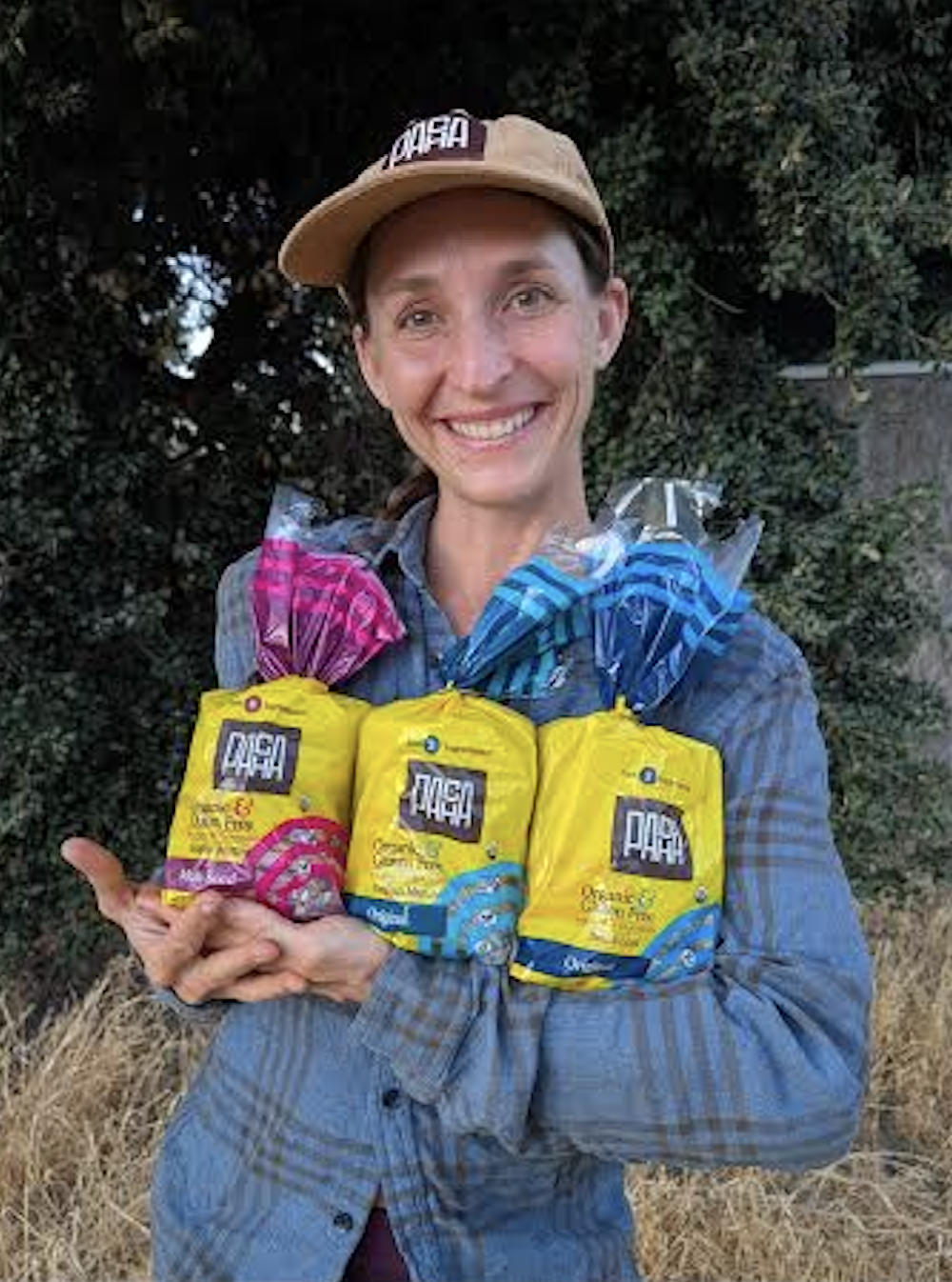
Season 11, Episode 05
What if the future of our children’s health depends not only on what we put on their plates, but on how that food is grown?
In this episode of Parenting for the Future, host Petal Modeste speaks with Maddie Hamann, co-founder of Pacha Bread, about the connection between regenerative agriculture, human health, and the future of our planet. Drawing on her background in engineering and oceanography, Maddie shares her journey from climate research to entrepreneurship and her commitment to creating more sustainable food systems.
Maddie explains how Pacha works with farmers to improve soil health and puts regenerative principles into practice through simple ingredients and traditional fermentation methods. The conversation explores the impact of industrial agriculture, why healthy soil matters, and why we need to rethink our relationship with the food we eat.
Beyond farming, Maddie offers practical ideas for families looking to reduce processed foods, incorporate more whole foods, and make more conscious choices about where their food comes from.
Discover why regenerative agriculture matters and how everyday food choices can contribute to a healthier planet and a brighter future for the next generation.
In This Episode:
- Explore what regenerative agriculture is and why healthy soil matters for our food systems and the planet.
- Learn how Pacha Bread works with farmers to support regenerative farming practices.
- Understand the connection between how food is grown, what we eat, and the wellbeing of future generations.
- Discover practical ways families can incorporate more whole foods and reduce processed foods.
- Consider how everyday food choices can support farmers and contribute to a healthier future for our children.
Petal Modeste (00:00)
Today’s industrial agriculture system is killing our planet. Land, people, animals and natural resources are all exploited so that we can eat. But here in the U S that exploitation.
Produces 10 % of our greenhouse gas emissions. But there is another way to grow food. Regenerative agriculture, which the UN’s Food and Agriculture Organization defines as holistic farming systems that improve water and air quality, enhance ecosystem biodiversity, produce nutrient-dense food, and store carbon to help mitigate the effects of climate change, could help us balance food production to meet increasing need.
While maintaining and improving economic viability for farmers and food producers. Our guest today, Maddie Hamann, believes in the power of regenerative agriculture. And she has built a successful regenerative food company called Pacha Bread that proves its promise. Maddie has a BS in civil engineering and environmental geosciences from University of Notre Dame and a master’s degree and PhD in oceanography from UC San Diego.
When she realized that scientific knowledge alone would not solve the climate crisis, she pivoted from academia to entrepreneurship and together with her husband, scaled Pacha into a six-figure monthly revenue in just two years. Today, we explore regenerative agriculture through Pacha and why building brands that nourish people and our planet are necessary to preserve the future for all our children. Welcome Maddie to Parenting for the Future.
We are delighted to have you here.
Maddie Hamann (PACHA) (01:38)
Great to be here.
Petal Modeste (01:38)
So I always start these conversations, Maddie, by asking our guests to tell us a little bit more about themselves and their backgrounds. I mentioned that you were a civil engineer with degrees in oceanography. What were your professional ambitions when you pursued your areas of study and how were they shaped by the values with which you were raised?
Maddie Hamann (PACHA) (01:57)
well, my choice to study engineering at Notre Dame was my grandfather was an engineer and it was easier to switch out of engineering than into engineering. So my parents, they kind of encouraged me, just give it a try. And if you don’t like it, you can always try something else. my parents,
I would say a lot of the choices that I made in pursuing academia were made because, one, my parents really believed in my abilities and were always super supportive of, like, me following what I thought was the right way to go. I would also say that my choices to study engineering and oceanography more so engineering were heavily influenced by what I thought was expected of me from our society. I
Petal Modeste (02:45)
Hmm.
Maddie Hamann (PACHA) (02:45)
was like, okay, I’m really good at math and science and not everyone is, so I should really put that to good use. And so that was in part why I studied civil engineering. through my whole life, my dad is…
is such a nature guy. he’s always got his eye on the natural world. And he’s an avid gardener and has always really cared about taking care of natural spaces. And I don’t, didn’t even realize how much that influenced me. But as I’ve grown older, my heart was really drawn to like, my gosh, like we’re not taking care of our planet.
And that’s why I ended up studying oceanography, was that I wanted to look at and contribute to the understanding how to address climate change. Yeah.
Petal Modeste (03:30)
Mm-hmm. So what made you pivot then into becoming a food entrepreneur? was there a particular incident, a eureka moment, and why bread?
Maddie Hamann (PACHA) (03:39)
Yeah.
So I would say that the moment was when I met my husband, who is the co-founder and CEO of PACHA. name’s Adam Heiner. At about the three-year mark in my PhD process, I realized that I wasn’t probably going to be a scientist. Like, I wasn’t going to be just going for research grants and producing
academic research for the rest of my life. I knew that there was something else that was going to be asked of me. In part, that was because my advisor pointed out just like, you know how to talk to people. Not all scientists know how to talk to people.
So, you know, there’s that. And I didn’t know what it was going to be. But I met my husband and he had founded a company called Bootchcraft, which is an organic hard kombucha brand.
Petal Modeste (04:27)
Okay.
Maddie Hamann (PACHA) (04:27)
And when I met him, was primarily, he had hired himself out of all the other positions and he was working primarily in impact and going and working with farmers and looking at the way that they grow their food and trying to find ways to help them transition into regenerative agriculture, which shockingly I knew nothing about when I met him. Studying earth sciences for years. even went to COP, like the COP 23, I think is the one I went to.
Petal Modeste (04:55)
Yeah. Yeah.
Maddie Hamann (PACHA) (04:57)
And, you know, I was in oceanography, so it’s likely that I just wasn’t paying attention to the regenerative agriculture piece. But yeah, I really did not understand the huge benefits that could be achieved by addressing this land-based issue.
Petal Modeste (05:12)
Yeah.
Maddie Hamann (PACHA) (05:13)
And yeah, so I just saw him building a company and directing dollars towards solving a problem. And I thought, wow, that’s, I could get on board with that.
Petal Modeste (05:22)
You could get on board with that. Yeah.
Maddie Hamann (PACHA) (05:25)
That seems like a way to make change. So, yeah.
Petal Modeste (05:27)
Yeah, for sure. So let’s talk about Pacha itself. I understand that Pacha means mother earth. I don’t know if that’s correct. You tell me, why did that name feel like the right fit for your brand and for the mission of Pacha?
Maddie Hamann (PACHA) (05:40)
Yeah.
So really interesting tidbits. Yeah. So the word Pacha comes from the Incan mythology. And yes, it does mean, it kind of means Mother Earth, but it actually means more like the fabric of all that we exist in, space time.
Petal Modeste (05:55)
Okay.
Maddie Hamann (PACHA) (05:57)
And there’s an element of that, that there’s like a reciprocity component that’s like in order to be a part of this fabric, we have to be a part of it.
Petal Modeste (06:08)
Yeah.
Maddie Hamann (PACHA) (06:08)
We have to be in right relationship with the world around us. I mean, we founded PACHA. The whole reason that I’m a part of this is because I see that there are ways that we need to remedy our right relationship with the earth, in
Petal Modeste (06:24)
Yeah.
Maddie Hamann (PACHA) (06:25)
particular in our farming system. However, about a year ago,
I did a podcast with a man who’s from India, and he asked
Petal Modeste (06:32)
Mm-hmm.
Maddie Hamann (PACHA) (06:32)
me, do you know what Pacha means in Sanskrit? And I was like, no. He was like, my gosh, I thought this was part of the story, because Pacha in Sanskrit means to digest. And yeah, and
Petal Modeste (06:46)
Really? Huh.
Maddie Hamann (PACHA) (06:49)
Really, those are the two major components of our brand.
Petal Modeste (06:53)
Yeah?
Maddie Hamann (PACHA) (06:55)
Where I’m here, we’re here to take care of the earth, but we’re also here to take care of human health. And the product
Petal Modeste (07:00)
Hmm.
Maddie Hamann (PACHA) (07:01)
we make is this buckwheat, this sprouted buckwheat bread that basically we do everything we can to make it as digestible and nutritious as possible. So it was just like, wow, okay, we chose the right name, Pacha. Here we go. Yeah.
Petal Modeste (07:12)
Yeah, you sure did. So
I understand this idea of symbiosis of being here on the planet, giving back as much as we take away so that we never leave planet to suffer ourselves are healthier. But then we have the concept of sustainability and obviously regenerative agriculture sits at the heart of Pacha. But now a lot of food companies talk about sustainability and they have been for a but you have said that sustainability is not enough. So why not? What does regenerative agriculture do that sustainability doesn’t?
Maddie Hamann (PACHA) (07:47)
Yeah, it’s a great question. And the answer is in some ways simple, like just the word itself, sustainability, like sustainability, if we are sustaining what we’re currently doing right now, we don’t have much time left.
Petal Modeste (08:01)
Yeah.
Maddie Hamann (PACHA) (08:02)
So really like, it’s a language thing. you have this idea of like, okay, I’m going to make my materials recyclable. Great.
But even if the materials that you’re using aren’t able to go back into the system, like if the system’s actually not able to be closed, like sustainability has this idea that better at the way we cycle our materials, but regeneration
Petal Modeste (08:35)
Mm-hmm.
Maddie Hamann (PACHA) (08:36)
has the idea that we actually need to work towards helping the earth generate more resources for us
Petal Modeste (08:44)
Mm-hmm.
Maddie Hamann (PACHA) (08:45)
to use. And the way that we use our resources needs to align with a system that continues to feed and grow and become more resilient and more beautiful with time.
Petal Modeste (08:59)
Mm-hmm.
Maddie Hamann (PACHA) (08:59)
Not just like, need to do the baseline to make sure that we all have food tomorrow. Yeah.
Petal Modeste (09:04)
Yeah, yeah. There’s this idea that the earth needs to keep getting healthier based on the habits, the way we treat it,
Maddie Hamann (PACHA) (09:11)
Yeah.
Petal Modeste (09:12)
the way we use it. So the healthier it is, just like all of us, the more we can produce, the more we can do. Okay, I get it. I get the difference. And I think it’s really important. So how do regenerative agricultural principles show up, you know, or what specific regenerative farming practices, let’s say, are used to grow your ingredients and how do you partner with farmers to continually evaluate and strengthen those practices so that regeneration really is happening.
Maddie Hamann (PACHA) (09:40)
Yeah, totally. This is a good question. It’s a long answer.
So one of the main tenets or ideas in regenerative agriculture, I don’t think this, you wouldn’t call this a regenerative principle, but it’s a practice. that’s that you keep roots in the ground all the time. Like one of the main purposes of regenerative agriculture is to
maintain and increase the health of the soil itself. So, for looking at it from a climate change perspective, soil, if you have a bunch of living organisms building a living soil system, that’s a ton of carbon-based life. So, it can be a carbon sink, the soil itself. And if the soil ecosystem is really healthy, then it’s able to pass nutrients into the roots of the plants and grow really nutritious food for us. um
And it’s also able to, like, if you can imagine, like, trying to pour water onto, like, some nice new potting soil that you got from the store versus, like, dirt that you got out of the kids, like, kickball lot. Right? You know? One of them soaks the water up and really holds it and keeps it within the system. The other one, the water just washes away the dirt.
So just from those examples, can see that soil health is so key to the regenerative system. And one of the ways that you keep a soil ecosystem healthy is that you use roots as a matrix to protect it. So all of our products are right now primarily made with buckwheat, which is not wheat. It’s not a grass. It’s actually like a really
It’s a tiny white flower with green leafy cover, and it grows maybe two to three feet high.
Petal Modeste (11:17)
Okay?
Maddie Hamann (PACHA) (11:18)
A lot of farmers, even who are not harvesting buckwheat, will use buckwheat as what’s called a cover crop. They’ll plant it in between crop rotations just so that there’s something there keeping the soil in
Petal Modeste (11:29)
Got it. Right.
Maddie Hamann (PACHA) (11:30)
there. It can fix nitrogen as well, similar to how a legume would nitrogen into the soil, can do that too. A lot of farmers will plant buckwheat and they’ll actually just till it back into the soil before it even goes to seed.
Petal Modeste (11:44)
Wow, okay.
Maddie Hamann (PACHA) (11:46)
So just in that, like just in using buckwheat, we’re already like, even if we weren’t getting organic buckwheat, even if we weren’t doing regenerative buckwheat, buckwheat itself is inherently a regenerative crop.
Petal Modeste (12:00)
Got it.
Maddie Hamann (PACHA) (12:00)
And we’re getting it from organic places and we’re getting it from regenerative places. We work with an organization called the Soil and Climate Initiative.
Petal Modeste (12:08)
Okay, okay.
Maddie Hamann (PACHA) (12:10)
And so that’s our certifier for our regenerative certification.
Petal Modeste (12:14)
Okay.
Maddie Hamann (PACHA) (12:15)
So the questions of like, do we work with our farmers to implement those practices and work with the continuous improvement, our certifying body actually does that work. They’re amazing.
They do way more than we ever could, but they’re out there doing things. They’re testing soil on an annual basis. They have a network set up for farmers actually to help each other solve problems of like, okay, I stopped using this chemical to prevent mold from growing.
Do I do now? Like, what are my options?
Petal Modeste (12:45)
Mm-hmm. Mm-hmm.
Maddie Hamann (PACHA) (12:47)
And really the farmers themselves are the best resource.
for sharing that
Petal Modeste (12:51)
Yeah.
Maddie Hamann (PACHA) (12:51)
information. And we also work with an ingredient supplier named John Strofus from Field Theory.
Petal Modeste (12:58)
Okay.
Maddie Hamann (PACHA) (12:58)
He was actually the one who introduced us to our certifier because, way that our certification works is they actually pay farmers an acreage fee. the acre, they pay the farmers like $25 for them to be able to transition their practices. John just said, you know, like this setup is what really works and it’s what farmers need to be able
Petal Modeste (13:22)
Yeah.
Maddie Hamann (PACHA) (13:22)
to commit to making big changes. You can imagine like farmers who have been doing what their parents did, what their grandparents most of them aren’t actually doing what their grandparents did because…
Petal Modeste (13:34)
I was going to say, yeah, don’t think the grandparents
Maddie Hamann (PACHA) (13:34)
There’s been a lot of changes.
Petal Modeste (13:38)
used as many chemicals and fertilizers and right.
Maddie Hamann (PACHA) (13:41)
Yeah. But they’re following what they know and
Petal Modeste (13:45)
Yeah.
Maddie Hamann (PACHA) (13:46)
They are experts at doing what they know. And it’s really challenging to get somebody to take the risk of jumping into a whole new system. But yeah, so we work with some amazing farmers who are truly like the heroes
Petal Modeste (14:01)
Yeah. And to have body as well, who kind of, put the boots on the ground and they’re working
Maddie Hamann (PACHA) (14:05)
Yeah.
Petal Modeste (14:06)
one on one with the farmers, I think that’s pretty brilliant. How do the regenerative principles themselves show up in the actual production of your bread? In other words, how do regenerative principles influence how your bread is actually made? Beyond main ingredient, which is the buckwheat.
Maddie Hamann (PACHA) (14:22)
Yeah, of course, of course. Well, there’s plenty of regenerative principles. I would say one of the most obvious ones is you want to work with nature instead of against it.
Petal Modeste (14:35)
Yeah.
Maddie Hamann (PACHA) (14:36)
So I would say that like our process for making the bread itself, what we do is we…
we get the whole buckwheat, it’s called a groat. It’s a seed, the buckwheat seed. And we sprout it, we blend it, and then we ferment it actually using only the yeast that are naturally occurring on the buckwheat.
Petal Modeste (14:57)
Okay. Okay.
Maddie Hamann (PACHA) (14:58)
So like where a lot of other breads in order to get a sourdough flavor, they might be actually introducing flavor or introducing like a high yield yeast of some kind that’s been like cultured and labified to get the result that they want. We’re actually just using the natural, naturally occurring thing and the time, we’re the bread to ferment and process over a long period of time the way that it has been done for centuries instead of prioritizing like quick turnarounds and high yields. Yeah.
Petal Modeste (15:29)
Mm-hmm. Yes, pick the market. Yeah. Mm-hmm. Mm-hmm.
Maddie Hamann (PACHA) (15:34)
Yeah. And I would say also, just what another principle would be, like, you want to have simplicity and minimal inputs, ideally, in your system. And for us, yeah, we really try to make our bread as simply as possible. Our base recipe is just two ingredients. It’s just buckwheat and sea salt.
Petal Modeste (15:54)
Wow.
Maddie Hamann (PACHA) (15:55)
Yeah. And I mean, on the systems side of things as well, it’s really helpful for us to be able to focus on building our relationship with our buckwheat suppliers have all these other flavors and grains and like, it’s the ability that the simplicity of our supply chain allows us to go really deep
Petal Modeste (16:14)
Yeah.
Maddie Hamann (PACHA) (16:15)
and in a good way with those things.
Petal Modeste (16:18)
Mm-hmm.
Yeah.
Maddie Hamann (PACHA) (16:19)
Yeah, relationship based growth is also a really important tenant in regenerative agriculture. yeah, I would say like, again, because we are working with John and getting to work directly with our farmers, instead of contracting with a mill that just buys buckwheat from whoever and you don’t actually know where the buckwheat came from.
Petal Modeste (16:40)
Yeah.
Maddie Hamann (PACHA) (16:41)
building those strong relationships in our supply chain is another really important and magical thing. And yeah.
Petal Modeste (16:49)
Yeah, I mean, that makes a lot of sense because again, this is all based in this principle of regenerative agriculture and that definition that I referred to earlier, it’s meant to benefit not just our bodies, not just the planet, but even those involved in the process, right? The farmers themselves, the food producers themselves. So that makes sense. And also what makes a lot of sense to me is how simple you just said you have two ingredients yet.
Pacha breads are organic, nutrient dense, vegan, grain free, gluten free, allergen free. I mean, it’s like a magic bread. And
Maddie Hamann (PACHA) (17:23)
Yeah.
Petal Modeste (17:25)
there was some place I saw you being interviewed or you wrote something where you said, yes, it’s made with ingredients that people actually recognize. So buckwheat, sea salt, that makes sense. But what do these attributes really mean for us as consumers? Tell us how all of these wonderful features actually benefit our health and wellbeing.
Maddie Hamann (PACHA) (17:44)
mean, there’s so many ways. But I think that really what it comes down to is that when you eat Pacha bread, feel nourished. And just in the sense of like, so again, like, our process is really designed to make the bread as digestible as possible.
We don’t even realize, I think, how much our systems are bombarded by things that our body can’t really actually handle.
Petal Modeste (18:12)
Yeah.
Maddie Hamann (PACHA) (18:13)
especially if you’re a gluten-free person, which not everybody who’s listening to this program will be. But if you’re a gluten-free person, there’s a lot of starches and gums that are included in gluten-free products
They have no fiber. Your body actually doesn’t know what to do with them. They’re there simply to give product a structure and a texture and a mouth feel that’s familiar.
Petal Modeste (18:34)
Wow.
Maddie Hamann (PACHA) (18:35)
then, of course, on the gluten side of things, I don’t think everyone should be gluten-free. And I think that there are a lot of people out there who have gluten sensitivity and don’t even realize it.
I’ll also just say like, the wheat that’s grown in this country has been selectively bred for yield and gluten content.
Petal Modeste (18:53)
Yeah.
Maddie Hamann (PACHA) (18:53)
Gluten is an amazing, it’s a miracle protein. It does some really cool things.
Petal Modeste (18:57)
Mm-hmm. Mm-hmm.
Maddie Hamann (PACHA) (19:00)
for the producers, if the wheat has a very high gluten content, it’s very easy to work with. And
Petal Modeste (19:06)
Right.
Maddie Hamann (PACHA) (19:06)
it allows you to rapidly ferment and add the airiness to the bread, right?
The wheat that we have now has like 40 times more gluten protein than it did in the 1950s. It’s crazy. ah
Petal Modeste (19:19)
Wow, 40 times? Wow, okay.
Maddie Hamann (PACHA) (19:23)
So yeah,
your body wasn’t actually made to handle that much gluten. And then of course
Petal Modeste (19:28)
Yeah.
Maddie Hamann (PACHA) (19:28)
there’s the whole issue of the glyphosate, which like,
This is just my feeling. But I have a sense that a lot of the gluten insensitivity is arising because the body it’s it’s equating wheat with glyphosate because of the way
Petal Modeste (19:45)
Yeah.
Maddie Hamann (PACHA) (19:45)
that the wheat is grown and processed with glyphosate. There’s a lot of conventional crops in this country that
Petal Modeste (19:52)
Mm-hmm.
Maddie Hamann (PACHA) (19:52)
what they do right before they…
harvest and process as they spray the entire field down with glyphosate to kill it and dry it.
Petal Modeste (20:00)
God.
Maddie Hamann (PACHA) (20:00)
It’s gnarly.
Petal Modeste (20:02)
I feel like we could have a whole separate podcast on how food is grown, especially in the U S and you know, what I find quite astonishing is all of the health benefits that we talked about, that are a part of, you know, eating patch of bread, but really eating the products of regenerative agriculture. I wonder if we really have just lost them because we have moved to food systems, ways to grow food that are focused on profit, that are focused on a quick timeline to get things to market, whether it’s synthetic fertilizers or other extractive practices, it’s all designed for profit. And so, I feel like if we had never moved away from the great grandparents who were farmers and what they did, health and planetary health would probably be in a very different place today. Do you agree with that? I mean, isn’t that what you’re trying to go back to in a way? Yeah.
Maddie Hamann (PACHA) (20:55)
Absolutely. Absolutely. Yeah. Yeah. Yeah.
Petal Modeste (21:02)
One detail that surprised me also about Pacha is that your packaging is home compostable. What does that mean exactly? I think I know what it means, but I want you to tell our listeners and our viewers. And why was that also important as part of this entire focus?
On doing things that would benefit us and also the planet.
Maddie Hamann (PACHA) (21:24)
Yeah, it goes back to what I was talking about with like regeneration versus sustainability and like we need for things to be able to go. It’s a concept called cradle to cradle, so not like cradle to grave. Like there’s really no such thing as a grave on this planet.
Petal Modeste (21:37)
Ah, mm-hmm. As a grave. Right.
Maddie Hamann (PACHA) (21:43)
Everything gets reused somehow. So if we can
Petal Modeste (21:46)
Yeah.
Maddie Hamann (PACHA) (21:46)
Design the system to be able to cycle things through,
Petal Modeste (21:49)
Mm-hmm.
Maddie Hamann (PACHA) (21:49)
That’s what we’re looking for.
Yeah, and this was again, like something that we, from the very beginning, we were clear that this was an important part of our business. go back into the earth as quickly as possible.
Petal Modeste (22:01)
Right.
Maddie Hamann (PACHA) (22:02)
So that means using packaging that’s made from plant-based materials. em
Petal Modeste (22:06)
Okay.
Maddie Hamann (PACHA) (22:08)
So like plant-based plastics that.
can break down. And so when we say that our products are home compostable, that means that they can be put into an active home compost pile and break down in 90 to 180 days.
Petal Modeste (22:22)
Wow. Okay.
Maddie Hamann (PACHA) (22:25)
The other thing about it is if our bags end up in the landfill, which for the most part right now, that’s what’s happening to them.
They break down like a hundred times faster than,
Petal Modeste (22:34)
Okay.
Maddie Hamann (PACHA) (22:35)
like 500 years for a traditional petroleum-based plastic bag versus like two years or three years for ours. It’s like, yeah.
Petal Modeste (22:41)
Don’t tell me. Okay.
So Maddie, none of what you’re describing sounds super easy, again, given where farming is in our country generally and how extractive agricultural processes are. And it doesn’t sound cheap either. And so maybe I’m wrong, but…
You know, you are doing well. Pacha is doing well. What do you think the growth says about how consumers are responding to regenerative food and the desire to eat more cleanly and consciously?
Maddie Hamann (PACHA) (23:14)
There’s so many things that I want to say here.
Petal Modeste (23:16)
I
Maddie Hamann (PACHA) (23:17)
it’s not cheaper to do things the way that we’re that we’re doing them. um
Petal Modeste (23:21)
Mm-hmm.
Maddie Hamann (PACHA) (23:23)
I think it should be, but it’s not.
Petal Modeste (23:25)
Yeah.
Maddie Hamann (PACHA) (23:26)
Well, so one thing I’ll say just on that front is, you know, for for a small company like ours to get to the scale that’s needed to be profitable, it
Petal Modeste (23:38)
Yeah.
Maddie Hamann (PACHA) (23:39)
takes a long time. So this journey, been successful. We’re feeling really good about everything that’s happening with Pacha. there’s still a long way to go before we are a company that’s just super rock solid.
Petal Modeste (23:55)
Yeah.
Maddie Hamann (PACHA) (23:55)
yeah, still in the trenches.
building this thing. Yeah.
Petal Modeste (23:59)
Mm-hmm.
Maddie Hamann (PACHA) (23:59)
The other thing I would say, part of your question was, what do you think it says about the consumer’s response to regenerative agriculture? I would say that the consumers care more about their own health, more than the health of the planet right now.
Petal Modeste (24:12)
Mm-hmm. Okay. Mm-hmm. Mm-hmm.
Maddie Hamann (PACHA) (24:16)
I think that surveys and research that show
that people do recognize the value. Theoretically, they recognize the value of regenerative products and would like to be able to purchase them. But the price gap,
Petal Modeste (24:29)
Yeah.
Maddie Hamann (PACHA) (24:30)
it’s too big. They don’t care enough to justify spending $3
Petal Modeste (24:36)
Mm-hmm.
Maddie Hamann (PACHA) (24:37)
more on a box of pasta that’s regenerative. Right?
Petal Modeste (24:39)
Yeah, yeah.
Maddie Hamann (PACHA) (24:41)
So there’s a mismatch between the value of the product itself and the values of the consumer right now. I think that really good work is being done at the moment on many fronts to help the consumers understand that food that is grown in a regenerative system is actually better for you. I mean, just like cutting out the pesticides. Just removing the pesticides, like.
Petal Modeste (25:04)
I know, huge.
Maddie Hamann (PACHA) (25:08)
Yeah. But there are actually now studies like they’re making a connection between soil health and nutrient
Petal Modeste (25:16)
Mm.
Maddie Hamann (PACHA) (25:17)
density in the food. And
Petal Modeste (25:18)
Right.
Maddie Hamann (PACHA) (25:19)
in order to be able to make really solid claims on that, brands have to do studies that show that. A lot of brands that are our size, like we can’t afford to do a study.
like that.
And there are also, there’s some major things happening with large companies, especially General Mills has a very large component of their company. If you go to Expo West, they’re always talking about their regenerative agriculture. So
Petal Modeste (25:46)
Yeah.
Maddie Hamann (PACHA) (25:46)
they are investing in things like this.
Petal Modeste (25:49)
Right.
Maddie Hamann (PACHA) (25:50)
McDonald’s just invested like $200 million in regenerative.
Petal Modeste (25:53)
Wow.
Maddie Hamann (PACHA) (25:54)
or something.
Petal Modeste (25:55)
That’s great.
Yeah, I found out that McCain Foods is also
Maddie Hamann (PACHA) (25:59)
Yeah.
Petal Modeste (25:59)
Doing something. I think they have something called future farms and they’re running all these pilots paving the way they want to transition all of their potato farms. That’s like millions and millions of acres that they want to transition into regenerative practices. So that’s really great, because that’s that’s
Maddie Hamann (PACHA) (26:13)
Yeah. Yeah.
Petal Modeste (26:15)
The only way we could scale this right is to have these giant food production companies really invest in this. And then they can do it at scale. Even the price points can sometimes
Maddie Hamann (PACHA) (26:24)
Yes.
Petal Modeste (26:24)
Come down for the consumer, correct?
Maddie Hamann (PACHA) (26:27)
Yeah, ideally, yes.
Yeah, but then, you know, at the same time, I do think that there’s a movement of people who are starting to realize that it actually makes sense to invest more money in in your food. Like,
Petal Modeste (26:39)
Yeah,
So what will it take, Maddie, in your opinion, to move this movement forward even more to scale it, to make it of a systemic level change, Specifically, how do we incentivize the businesses, the farmers, the communities, policymakers, and perhaps even investors to commit to regenerative agriculture at scale? Because like we said, that’s how we get big changes and sort of more permanent changes too. What do you think?
Maddie Hamann (PACHA) (27:09)
Yeah. Well, there’s one just glaring issue that if we could solve tomorrow, I think it would have major downstream effects. And that’s just that the government is currently subsidizing commodity crops that are grown on monoculture industrial farms. Farmers…
Petal Modeste (27:28)
Mm-hmm. Okay.
Maddie Hamann (PACHA) (27:30)
Right now are incentivized to grow more acreage of corn and soybeans.
Just because they’re guaranteed a certain price on it.
Petal Modeste (27:39)
Yeah.
Maddie Hamann (PACHA) (27:39)
And if we were to just get rid of those subsidies today, the
Petal Modeste (27:43)
Mmm.
Maddie Hamann (PACHA) (27:44)
market would shift. Because we don’t need as much corn as we’re growing, and we don’t need as much soybeans, and we need more of the foods that we’re actually importing from other countries on a massive scale right now.
Petal Modeste (27:56)
Mm-hmm.
Maddie Hamann (PACHA) (27:57)
And if we could just drop those subsidies, a lot would shift.
Petal Modeste (28:01)
interesting.
Maddie Hamann (PACHA) (28:01)
um
And so, you know, like for the way that that can translate down to like you as an individual listening to this podcast is like get involved, like talk to your representatives, call their offices and yeah, tell them
Petal Modeste (28:16)
Mm-hmm.
Maddie Hamann (PACHA) (28:17)
That you want to see legislation that moves towards removing these subsidies.
But the other thing that I think that consumers can really, like, tangibly do is start paying attention to where your food comes from. And
Petal Modeste (28:30)
Hmm.
Maddie Hamann (PACHA) (28:32)
Start buying as much food as you can that you can trace back to the source. Like, if there’s no way that you could ever know
where the ingredients for your food are coming from.
Petal Modeste (28:45)
That’s a problem.
Maddie Hamann (PACHA) (28:46)
That’s a problem.
That’s a problem.
Petal Modeste (28:47)
Yeah. Yeah.
Maddie Hamann (PACHA) (28:49)
And you know, again, it’s like, it can be overwhelming how could I ever know where this stuff is coming from? But like, okay, find a farmer’s market. Start buying like three things from your farmer’s market, from a local farmer.
Petal Modeste (29:01)
Yeah.
Maddie Hamann (PACHA) (29:02)
Just start there. Start getting
Petal Modeste (29:02)
That’s a great idea.
Maddie Hamann (PACHA) (29:03)
To know where your food comes from.
Petal Modeste (29:05)
actually have found often that to buy directly from the farmers is actually is much more affordable anyway. So if cost is an issue, that’s a very, very good idea. So, know, Maddie, our goal on this podcast is really to give everybody who’s parents, really a better sense of the forces shaping the future as well as cutting edge parenting tools that they can use and they can leverage to raise the next generation of healthy, happy, purposeful humans. And obviously how and what we feed ourselves, where our food comes from is foundational to our health and the health of this planet that we have to live on. And we know that here in the U S at least our diets are rich in really heavily processed foods, right? They’re made from synthetic materials, ingredients we can’t pronounce, and they’re packed with fat and sugar and sodium and chemicals, et cetera, all detrimental to us and to our planet. And in many parts of the world, heavily processed food is the exception, not the norm. So when you think about other cultures, how they eat, how they source their food, how they cook their food, prepare their food,
What do some other cultures get right, even if you could think of one? What might it get right about food that we might be well-advised to emulate to return to cleaner eating habits?
Maddie Hamann (PACHA) (30:22)
Yeah,
I mean, I can think of a lot of things. I mean, I think of also like my sister served at the Peace Corps in West Africa and just like
Petal Modeste (30:29)
Mm-hmm.
Maddie Hamann (PACHA) (30:31)
All of the, there’s so many places in the world where the only food that you have access to is food that’s grown in a 10 mile radius.
But it happens in Europe too, There’s many different places in Europe that have like little like convenience stores, like right
Petal Modeste (30:46)
Mm-hmm.
Maddie Hamann (PACHA) (30:47)
off the highway, like little…
They’re not bodegas, that’s the wrong term, but the same kind of vibe. But then you go in and they’ve got like, meat from the farm that’s like a mile down the road, and they just have cheese from a couple of these dairy makers that are within 10 miles of their shop.
Petal Modeste (31:06)
Yeah.
Maddie Hamann (PACHA) (31:07)
They’re selling all local food. And
Petal Modeste (31:09)
Mm-hmm.
Maddie Hamann (PACHA) (31:10)
They don’t have these like major food distribution systems that control
Petal Modeste (31:15)
Yeah.
Maddie Hamann (PACHA) (31:16)
the food that everyone is eating. So yeah, again, there’s going back to more local eating is the thing that I see that’s working.
Petal Modeste (31:26)
Think you give some really good advice and it actually works whether you’re in an urban environment or a more rural environment. You have the farmers markets in the urban areas, lots and lots of them generally. And certainly you’re right. Like, you you just figure out where you are and what’s growing and patronize those people. That would help. What are three actions, parents who are listening now?
Can take to reduce processed foods in their home, to have more nutrient-dense food without feeling overwhelmed.
Maddie Hamann (PACHA) (31:59)
Well, I saw this question on the list and it got me really thinking because it’s not always so simple, right? I think a lot of parents are overwhelmed. And part of the reason that we’re consuming processed foods is because they’re convenient.
Petal Modeste (32:16)
Yeah.
Maddie Hamann (PACHA) (32:16)
It like, in a lot of ways, convenience food equals processed food, right? All right, so shameless plug, there’s one simple thing you can do. You can start feeding your kids pot of bread. You could just stick it in the toaster and put butter on it and yeah, you know, it’s one easy
Petal Modeste (32:28)
Done.
Maddie Hamann (PACHA) (32:34)
Solution. There you go. But no, mean, the other thing that I see is that kids, and I see this with…
so many, in case we haven’t mentioned this yet, I’m a mom. I have a daughter who’s three years old.
Petal Modeste (32:43)
Yes. Yes.
Maddie Hamann (PACHA) (32:46)
And we feed her mostly what we eat, which is like we cook a meal that’s made of whole foods and that’s what’s available for her. but then I see lots of kids who they’re just waiting. They’re not eating their dinner because they know that their
Petal Modeste (33:01)
Hmm.
Maddie Hamann (PACHA) (33:01)
Mom’s going to pull something else out for them when they say that they’re hungry at bedtime and it’s going to be something that’s not okay. Yeah, something that’s convenient and probably processed
Petal Modeste (33:06)
Something convenient. Yeah.
Maddie Hamann (PACHA) (33:11)
So this isn’t easy, but it is simple. One thing I think parents can do is they can start reducing the number of convenience foods they store in their pantry.
Like, if you just don’t have it around, it’s not an option.
Petal Modeste (33:22)
Yep.
Yeah.
Maddie Hamann (PACHA) (33:24)
And that was something my mom actually used to do. We had plenty of convenience foods available at times, but whenever she went to the grocery store, she’d buy a package. And then once it was gone, it was like, well, we don’t have any. We’ve to figure out
Petal Modeste (33:37)
That’s it.
Maddie Hamann (PACHA) (33:37)
Something else to eat.
Petal Modeste (33:38)
Yeah. Grab an apple.
Maddie Hamann (PACHA) (33:40)
Grab an apple. Yeah. And like
Petal Modeste (33:41)
Yeah.
Maddie Hamann (PACHA) (33:42)
That’s another great tip, think, too, is just like, think about what are some whole food snacks that could be good replacements? Like apples and peanut butter. Amazing. My kids love cucumbers with a little bit of salt on them.
Petal Modeste (33:59)
Mm-hmm.
Maddie Hamann (PACHA) (33:59)
The salt makes it like a whole new experience, by the way. Yeah.
Petal Modeste (34:01)
Salt makes everything better. Yeah.
Maddie Hamann (PACHA) (34:04)
They’re like, cucumbers, ew. cucumbers and salt, great. It’s like a chip. But yeah,
Petal Modeste (34:09)
Yeah.
Maddie Hamann (PACHA) (34:11)
Just kind of brainstorming what are those whole food snacks that you could start rotating in and then rotate them in more.
Petal Modeste (34:20)
Mm-hmm.
Maddie Hamann (PACHA) (34:20)
Reduce the convenience foods and rotate in the whole foods more and more and more. Yeah.
Petal Modeste (34:25)
Yeah.
So my last question to you, Maddie, is this. You just mentioned you’re a mom. As Pacha grows and you you think about all of our children who are growing up, what legacy do you hope to leave both through your company, but also through your parenting for future generations?
Maddie Hamann (PACHA) (34:44)
I would say that the legacy that I wanna leave is just a legacy of hope. Yeah, I feel like in this moment right now, for many reasons and for a lot of people, there’s a feeling of hopelessness. Like how are we ever gonna fix all the problems that we have created for ourselves?
Petal Modeste (35:02)
Yeah.
Maddie Hamann (PACHA) (35:03)
And in a way I say this even for myself, but yeah, I want for my daughter to know that there is a way to be in right relationship with our planet and with the people around us. like, we can do this. We have the ability as humans to set aside our differences and…create a world that works for everybody.
Petal Modeste (35:35)
I know, yeah.
Maddie Hamann (PACHA) (35:36)
that’s what I want for my daughter to know from me and what I want all of our children to know and feel.
Petal Modeste (35:43)
Yeah. Thank you. I want that too, very much. And I appreciate your sharing that. And I agree with you. We can do it. We just need to do it.
We make it harder than it needs to be. So thank you. Thank you for that. And thank you for spending a little time with us today, sharing your work, telling us about Pacha and actually giving us hope.
Tthat if more and more companies really take on this challenge to get back to regenerative practices in terms of how food is grown, it make such a huge difference for us and for our planet. So it’s really good to hear about this today. And we wish you continued success, Maddie, before we say goodbye.
Please tell our listeners and our viewers where they can find Pacha, where they can buy it.
Maddie Hamann (PACHA) (36:26)
Yeah, absolutely. So right now, you can find us at any Whole Foods and any sprouts nationwide, as well as natural grocers. And there’s some other small chains, like Fresh Time and Mom’s Markets and your, yeah, the health food stores. The health food
stores. And you can also buy our products online directly through our website, which is livepacha.com and coming soon to Target on the west coast as well. You’ll able to find our tortillas in Target.
Petal Modeste (36:56)
All right, congratulations. Well, thank you again. Good luck to you, good luck to your family. And I hope you come back and visit with us. I imagine in another not so far away time from now, there will be more patch of products, more to talk about, and hopefully more upward movement in regenerative agriculture that would get
Maddie Hamann (PACHA) (37:14)
Yeah, absolutely.
Petal Modeste (37:16)
you so excited. You have to come back and tell us about it. So thanks
Maddie Hamann (PACHA) (37:19)
Thank you for having me.
Petal Modeste (37:20)
You’re welcome.
Subscribe to the PFTF podcast
The "Parenting for the Future" podcast connects you the experts leading the charge toward a brighter future. Gain fresh perspectives and actionable advice for nurturing future-ready kids.