"From Olympic Fencer to Changemaker"
with Nzingha Prescod
Season 11, Episode 03
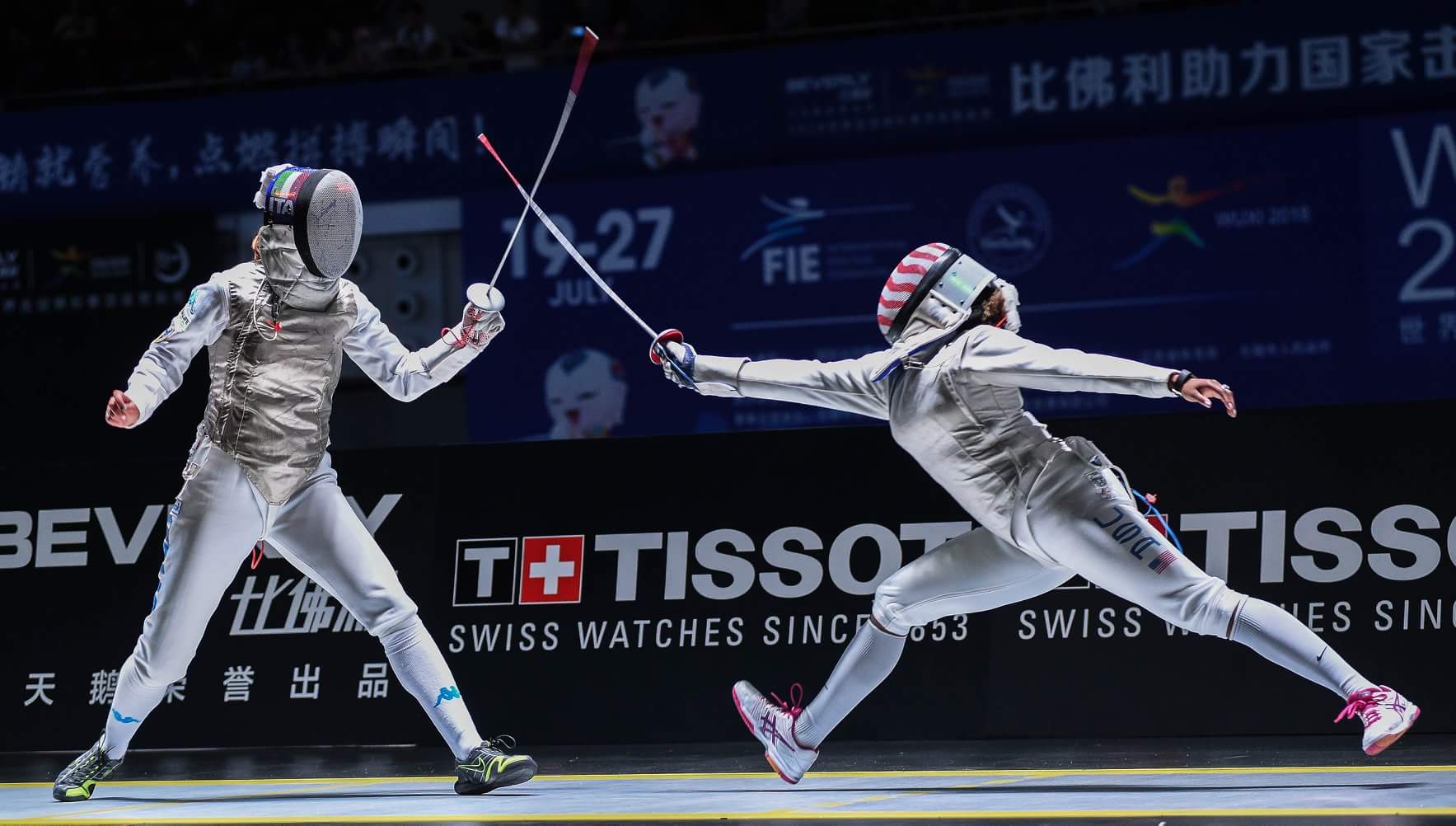
In this episode of Parenting for the Future, host Petal Modeste speaks with Nzingha Prescod, two-time Olympian, world champion fencer, and founder of the Prescod Institute for Sport, Teamwork and Education (PISTE).
Nzingha shares how her upbringing, family values, and experience with the Peter Westbrook Foundation shaped her journey in fencing and inspired her to create opportunities for the next generation. Through PISTE, she combines fencing, academic support, mentorship, and educational enrichment to help young people develop confidence, discipline, and skills that extend beyond sports.
The conversation explores the importance of representation, access, community partnerships, and exposing children to new possibilities. Nzingha also reflects on parenting, encouraging children to explore their interests, trust themselves, and find balance.
Ultimately, her story is a reminder that empowering young people means more than helping them succeed—it means giving them the support, resources, and confidence to recognize their potential and create opportunities for others.
In this episode, listeners will discover:
- How family values, representation, and mentorship can shape a child’s ambitions
- What fencing teaches young people about discipline, focus, confidence, and problem-solving
- How PISTE combines athletic development with academic enrichment and career exposure
- Why access and affordability matter in expanding opportunities for children
- How community partnerships and collective support help youth programs thrive
- Why young athletes should trust themselves, reflect, and make room for balance
- How parents can nurture children’s interests by exposing them to new experiences and possibilities
- Why helping children succeed also means teaching them to create opportunities for others
Petal (01:01)
As you know, a central goal of Parenting for the Future is to engage with experts who can help us better understand how to raise our children and our young people to thrive in and positively impact their rapidly evolving world. Yet nothing brings me more joy than to talk with one of those young people.
someone who is already using her gifts, her talents, and her accomplishments to change the world for the better. I am therefore over the moon today to talk to two-time Olympian, world champion, and four-time senior world medallist in fencing, Nzinga Prescott. Nzinga became the first black woman to win an individual medal at the senior world championships when she claimed bronze in 2015.
In July of 2018, she and her team captured Team USA’s first ever World Championships gold medal for USA foil. And she is the first American woman to win a foil Grand Prix. She has ranked as high as fifth in the world. Nzinga is a sports equity champion who advocates for inclusive and high quality sport education. She served as the thought leader for New York City Council’s legislation.
to create the mayor’s Office of Sports, Wellness and Recreation. She also served on the board of USA Fencing and was a member of the US Olympic and Paralympic Committees Council on Social and Racial Justice. In 2024, she was inducted into the USA Fencing Hall of Fame.
Nzinga is a graduate of Columbia University and she has worked as a consultant at Ernst & Young. in 2020, she became the founder and CEO of the Prescott Institute for Sport, Teamwork and Education, or PEAST.
Today, we talk about Piest, her legacy, and how she is changing the world for the better through fencing. Welcome, Nzinga, to Parenting for the Future. I am so honored to have you here.
Nzingha Prescod (03:04)
Petal, thank you for having me. It’s great to be here and I’m excited for our conversation.
Petal (03:08)
Now you grew up in Brooklyn and when we first spoke, you talked extensively about your mother and the powerful and positive impact she had on your life. So tell us a little bit more about your upbringing, the values that shaped you and how they impacted your drive and your discipline.
Nzingha Prescod (03:25)
so
is from St. Vincent, and she’s a dad like you. And so when I first
Petal (03:29)
Okay. Yes.
Nzingha Prescod (03:32)
met, I was so excited to learn that and I saw the steel pan in your house and it felt so much like home.
I grew up in the part of Brooklyn that’s very Caribbean.
Even though Brooklyn is so popular right now, it’s an area that most people don’t know, Flatlands. There’s no trains. It’s only buses. And so it’s quite hard to get to. it’s an enclave of almost everything Caribbean. it was a simple upbringing.
But my mom was very hard working when she got here she was a nurse and then she went to law school at NYU and then she became a lawyer. She worked for the city I grew up with a lot of ideas of black excellence. My mom would always point out like
a black person invented this. A black person created that. And she would tell me my history and my background and where I come from. Because I think especially growing up, maybe it’s a little bit different now, but there weren’t a lot of narratives of people that looked like you that
Petal (04:27)
Hmm.
Nzingha Prescod (04:28)
you could be proud of. And representation is so important. And so my mom knew that before.
She was very intentional of putting in front of me figures and people and experiences who look like me so I can have some aspirations and goals and really open up my realm of possibility in my life. So black excellence was always…
at the forefront in my upbringing before I got to fencing. Similarly in the Caribbean household discipline is you number one. So my
Petal (04:55)
Yes!
Nzingha Prescod (04:58)
mom did not take that lightly so if I did something wrong which honestly I was a good kid but like if something went left it’d be push-ups you know I had
Dropping did me 10 pushups. like very
Petal (05:09)
my goodness.
Nzingha Prescod (05:10)
early on it was very clear, to be in line. Otherwise, you know, you have a physical, repercussion.
Petal (05:16)
consequence.
Nzingha Prescod (05:17)
something else that was always, at the front of my mind was doing extra work for school. So we always
had a tutor.
always from when I was really young just like learning times tables and just being able to repeat it memorize it and so we were always you know top performers academically and so that was kind of normal in my life and then
Another thing my mom really taught me was helping to bring others up and sharing resources.
we owned our home. My mom was a lawyer in the community.
and so it was always about like sharing with other families like we found this program. We think you might be good for a good fit for it and so I started fencing with other girls in my neighborhood because you’re always sharing resources and helping
other families who might benefit from the information my mom had or like the access my mom had so those were a lot of the values I had growing up.
I was always ambitious, I think. My mom really kind of, I think, shaped a person who had vision, wanted to reach the top levels of something and be great. I remember watching the Olympics in Atlanta.
Petal (06:23)
Mmm. Yeah.
Nzingha Prescod (06:25)
Dominique Dawes, early on in my mind, just the vision of doing something great,
whether it was sport or not. But being innovative, being original, carving your own path, whatever it is that you decide to do, doing it to the best of your ability.
Petal (06:42)
So when did fencing enter your life and what did you discover about yourself as you engaged in the sport?
Nzingha Prescod (06:50)
So, sport was in my life from a very young age. I started ballet when I was three. We did karate, swimming, tennis, And when I was nine, my mom learned of the Peter Russo Foundation. Peter was developing young people from the inner city and…
sending them to the Olympics.
she thought she thought of everything that all of her values and all the things she wanted to teach us and thought it would be a great environment to learn a skill at the highest level, mentors, coaches, all of that to really build a solid person.
We started off once a week on Saturdays. And then after a couple of months,
Peter kind of hand picked me, my sister, and then two other girls, one who was my best friend there from our dance class that my mom had invited, and then another girl who we didn’t know but is still my really great friend. And he said, you know, we think you’re really good, you’re very disciplined, you’re coachable, which is very important in fencing.
And so we want to give you a scholarship. We have the Olympic coach who just moved here from Rochester. And we want you to be under his tutelage. But I entered fencing with this in my mind because my mom had told me, take it seriously, pay attention, and do your best. It’s a great opportunity. And See if you like it. And so I listened to my mom.
Petal (08:09)
Good girl.
Nzingha Prescod (08:10)
Right, I always listen to my mom. To this day, my mom’s not here anymore, but I listen to my mom. So I started at nine training with the Olympic coach.
I was really successful very early, even like a prodigy level, some would say. I made my first national team at 15. Yeah,
Petal (08:28)
Wow.
Nzingha Prescod (08:29)
and I was on the senior team, the under 17 team and the under 20 team at the same time. After…
Petal (08:35)
my God, how much fencing were
you doing a week?
Nzingha Prescod (08:38)
was doing a lot of fencing. I was fencing maybe five times a week for like four to five hours each day. Yeah.
Petal (08:43)
Wow. So
So you’re fencing all of these hours a week. I mentioned in the introduction that you went to Columbia for college, but before that, you went to Stuyvesant High School, which is one of the most acclaimed high schools in the United States. So I’m very curious about the role fencing played in your educational journey and how on earth you kept getting into these great schools with all those hours of fencing. Like, how did you balance the academics, the fencing, and did everything else sort of disappear from your life in terms of activities? Was it just like schoolwork and fencing? Like, tell me a little bit about that.
Nzingha Prescod (09:21)
Yeah, I kind of did, to be honest. When you asked me that, I’m like, I don’t know how I did that.
Petal (09:26)
Yeah
Nzingha Prescod (09:28)
from, like I was saying, academics were always an emphasis, a strong emphasis in my household. I was a valedictorian in elementary school to give you an idea of like, you know, how much of a priority it was. But at the
Petal (09:37)
Yes. Yeah.
Nzingha Prescod (09:39)
same time, I was pursuing fencing and I was very dedicated to my sport. I would say the culture of fencing is very much academic.
when you’re at a certain level and at a certain
Petal (09:49)
Thank
Nzingha Prescod (09:50)
club and
It’s very much a setting where you’re expected to go to an Ivy League.
It was a really great space for me because I didn’t have that in my home.
I would say the sport itself is also like a really strong developer of your mental game. Like how
Petal (10:02)
Mm-hmm.
Nzingha Prescod (10:03)
much you can manage at one time, your capacity. there’s so many things to balance when you’re out there competing. It’s your technique, it’s your strategy, it’s your physical fitness, it’s you know, did I eat enough?
what’s the referee redoing? I lost three touches in a row, like how am gonna come back? What’s working, what’s not working? There’s so many things to balance as an athlete and so I think that really like strengthened my mind and my capacity to manage a lot. And so I’ll
Petal (10:32)
Mm-hmm.
Nzingha Prescod (10:33)
always say that fencing, maybe even just sports in general, but I think fencing has an edge, maybe I’m biased. But I do
Petal (10:40)
A little.
Nzingha Prescod (10:41)
think fencing.
Fencing broadens your capacity to manage things up here. And so I always think that helped me enhance my academic outcomes.
Petal (10:52)
Okay.
Nzingha Prescod (10:54)
I would also say that, being able to focus for extended periods of time, it’s very transferable from the sport to studying for school.
Petal (11:00)
Yes.
Nzingha Prescod (11:03)
And then the other thing is like, I don’t have time and I know I don’t have time. So when I’m so busy and my plate is so full, I use my time very wisely.
had no idle time. was on the train, was doing homework, in the car, on the airplane, traveling I think, just the nature of how intensive fencing was in my life just kind of trickled down into everything you figure out a way because it’s what you want to do and your passion.
Petal (11:29)
Yeah. Yeah.
I will say that a fellow West Indian, the product of Caribbean parents too, my dad used to always say, kids do not have limits. They don’t know what their limits are. And you’re not going to kill your kid, obviously, but will challenge them and they tend to rise to the challenges. So could see that your mother’s values around, you know, black excellence, you can do this just as others did. I could see.
a very natural marriage with fencing. And also it explains a lot in terms of why you just kept going and always seeking to be excellent.
So you talked about being part of Peter Westbrook and for our listeners, Peter Westbrook was the first African-American to win an Olympic fencing medal. And he’s a six time Olympian. And his foundation is actually really famous, as you mentioned, for producing Olympic fencers.
And one of the things I have heard you say, that all of the students the foundation were like Mr. Westbrook’s kids. And, you know, now you have pieced your fencing academy. And I am very curious understand how much Peter Westbrook shaped your thinking about your own foundation.
Nzingha Prescod (12:40)
Growing up in Peters Foundation was a major blessing. It’s a family more than anything. And when you’re a kid, you get that you love to be there. All your friends are there and it’s a social place. It’s so special to grind day in and day out with your friends and people
Petal (12:59)
Yeah.
Nzingha Prescod (12:59)
who look like you and people who have similar experience as you.
and he really was very intentional of
creating a space to develop excellence beyond anything fencing it’s really about like learning to be your best self and pushing yourself. So definitely like informing peace, that vision and what it’s done for me in my life and for so many people that I know in their lives was definitely at the forefront.
And so that’s the structure I started building in my community, combining like definitely Peter’s mission with the kind of private club.
in the neighborhood, like largely we were free for four years. And
Petal (13:42)
Mm-hmm.
Nzingha Prescod (13:43)
now we were at minimal cost, always offering scholarship as needed. know, finances are never meant to be a barrier, but it’s supposed to be a space, a learning space where you can, you know, learn the sport, but really teach goal setting, how to work hard, what it is to strive for something, discipline, focus, self-control, all the strategic thinking, executive functioning, and then also provide and layer in academic support, access, connections, network, and connect them to admissions teams.
test prep programs, something like a better chance or prep for prep or things like that so that they have all these tools at their disposal to really get the best academic youth development experience for their child.
Petal (14:31)
Okay, so it makes sense. You kind of have actually answered some of the questions that I had because I wanted our listeners to understand what programs you have within Peace. And let me just say that, you you founded this as a 501c3 community fencing program and learning center. And the mission is to develop high performance in fencing, but also in life.
through this character building sport that inspires excellence and exploration. And of course you talked about why it was significant and important that it was located in your neighborhood, the neighborhood you grew up in. You have five different programs at Peace, and all of them are year round. And like you said, they are basically at very low costs to families who are involved. And this is after having it be no cost to families for four years, as you mentioned.
So the first program is called Peace Fencing Academy. So I wanna know a little bit more about this. Do students need to apply to the academy? And if so, what are you looking for? You know, who gets into the academy and what level of commitment is required? Because based on what you talked about in your own life, it’s a huge time commitment. The better you get, the more you’re advancing in the sport. So what are you looking for for those who will become part of the Fencing Academy?
Nzingha Prescod (15:45)
Number one is being from the targeted, like a targeted neighborhood.
that’s my number one.
to engage people from East Flatbush, Flatbush, Canarsie, East New York, Flatlands, some Brownsville.
Number two, I’m looking for commitment, which is hard. I think it’s hard for families to understand the opportunity because it’s a bit foreign. But after one or two years, I want to see that you’re increasing your number of days of fencing. So you might start off with one or two days, and then gradually increasing to three or four days after one or two years. So that’s what I’m looking for commitment-wise.
being consistent with practices.
a child being engaged with the coach and in the classes. I think it’s hard to rein in children’s attention, especially these days.
But being attentive and that’s it’s huge in fencing to be attentive like it’s kind of like a military sport in a lot of ways. It’s a combat sport. So you really have to be so attentive your opponent at the end of the day, which is
Petal (16:51)
Yeah.
Nzingha Prescod (16:52)
number one. But like right now to the coach at least. so like teaching that attentiveness, taking correction, fencing is so specific. It’s a technical, very technical martial art. And so we need to like when the coach says something, okay, it’s normal for a child, you know, you have to repeat yourself, like absorbing the information and applying it and then
Petal (17:14)
Yeah.
Nzingha Prescod (17:15)
retaining it, not just, okay, now I got it, but then I forget a few minutes later, like get the information
Petal (17:20)
Mm-hmm.
Nzingha Prescod (17:21)
and retain it over time because then we can move on to the next thing. And once you have a great technical foundation, then you can continue on to strategy and tactics, but it’s hard to move on if you can’t hit the target.
to get to the distance where you then do something tactical. So
Petal (17:37)
Right.
Nzingha Prescod (17:38)
that foundation is very important. So a child who grasps the foundation well, who can then move on to something more like higher level. And commitment from the families is very important because as a seven, eight, nine, 10 year old.
Petal (17:52)
Yeah.
Nzingha Prescod (17:52)
their parent is going to need to get them there. So the parent needs to be available so it’s a lot of factors and at the end of the day, can be hard, especially for the community that we’re in to be that consistent with everything going on in life.
Petal (18:06)
Right.
Nzingha Prescod (18:08)
So honestly just we meet our families where they’re at and we have different groups Like different skill levels I think originally my vision was high performance, it’s all a benefit to them, for them to learn
Petal (18:22)
Right.
Nzingha Prescod (18:22)
lessons in a structured setting, to even just have a structure where this is expected of them, to be focused, to be disciplined, not on their phones, very important. Where you’re expected to work hard and to improve and someone’s coaching you and you see your progress, right?
we offer several routes. So the recreational route is now, is an option, but high performance is also an option in what we’re oriented towards.
Petal (18:51)
Right, because some of your classes are led by former Olympians, right, and other fencing champions. So, you know, it stands to reason that those who really want to go the distance, they have the coaching they need, they will have the instruction that they need, and those who are able to do it more as a recreational sport, obviously they will still gain all of the benefits of engaging in a serious sport, but there’s a route for them too. So thank you, that’s really, that’s very helpful to know, and to know how focused you are in meeting families where they are because ultimately the students learn so much anyway, right? Yeah, yeah.
Nzingha Prescod (19:25)
Right. So, and so for that competitive route, we help families get into competition. You’re going to be there soon. The local competition.
Petal (19:33)
I think you have a plan for me, Nzinga. I have to say.
Nzingha Prescod (19:36)
I’m here to advise. The local competitions and then the regional competitions and now some of the kids compete nationally. So there’s a whole, you know, pathway to getting to that point. And so we help them along with that process as well.
Petal (19:52)
You also have Fencing in the Park, which is your summer program. And actually, I think you told me that’s kind of how the foundation got started, because you started to have these free sort of just come to the park and fence. And you still do that, correct?
Nzingha Prescod (20:05)
Yes, we do that. That’s our main pipeline to the academy.
Petal (20:10)
okay.
Nzingha Prescod (20:11)
So we get over 350 applicants a year. A
Petal (20:14)
Woo! Wow.
Nzingha Prescod (20:15)
lot.
Yeah, we get a lot of interest because it’s a new activity and I think a lot of families are excited that it’s in the community and they want their kids to be exposed. I’ve also seen kids gravitate to this really non-traditional thing when they start earlier, when they start at a younger age. So Fencing
Petal (20:31)
Mmm. Mm-hmm. Mm-hmm.
Nzingha Prescod (20:33)
in the Park starts at five or six.
Petal (20:35)
Wow,
okay.
Nzingha Prescod (20:35)
We accept
10, 11, 12, 13, 14, 15 as well. But
Petal (20:39)
Okay.
Nzingha Prescod (20:39)
ideally we want a child to start at five or six. You know, they do it for a couple of summers and then enter the academy.
Petal (20:45)
So you also talked a lot about your educational enrichment program. You talked about working with tutors. And you’ve been very clear that one stated goal of the foundation is to create a pipeline to the best schools and colleges and universities. And you aim also for your students to get college scholarships, things like that. So I am interested in who tutors the students, what subjects are covered, like sort of
Walk us through how you weave in the educational enrichment component with the Fed.
Nzingha Prescod (21:17)
Yeah, so we have a strong team. Our deputy director, Suzette, she manages our tutoring program. Our tutors are from Stuyvesant for the most part. That’s our number one source. We have about 60 kids in the program in the tutoring program right now. I would say about half are from Stuyvesant and then other tutors are from similar specialized high schools or top high schools around the city.
For the most part these tutors have a volunteer requirement.
They have a number of hours to fill. And so it fulfilled. They can get their credits through tutoring one on one with one of our students. And so it’s a nice exchange of value.
Petal (21:56)
Yeah.
Nzingha Prescod (21:57)
And then the students have a mentor, you know, someone who’s gone through this process of like getting into a great high school who’s done state tests, who’s done, you know, the same curriculum. And so, you know, it’s a great partnership.
It’s also a great mentor and exposure to a top high school because…
As I’ve kind of built out these programs, I’ve learned that a lot of kids don’t even take the specialized high school test because they don’t
Petal (22:23)
Okay
Nzingha Prescod (22:24)
believe that, you know, they don’t think they have a chance or like they don’t know about it. So
Petal (22:28)
Mmm.
Nzingha Prescod (22:29)
another component that I love about the tutoring program is they have exposure to someone who’s not that much older than them, who took this test, got into this great school So I really appreciate that component of it, too.
There’s the tutoring. Then we have educational enrichment rotating through. So on Saturdays, there’s two sessions of a range of programs. So CHESS has a pretty long residency at the club.
Petal (22:53)
Okay.
Nzingha Prescod (22:54)
This year they’re doing also architecture.
Over the summer they did urban farming, financial literacy, we’ve done quite a bit. As our
Petal (23:02)
Okay.
Nzingha Prescod (23:04)
contingent gets older, we
Petal (23:07)
Mm-hmm.
Nzingha Prescod (23:07)
have quite a few kids who are now 14, 15 just entering high school. starting to offer workforce development. So resume building, mock interviews, career exposure.
internship, of like putting that seed, planting the seed for them to start thinking about where are you gonna go with your education? we’ve done empowerment workshops for the girls, we’ve done independent school and special high school workshops to exposure to different types of schools. So it’s a really enlightening experience, I would say, for the kids and their parents or caretakers so that they understand what’s out there, but also connecting them and bringing the resources to them.
Petal (23:49)
It’s absolutely astonishing. I really have to say, I mean, I don’t know about many other programs that are like this and particularly that are focused on neighborhoods that we have underserved. It’s really incredible. You also partner with a number of schools across New York. And I’m interested in is the nature of that partnership? What does it mean to be a partner with a school?
And you also offer community clinics and demonstrations, usually in partnership with brands. So tell me about the partnership with schools, how do you pick partners? And also the brand partnerships that I think help you to do like demonstrations within communities and clinics, fencing clinics and things like that.
Nzingha Prescod (24:29)
Right. So schools the with the mission really tapping black and brown communities and communities that are overlooked in terms of resources and access. So we’re partnering with schools and those communities but not only in in Flapple and Canarsie areas. So we’re all over New York City. We have a few schools in the Bronx, upper Manhattan.
So really all over. it’s a recreational course depending on what time slots and what scheduling the school prefers. And so
Petal (24:57)
Okay.
Nzingha Prescod (24:58)
we send our coaches out and we do an introductory course of fencing, usually from anywhere from eight weeks to 20 weeks.
so it’s pretty basic, but you’re learning the the intro of the techniques the strategies and then friendly competition and encouraging the bouting and the matches so they’re getting a taste of what this new sport is like. But
Petal (25:21)
Okay.
Nzingha Prescod (25:22)
also within that short period of time, trying to master it and do something new and different to the best of their ability.
I love about the school programs that they’re doing something unusual because I feel like that opens up a child’s mind to say, I did this. I did this like really non-traditional thing. And so they might, you know, kind of take that vein of thought and apply it to school and
Petal (25:46)
Yes. Yeah.
Nzingha Prescod (25:48)
like, robotics is something like, you know, I’ve never thought of doing before,
but most normally it’s a recreational, like a physical education option for a school.
Petal (25:59)
Okay. And what about the brand partnerships, the clinics that you do? What are those about?
Nzingha Prescod (26:03)
Right.
Often we partner with local elected officials who support our programming. And so we’ll go to street be visible as a sport because a lot of people in these communities don’t actually know the sport. Or we’ll do something with Nike for… the International Day of the Girl, which is fun.
Petal (26:24)
Yeah.
Nzingha Prescod (26:24)
What different brands do, you know, they’re excited by the sport and that we’ve attracted, like created a community of people who aren’t the most represented in the sport. And so that gives us a lot of access to brands and things
Petal (26:38)
Mm-hmm.
Nzingha Prescod (26:39)
like that. Nike’s actually supported us for about three or four years now
Petal (26:43)
Wow.
Nzingha Prescod (26:44)
and we’re continuing to work with them.
Petal (26:45)
Yeah, that’s great.
Petal (26:47)
So you’ve told us, Nazinga, that PEACE programs are offered at very low cost, we have talked about. Fencing is not an inexpensive sport, and neither is tutoring, although you’re doing some very novel things where you are, high school students are able to fulfill their volunteer requirements, so that’s great. But you still offer so many advantages to the students the foundation, so how are you able to do this?
some of your brand partnerships part of how that happens? I’m curious about how you’re running all of this. It’s fantastic. Yeah.
Nzingha Prescod (27:20)
It’s a great question.
originally through my Stye Network, I came in contact with a funder, someone who was interested, was a fencer at STI. He’s the chairman of Bally’s. so Bally’s, the casino and gaming business has been very supportive. They’ve given us like a significant chunk of our budget every year. So that’s
Petal (27:43)
Okay.
Nzingha Prescod (27:43)
been very helpful. And then through the Olympic Paralympic Committee, I was connected to a mutual contact at Ernst & Young.
So connected over the Olympics and EY and then she gave me early seed money to get going and First couple years. We’re at the Flatbush YMCA for the Academy Four
Petal (28:04)
Okay.
Nzingha Prescod (28:05)
times a week then now we’re six times a week previously seven But you know many more days than we used to be we have a roster of coaches now We have a storefront now through a partnership with start the started city owners who have been very helpful. They subsidized our space early on and even like even just up to recently about a year ago I was still at Ernst & Young and Ernst & Young They provided accounting support, project management support.
HR support helped me build up my org structure, my RACI, all the job descriptions,
Petal (28:42)
Mm-hmm.
Nzingha Prescod (28:43)
defining roles, you know, eliminating redundancies, like mapping out how I was going to plan this, plan the work, our team We did fundraisers pretty significantly sized in our first couple of years. And so just have been building it
Petal (28:57)
It’s wonderful though. Yeah, because it also is
Nzingha Prescod (28:59)
me
Petal (28:59)
a testament to, obviously you, you’re the driver of all of this, but it’s just such a powerful statement about what we could do when the private sector, right? Other foundations, right?
Nzingha Prescod (29:08)
collectively. Yes.
It falls a lot on nonprofit to get things done. And
Petal (29:15)
Yeah.
Nzingha Prescod (29:16)
honestly, it’s it’s very hard work. It’s it’s
Petal (29:18)
Of course.
Nzingha Prescod (29:19)
and it takes a community of people who are passionate about the work. We have a great
Petal (29:23)
Yeah.
Nzingha Prescod (29:23)
team. Two other women have been on since like close to the beginning and they’ve really helped to build it. Sarah Tafel and Suzette Hunt. We have our community of parents, you know the parents chip in and like help with a lot of parts. Last night I was sending out postcards, I was coaching and we had a grant visit and so I was like in between the grant and coaching and doing these donor postcards and like the parents start stuffing the cards. So it’s always you know a group effort
Petal (29:54)
Yeah.
Nzingha Prescod (29:55)
I think we’re all just very proud of it and just like trying to keep it going because funding is very tricky.
Petal (29:59)
yeah. Mm-hmm. Yeah.
Nzingha Prescod (30:01)
I would say we have six solid revenue streams. The school programs is one. So the schools provide budget to do those programs. The corporate sponsors, individual sponsors, our individual donors, government grants, we’ve gotten quite a few. So
Petal (30:15)
Good.
Nzingha Prescod (30:15)
meeting those relationships is very important. Foundation grants. Now our membership fees make a little bit of money. Like we used to hold our regional youth circuit event with USA Fencing. So between all of those sources, know,
Petal (30:28)
Keep going.
Nzingha Prescod (30:29)
we make it work. Right.
Petal (30:31)
But with all of that, I mean, you have introduced over 600 kits to fencing. Over 700 fencers have participated in that youth circuit, the Peace Toast
Nzingha Prescod (30:41)
Each year we touch about 600 kids. There’s some overlap year to year, each year we’re,
Petal (30:45)
So each year.
Nzingha Prescod (30:46)
yeah, between our school, because we work with about 12 schools each year.
Petal (30:51)
Right.
Nzingha Prescod (30:51)
So that’s significant in terms of like volume.
Petal (30:54)
Mm-hmm.
Nzingha Prescod (30:55)
The academy has 80 students enrolled each year. Dancing in the Park, 120.
And then we do events across the city. that’s, you know, a few, a couple hundred more. So, but in one year we’re touching a lot of kids, which is, yeah, we do
Petal (31:10)
Great, yeah, yeah.
Nzingha Prescod (31:12)
great work. Very proud of it.
Petal (31:15)
And you should be, you should be. So, you know, the role of this podcast, I kind of started there when we were doing the introduction is, you know, we really want parents to better understand the world as it’s evolving so they could raise their children to thrive and to impact it positively. We know it’s a complex world, right? Everywhere we turn, it’s something. AI, political division, wars.
you know, all of the systems and structures that we really should have dismantled a long time ago that continue to create just inequities in the world. You know, in neighborhoods like the where you grew where your foundation is, social media, all the things to distract our kids. It’s a very complex
world. So I have two last questions for you. And the first is, what advice do you have for young athletes?
Particularly if they’re like you, they’re people of color, they’re women, or they may otherwise not see themselves represented in leadership or in a sport, what would you want them to know about what’s possible?
Nzingha Prescod (32:17)
no limits. I think even I had limits for myself in terms of wanting to be an Olympian versus going for a medal. And something I think I always had to convince myself to believe in myself.
And so I would say to a young athlete, work on your trust in yourself. And that’s always gonna be what brings you the furthest. On the days where I trusted myself and I was paying attention to myself and I was not distracted by how is that person doing, that person just got another touch over there. know, days where I was focused on me, my game, how I’m going to get touch by touch by touch. Those were the days I had my best performances. And so I would say, you know, trust yourself and you know be introspective. I think we lose a lot of that because of the social media, of the scrolling, everything’s on the
It’s hard to take time to be reflective and to listen to yourself.
Petal (33:16)
Mm-hmm.
Nzingha Prescod (33:17)
And as an athlete, but also like post-athletics, just being able to listen to my gut and what I’m telling myself, what my body’s telling me is such a skill. And so I would tell every young athlete, non-athlete, really tap in and lean into, you know, what’s going on in here.
So that’s one big piece of advice. I’d also say, I mean, you know, I did have like lot of great success in my career. But there’s also value to like balancing your life a little bit more and, you know, being very intentional and like exploring other things in your life. Because when you get to my big age, you know, like when you’re older, you’re kind of set in who you are and you want to have like a variety of experiences and sport definitely does provide that because you’re traveling here, you’re meeting all these new people and all of that but I do think it’s worth it to diversify you know how you spend your time a bit more which is something
Petal (34:16)
Thank
Nzingha Prescod (34:17)
I would advocate for for my my daughter and for for our kids in the program I’m happy that they’re
not quite at the intensive level that I’m at. You know, I think there’s a balance to it that I would advocate for.
Petal (34:30)
So you just mentioned, you have a daughter? You are a mom to a very gifted and vivacious girl. And you had the great blessing as you talked about, you know, very early on in this conversation of having a mom.
who not only saw your potential, but made a way for you to do the things that most of us could only dream about. So what advice would you have now for parents, other parents who want to inspire their children to discover their gifts and to use those gifts not just for personal success, but really to make the world a better place?
Nzingha Prescod (35:04)
It’s a great question. I don’t know if I’m new to this. I’m only a year and a half in. But my approach has been to put in front of Sayla anything she might be interested in and to continue exposing her to what she shows interest to. And I try not to be biased. So for example, she loves art.
I’m not necessarily artist, but I do try to put in front of her things where she can grow that passion that she seems. I mean, she’s so young, but my approach is to give her what she wants in terms of what she’s interested in. And so being very active, proactive in facilitating those experiences for her is very important. I think also like kind of like I was saying in the beginning, immersing her in experiences where she can, she’s represented.
in what she’s seeing and seeing greatness and being represented in that greatness. So for example,
Petal (36:00)
Mm-hmm.
Nzingha Prescod (36:01)
taking her to Alvin Ailey was, I mean, she’s only one and a half, but I think it’s very formative. It’s a formative experience, you know, to be like
Petal (36:09)
Yes.
Nzingha Prescod (36:09)
in awe of, I mean, I’m in awe, everyone’s in awe. you know what I mean? To see what’s possible.
I think is very important for her even at that age. So I’m a big advocate for that and just like really opening up the world for kids. So
Petal (36:27)
Hmm.
Nzingha Prescod (36:27)
that’s what I would say as a parent. I grew up very passionate about my sport, was so tunnel visioned and I was so fully invested in that and
Petal (36:37)
Right.
Nzingha Prescod (36:38)
I had so much joy doing that. I really really did. I loved going to fencing. I loved doing it with my friends. It was a great experience for me.
So yeah, I would love for her to be passionate about something because I think that’s a very fulfilling life. my time in fencing as an athlete, I was very fulfilled and I was very happy with my progress. you know, winning was just like a cherry on top.
I loved that I was able to solve a problem that I used to have when I fenced this person. I figured something out. I beat someone I’d never beat before because I did a new action that I’d been working on, you know, and I believed in myself enough to execute it, right? Because I’ve been practicing and working towards that.
Petal (37:18)
Yeah.
Nzingha Prescod (37:18)
those were my most memorable… experiences and winning those bouts because I put pieces together that I hadn’t before. So
Petal (37:26)
Mm-hmm.
Nzingha Prescod (37:27)
I hope she has something that she loves as much as I did and my job to me is putting those experiences in front of her to understand what that could be but also
Petal (37:36)
Yes.
Nzingha Prescod (37:37)
I think you know being that example of like this is how you achieve something great. now that I have my daughter I see how much of my mother was in me.
Petal (37:49)
yes, we all get there at some point.
Nzingha Prescod (37:52)
Because my mom was a single mom and so
Petal (37:54)
Yeah.
Nzingha Prescod (37:55)
and now I’m
I’m a single mom and so I see how much you have to carry and how much capacity you need to get through one day.
Petal (38:03)
Yeah. Yeah.
Nzingha Prescod (38:05)
The amount you juggle, right, to be a mom.
So I think you also really want to be that person who can achieve greatness so that your child knows how to achieve something significant because it’s not so simple.
Petal (38:21)
Yeah. Well, Nzinga, you personified the young people that parents listening to this podcast, people with kids in their life who are listening, you personify the young people that they want to raise, people who use their talents and skills and blessings to raise others up, to even the playing field and to create a more inclusive world. So I’m so grateful that you took the time to share your story with us.
And most of all for everything you’re doing in the world. So could you let all of our listeners know how they can engage with peace? Maybe you have a website, social media, if you can share those with us. I will also put it in the show notes before we go.
Nzingha Prescod (38:58)
Right.
So our Instagram is Peace Academy, P-I-S-T-E Academy Best way to reach us is through email. You can send me an email at nzinga, N-Z-I-N-G-H-A, at peaceacademy.org, or you can visit our website at www.peaceacademy.org. And we’ll be happy to hear from you on hope. Hope we can continue to engage more of the community to help support our mission and our work, because it’s needed.
Petal (39:27)
Thank you. It’s so needed.
Nzingha Prescod (39:27)
needed work.
Petal (39:29)
It is so needed. Thank you again, my dear. Oh, thank you.
Nzingha Prescod (39:31)
It’s an honor. I love your podcast pedal.
I really do. Thank you for what you do. It’s important.
Petal (39:39)
Thank you too.
Subscribe to the PFTF podcast
The "Parenting for the Future" podcast connects you the experts leading the charge toward a brighter future. Gain fresh perspectives and actionable advice for nurturing future-ready kids.