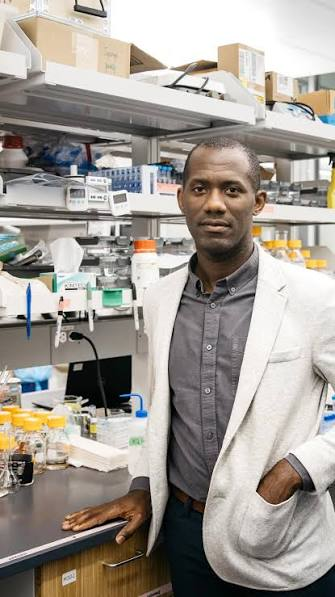
What if the things we call “waste” could become valuable resources—and what if teaching children to question those assumptions could help create a more sustainable future?
In this episode of Parenting for the Future, Petal Modeste speaks with Dr. William Tarpeh, Stanford University chemical engineer, MacArthur Fellow, and founder of the Tarpeh Lab, about his groundbreaking work transforming wastewater into useful resources such as fertilizer, energy, and critical materials.
William explains how his curiosity about water access began as a teenager and ultimately led him to focus on wastewater, particularly the recovery of nitrogen from urine. He takes listeners inside the science behind his research, including technologies that can extract pollutants such as ammonia and nitrate and turn them into useful products. He also shares lessons from projects in Kenya and California that demonstrate how wastewater-derived resources can provide practical and locally relevant solutions.
But this conversation goes beyond science and engineering. William reflects on the role his family, teachers, mentors, students, and community have played throughout his journey. He discusses learning from failure, staying curious through setbacks, and why meaningful innovation is often a collaborative effort rather than an individual achievement.
The conversation also explores what it means to “close the loop”—rethinking waste as an input for another process and moving from a linear approach to resources toward a more circular one. William and Petal consider how parents can nurture these same qualities in children by encouraging them to ask “why,” explore their curiosity, learn from failure, and think about which problems are worth solving.
Ultimately, William offers a vision for a future in which we question what we consider valuable, bring overlooked communities and resources into focus, and empower the next generation to imagine different possibilities.
In this episode, listeners will discover:
- How wastewater can be transformed into useful resources
- Why William chose to focus on wastewater and nitrogen recovery
- How his technologies can turn pollutants into products such as fertilizer
- What his work in Kenya and California has taught him about innovation and impact
- Why failure and experimentation are essential to scientific discovery
- The importance of family, mentors, teachers, and community in nurturing curiosity
- How parents can encourage children to ask questions and become problem-solvers
- What it means to create a more circular, sustainable future
Petal Modeste (01:31)
What if we could take wastewater, the used water from homes and offices and factories that we get from activities like flushing the toilet or taking a shower or doing the laundry.
What if we could take that water and turn it into something useful, like disinfectant or fertilizer? And what if we could do that in a sustainable way so that less wastewater discharges into and harms our environment?
Our guest today, Dr. William Tarpeh, does just that. And his activities have won him a MacArthur Fellowship, or Genius Grant, as it is commonly known, which is awarded to individuals who demonstrate exceptional originality and dedication in their creative pursuits. William is an assistant professor of chemical engineering at Stanford University, a fellow at the Woods Institute for the Environment, and the principal investigator at the Tarpeh Lab. He has a BS in chemical engineering from Stanford University and an MS and PhD in environmental engineering from UC Berkeley. Today, William is here to share his remarkable work with us and why it matters for a healthier, more sustainable future. Welcome, William, to Parenting for the Future. I am so excited to have you here.
Will Tarpeh (02:50)
Thank you for having me. I’m excited to be here.
Petal Modeste (02:52)
So I always like to start these conversations, William, by asking our guests to tell us a little bit more about their backgrounds, including the experiences and the people that influenced them and the values that shaped them. So tell us, tell us a little bit about your upbringing and your family and your life to date.
Will Tarpeh (03:09)
Absolutely. Yeah, I started kind of across on both sides of the Atlantic Ocean. So my mom is from the US. She grew up in New Haven, Connecticut. My dad is from Liberia. And so I was born in Ivory Coast right next to Liberia and my siblings were born either side of the Atlantic. So my oldest brother in Liberia, my sister in Connecticut. And so that to say both of those aspects shaped part of my life and how I viewed the world. I was introduced of course to Western Africa and we moved back to the US in part because of the Liberian Civil War around the turn of the 90s. And then I grew up mainly with my mom here in the US but much of my work still circles back to Sub-Saharan Africa now. so things that I remember growing up as a child, was the youngest of three.
As a kid, I was known for a few things. One, I always had a book, multiple books. Two, I was very, very shy. so adults would often ask me what book I was reading and I would just point to the title because I was like, in my mind, I was like, I’m a kid, I can read, so they must be able to read. so my mom sort of helped me become aware of the social niceties of saying, this is the book I’m reading.
I also was very curious and I love to think about how things are put together, how they’re taken apart. You would find me outside digging for dinosaur bones or figuring out how to turn paint different colors or things like that, do science, home science experiments. I mentioned all those things because those are kind of who I am today. And now as a parent of a two-year-old, I kind of marvel at our personalities are of course, part nature, part nurture, but some of it you can see early on and
Petal Modeste (04:42)
Yeah.
Will Tarpeh (04:43)
make sense 20 or 30 years later. Yeah,
Petal Modeste (04:45)
It’s fascinating. Yeah.
Will Tarpeh (04:46)
yeah. So I think the values that really shaped me, think my mom really impressed upon me that education is something really beautiful because it’s something that no one can really take away from you. It’s a rare thing that once you possess it, there’s like no one can really take away your knowledge. That’s something that always captivated me. I grew up outside of Washington, DC most of my life. And so I spent a lot of time going to some really great public schools and I went to a high school that when US News and World Report started ranking public high schools for whatever reason they decided to start doing that. Mine was number one and so but for me it was
Petal Modeste (05:19)
never.
Will Tarpeh (05:20)
a place I went to it was a place for kids who had passions for science and technology and was a place that I enjoyed but was also a place I was severely severely underrepresented as a black student. And
Petal Modeste (05:30)
Mmm.
Will Tarpeh (05:30)
so that shaped me my mom did a I think an amazing job of kind of telling me who I was and showing me who I was in a way that I felt defined my home life. And so when that would come under attack or people would question my abilities, I sort of was like, I know who I am because my mom has told me who I am. whoever adult or other kid you may be, I don’t know you, so I just don’t believe your assessment of my intelligence. And
Petal Modeste (05:55)
Love it. That’s right.
Will Tarpeh (05:58)
that was something I had, it feels like from age five or six, I was just like, well, I know what I can do.
Petal Modeste (06:02)
Mm-hmm.
Will Tarpeh (06:02)
And
I didn’t question that. Not to say it was easy, but I always had that to come back to. So those are some of the values that shaped my life and never taking for granted the opportunities I had because it was never lost on me that people in my family a generation or two ago didn’t have the same opportunities I’ve had. My mom was the first in her family to go to college. so the education has been an important part, but taking those opportunities very seriously because they’re not as widespread as maybe they should be.
Petal Modeste (06:29)
Yeah,
yeah, I love your mother, by the way. I love it.
Will Tarpeh (06:31)
You
Petal Modeste (06:32)
That’s really important that our kids know from a very young age that they are
Will Tarpeh (06:36)
Okay.
Petal Modeste (06:36)
not defined by others and that they figure out who they are in their own homes. I love that a lot. So
Will Tarpeh (06:41)
Mm-hmm.
Petal Modeste (06:42)
I understand, that you got interested in water in high school. There was
Will Tarpeh (06:46)
Hmph.
Petal Modeste (06:46)
apparently a class you did on globalization. And was it wastewater at that time or just water? Tell me a little bit about that.
Will Tarpeh (06:52)
Yeah,
so it was a class in high school on globalization indeed, and I got interested in just water. First is drinking water and how people had different access to drinking water, especially on, for me, both sides of the Atlantic Ocean and sub-Saharan Africa versus in the US, knowing that even in my own life, I could have easily grown up in West Africa instead of in the US. So I felt very close to my own experience. So I got interested in drinking water first and learned about all these people who I didn’t know doing research about how to make sure people have access to drinking water. And that was a problem and was something that I took for granted as a 16 year old outside of Washington, DC. I turn on a tap and I expect there to be water. I expect there to be water at the temperature of my choosing and just learning about the very real experience that that is a complete luxury in many parts of the world really impressed upon me that I was most interested in solving problems like that. And when I say problems
Petal Modeste (07:43)
No,
Will Tarpeh (07:44)
like that, meant
problems that can really change drastically the course of someone’s life and the course of many people’s lives, millions if not billions of people. So that sort of helped me filter some of the problems that were most interesting to me. I’ve thought of myself then as a budding engineer. I didn’t know what type. I knew I loved science and math and I could spend all day doing science and math. But I also had this drive to work on problems that were impactful. And so put those together and that’s really what I do now and how I got interested in wastewater was it was sort of like I’m a person who loves to go like the path, like the two paths in the wood, I’ll take the one less traveled, right? So for water,
Petal Modeste (08:19)
Right, right.
Will Tarpeh (08:21)
there was a lot of work on water. There wasn’t as much on wastewater, but they’re connected, right? If someone doesn’t have a clean place to go to the bathroom to relieve themselves, it’s likely that their water may, the drinking water may also get polluted. And so a series of discussions like that in my own head and with mentors of mine is what led me to choose within wastewater even, to choose to work, focus on urine and to focus on nitrogen, a series of.
Well, this is an important problem, but it feels understudied. That’s sort of how
I’ve made a career out of the questions that are impactful to me.
Petal Modeste (08:48)
So let’s talk your work now to recover resources from.
wastewater and like you said, you look particularly at urine, you look at nitrogen in urine. According to the EPA, wastewater treatment facilities in the US process approximately 34 billion gallons of wastewater every single day. And maybe it’s more, this is what I found in the research. I can’t even imagine what that number looks like if we even multiply it on a global scale. And we know that not every country has an infrastructure for treating wastewater as well. The wastewater contains, like you said, nitrogen, phosphorus, lots of other chemicals from human waste, from food, from detergents. What happens to wastewater when it is treated in a plant like we have here in the US? What does it become?
Where does it go? And how does it impact our environment?
Will Tarpeh (09:41)
Absolutely, yeah, it’s a fascinating question. And so when we flush the toilet or take a shower, use water in our house, it all gets collected in a pipe and makes its way usually downhill somewhere to a wastewater treatment plant. So if you have a careful eye and you look at the lowest point in your city, that’s probably where the wastewater treatment plant is. What it’s doing is it’s processing all of that waste and a lot of it is household or municipal wastewater, as we call it. It also can put those plants also can process industrial wastewater too. Think if there’s a, I don’t know, like a soda, plant or a semiconductor fabrication plant, it will process those as well. But there three main things that are happening at a wastewater treatment plant. We’re removing big particles, things that float, things that float in water. I
Petal Modeste (10:22)
Yes.
Will Tarpeh (10:23)
to keep it bit sanitized for this audience. But things that
Petal Modeste (10:26)
You
Will Tarpeh (10:26)
float in water, we want to remove those. And then we remove things that are dissolved in water, especially organic material that’s dissolved in water, like carbon-based materials. And then
The third stage of treatment that we call tertiary treatment, that is like everything else. So that might be removing nitrogen, removing phosphorus, adding disinfectant to make sure that the water that goes into the environment is as clean as possible and changes the environment the least possible that it can. It has the minimal effect on the environment. And so
Petal Modeste (10:56)
Okay.
Will Tarpeh (10:57)
those plants have been developed over decades, hundreds of years. And so we’re constantly making them better. And so the stages that I mentioned, like removing the big solids, that’s primary treatment. Removing the dissolved organics, that’s secondary treatment. The advanced
Petal Modeste (11:10)
Okay.
Will Tarpeh (11:10)
or tertiary treatment is removing all the rest. I know the billions of gallons can be hard to wrap your mind around.
One way that I think about it is on average, most Americans, we generate over a hundred gallons of wastewater per day. And a gallon you can think of as like a gallon of milk. Imagine a hundred of those stacked up in your home somewhere. That’s
Petal Modeste (11:27)
Yes. Wow. Yeah.
Will Tarpeh (11:31)
per person. So if you have a family of four, you’re talking four, right? And it’s just, we use a lot of water, our dishwasher, our laundry washer, and a lot of it is hidden from sight. So I think so much
Petal Modeste (11:38)
Yeah.
Will Tarpeh (11:41)
of the work that I do is like, we as engineers, we’ve done a fantastic job of making infrastructure very convenient, and that’s amazing, but it’s like literally hidden from sight. In my field, we have like a quick turn of phrase that we say, flush and forget, right? Because we don’t have to deal with our waste, we
Petal Modeste (11:54)
Mmm. Yeah.
Will Tarpeh (11:57)
don’t.
We have to work to think about it and think about what happens. I’m really glad you asked that question and hopefully
Petal Modeste (12:02)
Yeah.
Will Tarpeh (12:02)
that gives people an insight into what happens after you flush the toilet.
Petal Modeste (12:05)
Yeah.
Now you have said that whereas most people think of wastewater as a nuisance, again, it’s invisible, we don’t think about it or something to get rid of, your lab asks, what can we mine from it? M-I-N-E. And you compared what you do in your lab and with wastewater to what oil refineries do with oil. So now that you’ve explained these three stages, know, the sort of the processes in the treatment plants.
What are some of the most useful things we can mine from wastewater?
Will Tarpeh (12:38)
Absolutely. Yeah, so we do indeed think of wastewaters as mines, right? And the beautiful part is, if you think about, let’s turn what I said about how much water we generate on its head. If that is a good thing, then we have a lot to mine from, right? We don’t have to go and dig up for chemical species. It’s everywhere there’s a population center, you have some raw material, right?
Petal Modeste (12:57)
Right. Right.
Will Tarpeh (12:58)
So things that are valuable in water, one that we’ve been working on as a field for decades is energy, right? That carbon that we want to turn into something else, right?
We can produce energy that way. So energy is one of the things that we can recover from wastewater. We can make actually like natural gas from wastewater.
Petal Modeste (13:15)
Wow.
Will Tarpeh (13:16)
We can also make materials like people are making bricks, which is kind of wild, but bricks from wastewater. You can precipitate out carbonate species and make actual bricks. And their nutrients, so nitrogen, phosphorus, those are the same nutrients that are in fertilizers. They’re also in our wastewater, which makes sense if you take a step back. If
Petal Modeste (13:30)
Right. Mm. Mm-hmm.
Will Tarpeh (13:34)
you’ve ever been to a farm or seen a bag of fertilizer,
you have seen or thought about like manure, like animal manure being used. And animals and humans, we sort of produce similar waste streams, right? So it makes sense. So those nutrients can be used for fertilizers. And then
Petal Modeste (13:47)
Mm-hmm.
Will Tarpeh (13:48)
there are also trace compounds. So there’s lithium, there’s gold in wastewater. think some of the medicines we take have lithium, little bits of lithium in them, right? Little bits of metals. And so then we can start to mine things. And what happens is the more valuable you get in terms of the product, the more that process can begin to pay for itself or recoup some of the costs. And so
Petal Modeste (14:06)
Mmm.
Will Tarpeh (14:07)
that’s where we start to enter and say, what can we mine from wastewater? And our sort of framework is take a wastewater, take a pollutant you want to get rid of because it will damage the environment, and then make
Petal Modeste (14:14)
Right. Right.
Will Tarpeh (14:16)
it into a product that people will buy.
Petal Modeste (14:18)
Yeah, I love that. So your resource recovery technologies or the way you mine wastewater or refine wastewater require minimal infrastructure and energy and offer opportunities, like you’re saying, for sustainably sourcing agricultural nutrients, industrial metals in a range of contexts. So I want to kind of better understand these technologies that you’ve invented or that you put to use. First, you have developed something that’s
It’s electrochemical based. It’s a process to isolate chemicals from wastewater. You use electricity, I understand, to drive ions through selective filters so that you can separate chemicals, many of which are pollutants, like you said, but you can separate them one from another and then convert them into products. Using one of the chemicals in wastewater, can you walk us through how you do this? Give us an example of what that would look like in your real work.
Will Tarpeh (15:13)
Absolutely, and you described it beautifully, Piddle. So we are taking nitrogen out of wastewater. so nitrogen is one of these compounds that is a nutrient. And I like to think about, to get a bit philosophical, if we can.
Like what we call waste is very subjective. it’s a social contract. It’s something we all agree on, right? there’s an obvious way to think about this is like, now we compost and we recycle and we ask each other, how do we know what goes where? That’s like a great example of something that you know is a social contract, not in a bad way, but it’s just like, we all have to figure out the rules, right? They’re mutually agreed upon rules. If we apply that to water, right?
We’ve decided that the water that comes out of a wastewater treatment plant should be wasted or should be treated and then put into the environment. We’ve decided there’s not much valuable to recover from it. But if we think about like a chemical species like ammonia, which contains nitrogen, it is a compound that’s a component of fertilizer that literally feeds half the world. Okay, so this is a chemical engineering process that has led to half the world being alive, which is amazing.
But, we call it a commodity. We call it a product in that sense. But the same compound, when it’s in water at a wastewater treatment plant, we call it a pollutant. Nothing has changed about the bonds between nitrogen and hydrogen, three hydrogen atoms, and ammonia. Just its location has changed. And we’ve decided it’s a waste versus a product. So then my job, we take that as a thesis, then it means if I resituate ammonia, I can turn it into a product from a pollutant. And so that’s how we develop this process. We have ammonia that’s in wastewater.
And we use electricity to move ammonia’s cousin, you will, ammonium, which is a positively charged version. And so have a negatively charged piece of metal that pulls on positively charged ions, just opposites attract. And then what’s cool is that we can change how acidic or basic the water is using the electricity as a side effect. And that changes ammonium, the positive form, to a neutral form. That neutral form we can then separate out because it basically boils, it’s volatile, it becomes a gas.
so we use two selectivity tests. One, it’s charged. Two, it’s gaseous. And we have a way, just by changing pH, to connect to those two. So ammonium is charged, ammonia is gaseous, and we can select just ammonia out of any wastewater. So we’ve tried this on over a dozen wastewaters, and it works beautifully. It’s very selective, and it’s two selective
Petal Modeste (17:35)
now.
Will Tarpeh (17:37)
filters that allow us to do that.
Petal Modeste (17:39)
That’s fascinating. I mean, I’m not a scientist by any stretch, Will, but I mean, I’m telling you right now, it’s riveting.
Okay, then leveraging a process called electro catalysis, which I believe involves reactions driving reactions driven by electricity, you have developed an electro catalyst in a box system or ECAB that can
Will Tarpeh (18:01)
Mm-hmm.
Petal Modeste (18:02)
recover ammonia from wastewater and turn it into useful products on site. So different from stripping the ammonia as you just described. Tell us a little bit about how ECAB works and given that ammonia is a primary ingredient in fertilizer, as you pointed out, why is this technology so impactful compared to conventional approaches such as the stripping?
Will Tarpeh (18:27)
Yeah.
Petal Modeste (18:27)
that just removes the nitrogen from wastewater.
Will Tarpeh (18:30)
Absolutely. this, our electro catalyst in a box, as we call it, it’s important that it developed from electrochemical stripping. We came up with electrochemical stripping first, and that was just getting ammonia out of wastewater. We’re not changing its form necessarily. We’re saying there’s ammonia and it’s a needle in a haystack. I want just the needle over and over. I’m just going to get that ammonia out. What electro catalyst in a box does is it says, let’s take another form of nitrogen. That’s also a pollutant, nitrate. And nitrate is one of the most common violations for water in the US. So if there’s something that is causing fines, it’s usually nitrate, whether it’s in wells,
Petal Modeste (19:08)
Okay.
Will Tarpeh (19:08)
and it can cause cancer, it can cause several issues, especially for very young children and infants. And so it’s a pollutant that we need to remove. And we said, what if we could turn nitrate into ammonia? And if we do that, then we already have a way to get the ammonia out of solution. That’s electrochemical stripping. So we’re adding the stage.
Like you said, the reaction part where nitrate gets turned into ammonia. Now, what we did for electro catalyst in a box, the analogy I like to make is like if you’re making loose leaf tea, okay, if you’re making loose leaf tea, you put in, you have some type of strainer or a colander or something that keeps the tea leaves in so that you can remove them, but after they’ve steeped, right? So the tea leaves need to come into contact with the water, but you need a way to remove just the tea leaves later. Same thing, but instead of tea leaves, we have a catalyst, okay? And that catalyst is just a chemical compound that dissolves in the water.
And so what that allows us to do, that’s what we mean in a box. So that catalyst is trapped in a box, but we deliver nitrate to it from wastewater. And then
Petal Modeste (20:03)
Mm-hmm.
Will Tarpeh (20:03)
we take ammonia away from the catalyst and deliver that to a product chamber. So what we’re doing is basically extracting just what we want from the wastewater, allowing it to react and form ammonia, and then extracting that ammonia as well. The reason that is so interesting is because when we think about the whole nitrogen cycle, humans have really skewed it. We’ve thrown it out of whack.
So one way to think about that, like we do often with cycles.
Petal Modeste (20:27)
huh.
Will Tarpeh (20:28)
So the carbon cycle is one that many of us are used to thinking about. think, OK, yeah, greenhouse gas emissions, we need net negative carbon technologies. A similar story can be said for net negative nitrogen technologies as well, because in fact, we have doubled how much nitrogen is in the environment relative to the natural amount of nitrogen. And a lot of that is from our wastewater.
Petal Modeste (20:50)
Mmm. Yeah.
Will Tarpeh (20:52)
from our wastewater, goes into the environment. So what we’re doing is sort of closing the loop on that broken cycle and saying, let’s just turn nitrate, a common pollutant, into ammonia, one of the most common products, and then we
Petal Modeste (21:02)
Mm-hmm.
Will Tarpeh (21:03)
can recycle it on site. So this could be applied at places like farms, places like where livestock are raised, and even at wastewater treatment plants where nitrate is formed, but we can make ammonia and then use it potentially on site, use it elsewhere as well.
Petal Modeste (21:16)
Wow, you’re also developing other technologies, something called ligand exchange adsorbents, which seem to be materials that bind molecules to their surface. Tell us a little bit about that. How do these work and which chemicals or compounds in wastewater are targeted using this technology?
Will Tarpeh (21:35)
Right. So one of the biggest challenges in the wastewater refining area is selectivity. if there are dozens of different chemicals swimming in the water, so to speak, how do I just select one out? And that’s what I alluded to with the needle in a haystack analogy. And so what these, what these ligand exchangers allow us to do is they allow us to expand what’s been done already. So if we have like a selective filter, another analogy here, you can think of as like a Brita filter or like a, some type of filter in your refrigerator or something in your filtered water bottle. What that filter is, if you open that filter up, like I did when I was a kid, because I was curious and got into things, okay? But if you open it up, you’ll see a bunch of little like rock looking particles. And those particles are called adsorbent beads, because they adsorb pollutants from the water and they clean it up for you. We designed those, but they’re highly selective. Rather than just absorbing any pollutant, they absorb just one pollutant. So it could be ammonia, we’ve developed those.
We’re now developing these for metals as well. So lithium, nickel, cobalt. These transition metals are critical materials, you may have heard, and they’re called critical because they are critical to our clean energy transition, right? They’re highly relevant to energy, but there’s not enough of them to go around. So we can take waste streams like from battery manufacturing or from environmental brines or from other wastewaters and get just one element out at a time and then use that to produce batteries again from scratch.
Petal Modeste (22:52)
how does recovering resources from things like old batteries fit into your overall mission of sustainability? So do you kind of essentially see all of these waste to resource innovations sort of connected or do you see a future where they are super interconnected?
Will Tarpeh (23:09)
Yes, I absolutely do. think the future that I envision, this is far off maybe toward the end of my career, we’re talking, I’m 35, so maybe 30 years from now, where the concept of wastewater is pretty obsolete. And I would love it if my daughter, when she’s my age, and we talk, she says, it’s kind of weird that you guys used to like slush
Petal Modeste (23:27)
Yeah.
Will Tarpeh (23:28)
water, like add clean drinking water to your waste.
Petal Modeste (23:32)
Yes.
Will Tarpeh (23:33)
I would love that if that concepts were obsolete, because that would mean that we’re closing the loop as much as possible. We’re reusing things as much as we can because we have to, right? In terms of like sustaining
Petal Modeste (23:42)
Yeah, yeah.
Will Tarpeh (23:44)
the environment, in terms of a definition of sustainability, in terms of like the seventh generation principle, right? How can we ensure that the world is intact and beautiful and thriving seven generations from now, let alone the one generation I’m talking about with my daughter?
Petal Modeste (23:58)
Mm-hmm.
Will Tarpeh (23:59)
So yeah, to these are all connected. We think of them as very modular, like kind of Lego blocks. You can put them together. If you have a wastewater that has lithium and nickel and cobalt, I put one membrane here, another here, another here, and together we separate out each one. So we try to develop them in ways where even the reactors look very similar. If I walked you through my lab and said, which reactor goes with which element, my goal would be for you to not be able to tell, because we should
Petal Modeste (24:24)
Mmm.
Will Tarpeh (24:25)
be able to just mix and match them and say,
you want lithium? I got you. We’ll put this together and that’ll do lithium. I’ll tweak it a little bit if you want cobalt. I’ve got a material if you want ammonia or phosphate. That’s the goal
Petal Modeste (24:35)
Thank you.
Will Tarpeh (24:35)
for me, that these have to be interconnected to realize the whole vision.
Petal Modeste (24:39)
Yeah. So you’re currently working, obviously, to implement your technologies at scale. And I understand that you did a pilot project in Kenya where you produced urine-derived fertilizer at lower cost than synthetic fertilizer. Tell us a little bit about that experience and what would you say surprised you most about it?
Will Tarpeh (24:58)
so when I was a PhD student, I spent parts of three summers in Kenya outside of Nairobi. And I worked with a company called Sanergy and they build clean toilets, very clean toilets in informal settlements where the alternatives are pit latrines, which are basically holes in the ground with maybe a roof of some sort, or people are just defecating in the open because they have no other recourse. And so Sanergy happened to be using toilets that separate urine from feces without getting too graphic, the reason they do that is because most techniques to make value from feces require it to be as dry as possible. And so just by having like a squat plate or like a divider in your toilet, you can separate urine and feces. So they had all this urine generated and I was kind of a guy, random guy who said, I would love to treat that urine and make something valuable of it. How does that sound to you? And they said, sure, come on over. And
Petal Modeste (25:48)
Yes!
Will Tarpeh (25:50)
so.
What we did is we used actually some commercial resins like these Brita filter beads again to recover and remove ammonium from real urine that we collected in Kenya. And so I a series of tests for several weeks to show that this was doable on a toilet level scale and also at a more centralized facility. And just by doing some quick cost analysis, we were able to produce, like you mentioned, the fertilizer we made from urine was much cheaper than fertilizer that you could buy on a per nitrogen basis. And that’s because now we get into the societal part of it in Kenya, as is the case in much of sub-Saharan Africa, there very few facilities that produce fertilizer. So that means most fertilizer is imported. When things are imported, that means there can be tariffs and that means people can charge more and more and more. So the value of our urine derived fertilizer, and this really opened my eyes at age of like 25, 26, I’m like, this fertilizer is so cool because it’s urine derived.
The customers are like, this fertilizer is so cool because it’s cheap and it’s locally made. That’s what I care about. And so it allowed me to think, how do I expand my definition of what is a useful product to meet customers where they’re at? I think it’s useful because it’s from wastewater. They think it’s useful because it’s locally produced. And that’s what allowed us to have the aligned incentives to get that,
making a cost-effective fertilizer.
Petal Modeste (27:07)
Again, I could see this being used in so many places and just shifting the paradigm for farmers and for people in agriculture, in food service who raise animals.
You could just see that this can have really positive and powerful impact on their production rates, their costs. Okay.
I’m over here now thinking about all of it. You’re also, I think, using the ECAB system in some California farms. So right where you are and you’re testing to see how effective it can be. If your tests prove successful, how will the farms and the farmers benefit?
Will Tarpeh (27:48)
Yeah, we’re really excited about this. This has been a couple of farms that are less than an hour and a half away from where I’m sitting here at Stanford. And so that local impact is also really important. So we’ve done some interesting kind of demo days where we’ve shown the technology to farmers and gotten their input. And not just to say like, how excited are you about this, but like, what can we do better? Is this addressing a need that you all actually have? And there has been general excitement about
taking the nitrate from the runoff, especially because there may be regulations coming about how to manage nitrogen on farms in California. And so they’re thinking of it as a risk-proofing, a future-proofing solution, and one that, by the way, can save them some money because we can just produce fertilizers on site. So that type of impact allows farms to be, of course, regulatorily compliant, but also really push the envelope. We often think here in California of pushing the envelope of environmental.
and sustainability efforts, right? If we show that it can be done in California, then maybe other states will pick it up and other regions will pick it up. And we sort of kind of have that responsibility because we have such a large economy, right? California has such a large economy. It’s like, if we can test it
Petal Modeste (28:51)
What is it? Seventh?
Will Tarpeh (28:52)
out here.
Petal Modeste (28:53)
Yeah. Seventh in the world or something? It’s really… Yeah. Hey, no!
Will Tarpeh (28:55)
Yeah, which is just mind boggling, but it means that we can reach scale quickly if we are really strategic. so that’s in collaboration with the US Department of Agriculture scientists, some other folks here at Stanford. And it’s really a case of very interdisciplinary work. Let me be very, very clear. I don’t know that much about soil or about water when it’s on a farm. And so I need collaborators to help me understand that and to make sure I don’t sound like an idiot when it comes to it.
But I learned so much from them is what I’m getting at. So this is a collaboration of PhD students, professors, really just focused on impact. And this has been work funded by the Woods Institute for the Environment and a lot of things at Stanford that make us able to do work that we think will be impactful, even if it’s not, I would say, in addition to being academically interesting, I guess. So we
Petal Modeste (29:42)
Yeah.
Will Tarpeh (29:42)
want to see where the research meets the impact. And that’s what’s really exciting to me.
Petal Modeste (29:46)
Yeah, I totally appreciate that. So innovation often comes with setbacks, Will, and I’m interested in understanding what keeps you going during those inevitable rough patches in a long research journey. I mean, this is what you do. Give us a sense of what keeps you optimistic, what keeps you going, what makes you get up if you fall. I’m interested in that.
Will Tarpeh (30:08)
I always tell my PhD students I mentor about 10 PhD students in my group at any given time and Setbacks and failures is something we talk about all the time because they happen all the time We think we know what’s gonna happen. We end up being wrong And for me, I don’t know another way for effective learning to take place And this is something we’ve talked about a lot. It’s like because sometimes it may feel
Can you tell me which experiment to run that will be the best or will save the most time? And sometimes I can’t. Sometimes I’m like, oh, I think you should do this, not that. And sometimes I can’t. sometimes we just have to learn from doing. I say often to my students, if we took out the learning part, a PhD could probably be done in two years. Like if you knew exactly what to do, but it takes five. So that tells us that like the learning part, learning is inherently an inefficient process, right? is how I think about it. So the things I’ve learned, always think of every experiment can teach me something, whether it was like I need to design a better experiment or, I hadn’t thought about that factor or all these things. These are complex experiments. Some of them take days to run, right? I’m often a like, you want to think about it absolutely. You want to try your best, but you got to go into it and just do it, right? It’s you have to get your hands wet or dirty, however you want to think about it. For me personally, what keeps me going is I’m genuinely excited about this work. I think it is like such a gift that I get to wake up every day and do work that I think is exciting. And that I’ve always
Petal Modeste (31:29)
Yeah.
Will Tarpeh (31:30)
said being a professor for seven, seven and a half years or so, it’s like kind of wild to me that if I can like think of an idea along with my students and write about it and convince someone to give me money to do it, I can just
Petal Modeste (31:41)
You
Will Tarpeh (31:42)
like.
And each of those steps has like failure rates, of course, right? But it means
Petal Modeste (31:45)
Yes.
Will Tarpeh (31:46)
like, I can literally just think of wild ideas and do them, right? And like, and that’s, I just try never to take that for granted. And I think some of it harkens back to like, my upbringing and like knowing that it wasn’t like a guarantee in any way in my life, being born where I was and to the family I was and having to overcome some of the obstacles of being underrepresented that I would end up here sitting in my office here at Stanford. to me, it’s like, I love it. It’s exciting.
But when pressure comes or failure feels imminent, say, and my students kind of laugh at me because I have these like aphorisms I say all the time. I literally said like, what a gift, what a day to be alive that I just get to do this. And
Petal Modeste (32:22)
Yes.
Will Tarpeh (32:23)
like, I think of all the people who had to work so hard for me to be able to do this. And it just, it’s, it’s joy. What I always come back to is the joy of doing it, whether it’s the joy of the eureka moment or the joy of trying really hard and waiting for the eureka moment or the joy of working with my students or talking with one of my colleagues.
Or even thinking back to like, was a PhD student not so long ago, but it’s like, I developed this stripping technology when I was a PhD student. It was me, some whiteboard and a lot of years of trying to make it work. Okay. And I thought it should work for a long time. And we had this kind of funny moment. My advisor came into the lab when I was at Berkeley and I often would show her results outside of the lab or show her photos in lab, but she came into the lab because she had another meeting.
And she didn’t have gloves on. I always had gloves on when I was doing my system. And she just took out a membrane, like this selective filter, think a piece of paper, and she sort of took it like it was two sheets, and she went like this because she had the dexterity with bare hands. And
Petal Modeste (33:23)
without the gloves, yeah.
Will Tarpeh (33:24)
I was aghast. I went, and she went, what? Well, I said, I didn’t know it had two sheets because…
I always had gloves on and like, you know, if you have like winter gloves on and you’re trying to like do it
Petal Modeste (33:38)
Right.
Will Tarpeh (33:39)
and it turns out one sheet was a protective plastic barrier and that’s why my experiments hadn’t worked for about eight months. And so it was like Eureka
Petal Modeste (33:45)
my God.
Will Tarpeh (33:47)
and like, my gosh, I’m so embarrassed. But then
Petal Modeste (33:49)
Yeah.
Will Tarpeh (33:50)
the next day I did the experiment and it worked and I was like, wow, what a moment that I’m so
Petal Modeste (33:54)
Yeah.
Will Tarpeh (33:54)
Glad my advisor came and did this. And sure, it’s like, could I have figured that out earlier? Should I have maybe I could beat myself up about it. But I was like.
Well, I had an idea and it does work. I just had to keep going and sometimes it’s serendipitous. So I just leave myself open to the serendipity of that type of moment. Who are you going to talk…
Petal Modeste (34:09)
Yeah.
Will Tarpeh (34:10)
to? It’s like, I have just the solution for that. I just
Petal Modeste (34:12)
Mm-hmm.
Will Tarpeh (34:13)
Try to remain optimistic and think like it’s truly a privilege to get to do what I do every day. And like many people, when they find the thing they love, it feels like work sometimes, but often it just feels like joy.
Petal Modeste (34:24)
Yeah, I mean, you said so many important things in that answer for us parents, for people who have children in their lives and for us as adults. remember a very early episode on the podcast. I had a wonderful author. She wrote a book called The Gift of Failure.
You know, obviously very similar philosophy that we don’t learn actually as well. If everything goes smoothly for us. Really do, there’s so much learning in setbacks and in quote unquote failure. But also I think what I really loved about your answer Will is just going all the way back to childhood and to curiosity.
Will Tarpeh (34:58)
Hm.
Petal Modeste (34:59)
that sense that if we can foster in our children a love of discovery, if we don’t,
Will Tarpeh (35:04)
Yes.
Petal Modeste (35:05)
sort of stand in their way and, you know, hold them back all the time because we worry that maybe they’ll get hurt or, mean, obviously I’m not saying.
You know, they can go skydiving at six, but,
Will Tarpeh (35:14)
Right.
Petal Modeste (35:14)
you know, I think to nurture that sense of curiosity and possibility and exploration
Will Tarpeh (35:20)
Hmm.
Petal Modeste (35:21)
Is so important to developing a mindset that says, it’s okay if I fail, who cares? This is joyous.
Will Tarpeh (35:26)
Thank you.
Petal Modeste (35:28)
I’m obviously going to find something at the end of it. I just want to point out to you that all of that was in your answer. And I
Will Tarpeh (35:34)
Mm.
Petal Modeste (35:35)
think it’s very instructive and a great reminder for all of us parents. You also…talked about your community in your answer. You know, why it’s so important to have a supportive community. And actually, I think when you received your MacArthur Fellowship, the award, you did see that the award was a testament to your family, to your community, your postdocs, your mentors, your colleagues. Why is having a supportive community so crucial in research and indeed in any worthwhile endeavor?
Will Tarpeh (36:09)
Yeah, I’m so glad you brought this up. To me this is such an important aspect of how I approach the world and at times actually in academia can seem it’s kind of like a square peg in a circular hole sometimes because I think academia and the many many professions can see they we tend to prize individual achievement and accolades and we say like that’s a brilliant person or that’s a genius right and
Petal Modeste (36:28)
Mmm.
Will Tarpeh (36:29)
to me it’s so easy for me to see all the people who have
put something into me that I’ve needed for some part of the journey. So for me, in terms of my community, I think of the values instilled in me from my parents, my siblings, my early grade school teachers who let me do weird projects because I was bored. And they were like, sure, kid, do that, do that. Or they
Petal Modeste (36:49)
You
Will Tarpeh (36:49)
would say, you seem really interested in math. Here’s a math gate. And they just, they stoked that fire of curiosity until I could feel like I could hold it for myself. And they allowed me to explore.
To the people who today make that possible from my students and postdocs who I work with every day to our group administrator who like balances our budgets and makes sure we don’t run out of money. I have a communal aspect on life because that’s how I was raised I think. And I just think the beautiful part about community is I really think it like multiplies the exciting times because when I found out this news, once I could tell people everyone was very excited.
Petal Modeste (37:23)
Yeah.
Will Tarpeh (37:25)
And it gets you through the harder times, right?
Petal Modeste (37:27)
Yes.
Will Tarpeh (37:28)
I don’t feel like I can do it or when I’m doubting myself, it’s usually other people’s voices, either like physically in person or over the phone or in my mind, but I’m quoting someone else, you have other people’s voices in your head, right? In terms of like remembering what my mom has said about me or what my teachers have said. Those are the things that have carried me, right? Like when it’s like, I can’t solve this problem, it’s like.
I know that if I’m patient enough, I can find a solution or I can find help. These types of mantras that I feel like I’ve learned throughout my life, like just like, there’s nothing you can’t do with support and resources, right? Just the sky is the limit. they seem very cheesy at times, but they really do help in the harder moments of life. Yeah.
Petal Modeste (38:08)
Yeah, I couldn’t agree with you more. You know, on this podcast, our goal is to give all who parent a new lens through which to understand the forces that are shaping the future, as well as cutting edge parenting tools, resources, all of which they can leverage as they raise the next generation of hopefully purposeful people. But none of our children will have a real future if we don’t slow environmental degradation, if we don’t find sustainable ways to… to ease the strain on our very finite resources, like water.
Will Tarpeh (38:37)
Thank
Petal Modeste (38:38)
there is therefore no more crucial time in my mind for re-imagining how we treat wastewater and in fact all waste. So this is why I was so interested in talking to you. I was so pleased to see your work rewarded in this way because I just think you are working on things that really can change the future for the better for all of our children. You talked about your daughter…
Will Tarpeh (39:00)
Mm-hmm.
Petal Modeste (39:01)
Being two. She’s very young. I have a 19 year old and a nine year old. The future is theirs. We’ll be gone. so really, really working to solve these issues to make our planet sustainable is so crucial. You have said that one goal with your work is to close the loop, to create a closed loop. And you kind of started talking about it when you said you hope that…
You’re basically out of business by the time your daughter is 30 or so. But tell us what that means almost from a scientific perspective to create a closed loop in terms of what you’re doing with wastewater.
Will Tarpeh (39:36)
Right. one of the classes I teach right now is our introduction to chemical engineering class. And we view a lot of things as like you draw a box around something, whether it’s a reactor or a factory or a city or a farm. And you say, okay, what goes in and what comes out? Right. And so we draw arrows as lines. say in is this out is this, how this is how much carbon, how much nitrogen. And so in that picture, in my mind, if you imagine a box and an arrow in and arrow out, what I’m doing is taking the out and bending it to another in.
That’s like all my work is doing, or it’s taking that out and plugging it into a different in for a different process. Everything we do is trying to find a second life, if you will, for what one process’s waste is, can be the input for another process. I love this idea and it’s so captivating to me because it seems quite new in some ways, but I think it’s like also quite old, like in like biology or in nature, right?
Petal Modeste (40:27)
Mm-hmm.
Will Tarpeh (40:27)
Any organism’s waste, it sounds gross, but is like the input for another organism. I think
Petal Modeste (40:32)
Yeah.
Will Tarpeh (40:32)
In many ways, like nature works in cycles, the water cycle, the carbon cycle, right? And I think kids are so wonderful because they understand this so intuitively, right? I feel like when I talk young kids, older than my daughter, but they’re like, yeah, things just go in circles, right? They go in cycles,
Petal Modeste (40:45)
Mmm.
Will Tarpeh (40:45)
right? And that’s very intuitive to many of us, but then somewhere along the way we learn to think in lines rather than in circles. And so in many ways, what I feel like is we’re returning back in some ways to thinking in a more circular fashion. Another way to say it is what looks like lines when you keep zooming out becomes a circle, right? Because
Petal Modeste (41:05)
Yeah.
Will Tarpeh (41:06)
if you zoom out and you’re just like going around the clock face from two to three and three to four, if you zoom out, it is a circle. You just have to be aware of it. And when you zoom out, you start to see new insights that you wouldn’t see if you were just looking at your box.
Petal Modeste (41:19)
Hmm, that is so true. Huh. So based on your journey and many of the lessons that you’ve learned from your parents, your mentors, your teachers, you have shared with us throughout this conversation, I would like you to help us think about how do we nurture the next generation of problem solvers? You just said that a lot of the sort of circular… way that we should be thinking about our resources, that that is intuitive to children. So how can we encourage our children to be curious, to be resilient, to find their passion, but really so that they can look at those things, their passions in terms of problem solving or making their unique impact in a way that actually benefits our world.
Will Tarpeh (42:11)
Right, yeah, think two things come to mind. One is, I think children, we all kind of have this funny thing, like stereotype of kids always asking why, right? My daughter’s in that phase. I was like
Petal Modeste (42:22)
God.
Will Tarpeh (42:23)
A prime culprit of that, as my mom tells me this all the time. She’s
Petal Modeste (42:26)
You
Will Tarpeh (42:26)
Like, you just wouldn’t stop asking why. And so eventually, this was the early 90s, she would just take me to the library. She’d just say like, I don’t know,
Petal Modeste (42:34)
Figure it out.
Will Tarpeh (42:35)
Let’s talk to the librarian.
That librarian seems very knowledgeable, but that’s how I got so interested in books. I had a lot of questions. My mom answered them to the best of her ability. And of course, there were ones she could answer, but what she got me interested in is, if I ask a question and someone next to me doesn’t know the answer, I can find it. That’s the undergirding of what she was teaching me. And so I’ve always asked those why questions. And I think the same thing happens with these processes or…kids at an early stage start asking like, well, where does the water go? Why does it do that? Why do we do it that way? and they just keep asking and asking. That curiosity is something we can stoke. And the second thing is I think right now there’s a lot of emphasis on like what skills do our kids need, right? And there are lots of skills that I think kids need to be very effective contributors in every walk of life to society. But I think so much about what problems are we solving and do we teach someone to find a good problem to work on, right? That is at least as important as what skills they have, right? So the students I teach here at Stanford, they’re often really excited about skills. They feel like they need to learn to code and they need to learn how to do chemistry and all these things. And it’s like the skills are very useful, but in many ways the skills can differentiate you. You can be an excellent coder and we all wanna do things to the best of our ability.
But often, in my case, I feel like the problem I work on and how I’ve defined the problem has also distinguished me. And that’s because of the perspective I’ve built. And so that’s a harder thing to measure.
can allow our kids to say, well, what about that? What about that? They build curiosity and then define problems in new ways. Then we can apply those skills in a more positive direction, I think.
Petal Modeste (44:15)
Yeah,
yeah, I agree with you completely. I have lots of conversations with my kids about this. You know, sometimes they’ve seen something on the news or a friend says something or they heard something, you know, in passing and they have questions about it. And sometimes I say, but what does it relate to? You know, one time we were talking about the unhoused because we had traveled somewhere and we saw a lot of, people on the streets and
And I said, well, what’s at the bottom of this? Why are they there? Why do you think they’re not in homes? Let’s talk it through. What ideas do you have about this? And then we keep talking and talking and talking. And finally, I’m like, well, how would you solve So I think there’s a lot of to come out of that. I mean, we do have to be patient sometimes. think that
Will Tarpeh (44:57)
Yes. Yes.
Petal Modeste (45:00)
the why questions could become, my goodness.
Will Tarpeh (45:02)
Yes, yes.
Petal Modeste (45:03)
But thank you, that was a great response. So here’s my last question to you, Will. What future do you hold in your own mind as you do this work every day when you imagine our children, your daughter, 20, 30 years from now? What do you hope defines that future? What its values look like? What the opportunities are for our children? And for our humanity as fellow
Will Tarpeh (45:30)
Mm-hmm.
Petal Modeste (45:31)
travelers on the planet. I want you to describe it for me, that future.
Will Tarpeh (45:35)
Right, think that future I imagine, of course, it has a lot to do with wastewater, and reusing wastewater, but I think the larger future I’m interested in is one that asks the question, what are we deeming less valuable? What, who, where are we deeming less valuable? And how do we turn the spotlight towards those people, those people, those places? So I think.
Like in my work, I could spend all of my time in the lab just working on chemistry, which I love to do. But instead I try to turn the spotlight towards what communities are not being served by our current system and how can we change that. it’s so much about maybe like changing the center of our emphasis. A lot of our emphasis is on whether it’s like cultural, it’s like, Silicon Valley or Wall Street or these places. are lots of places and types of people that are at the center of how we do things.
I’m always interested and I would love a future where we kind of get rid of some of those corners in the same way that we redefine waste. We redefine what’s center stage and what’s backstage, right? Just kind of change how we view things. Because when we do that, I think we start to get to solutions that I’m not sure we could get to otherwise. Another way to say it is like these decentralized solutions we come up with, I love that they work in Kenya and I strongly believe that they could work and make things better here in the US, right? There’s an arrow going both ways there. But if we never explore the ones in Kenya, we might not get to them in the US. I think the future I imagine is one where we’re constantly asking, what if things look different? And what are we deciding is less valuable? And then what if we flip that on its head? So much of innovation, I think, comes to calling out assumptions and switching them around and then coming up with a new solution.
Petal Modeste (47:10)
Yeah.
Well, thank you so much, William, for visiting us with us today, for sharing your work. mean, I think we’re in awe of you and your work, and we’re really thrilled that it has been recognized and rewarded and that you now have the freedom to continue to pursue bold, audacious ideas that will change the world for the better. So thank you for joining us. I hope you know that you’re on the hook to come back.
Visit with us, keep us updated. Sorry.
Will Tarpeh (47:40)
Great. No problem.
Petal Modeste (47:43)
But it was wonderful to have you here. Thank you so much.
Will Tarpeh (47:46)
Thank you, Fedol. It’s been a joy.
Subscribe to the PFTF podcast
The "Parenting for the Future" podcast connects you the experts leading the charge toward a brighter future. Gain fresh perspectives and actionable advice for nurturing future-ready kids.