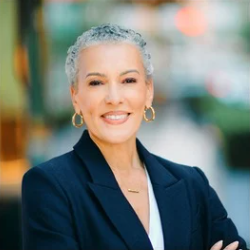
In this eye-opening episode of Parenting for the Future, host Petal Modeste sits down with Dr. Sharon Malone, board-certified OB-GYN, Chief Medical Officer of Alloy Women’s Health, nationally renowned women’s health advocate, and author of Grown Woman Talk: Your Guide to Getting and Staying Healthy. Together, they explore why women in the U.S.—particularly Black women—continue to face alarming health outcomes despite medical advances, and what we can do to change that narrative for ourselves and our daughters.
Drawing from over 30 years of clinical experience and her own family history shaped by segregation and healthcare mistrust, Dr. Malone explains how cultural competency, prevention, and patient advocacy are critical to improving women’s health. She breaks down the “North Star” habits of good health, the importance of building a trusted and integrated medical team, and why understanding family medical history can be life-saving. The conversation also explores interoception (listening to your body), storytelling as a powerful tool in doctor-patient communication, and how chronic stress, weight gain, diabetes, and menopause intersect—especially for women in midlife.
Most importantly, Dr. Malone challenges listeners to move beyond individual responsibility and embrace both “little a” advocacy (personal health habits) and “big A” advocacy (pushing for systemic change, research funding, and policy reform in women’s health). This episode offers practical guidance, honest reflection, and a roadmap for empowering the next generation of women to take ownership of their health with confidence and agency.
In this Episode you will learn about:
- The state of women’s health in the US
- The role of instinct in staying healthy
- QUILT – the way to tell your story to your doctors and medical providers
- How to make a “Family Medical Tree”
- What we can do to advocate for more and broader funding for Research
into Women’s Health
Petal Modeste: Did you know that women in America have the lowest life expectancy of women in the world’s 14 wealthiest countries? That one in 3 of us are obese? That heart disease kills more of us than any other disease? That we are twice as likely than men to suffer from depression or be diagnosed with Alzheimer’s? What if we could change those numbers? Our guest today, Dr. Sharon Malone, is here to explain how, even with a confusing, unreasonably onerous health care system that often puts profits ahead of people, we could change these alarming statistics and teach our daughters to do the same. Dr. Malone is a board certified OBGYN, the Chief Medical Officer of Alloy Women’s Health, a nationally renowned Women’s Health Advocate, and the author of the bestselling book, Grown Woman Talk: Your Guide to Getting and Staying Healthy. She has practiced medicine for over 30 years in Washington, DC. Serving patients from all walks of life backgrounds and perspectives . – From Titans of industry, schoolteachers, members of the military stay-at-home moms, movie stars, congresswoman, and even first ladies. They have all relied on her expertise, wisdom, warmth, and candor. Dr. Malone is mother to three children, and the wife of former attorney, General Eric Holder. She has a BA in In psychology from Harvard University, and an MD from Columbia University’s College of Physicians and Surgeons. Welcome Sharon to Parenting for the Future. We are so honored and excited to have you here today.
Sharon Malone: Well, thank you so much for having me after that introduction. I’m like, Okay, I can leave now right You made me sound better than I think I am.
Petal Modeste: So, Sharon. I always like to start by giving our audience a little bit more insight into the background of our guest, and so I know that you were the youngest of eight children. You were born to parents who grew up in the segregated South, and who, during the great migration, moved to Mobile, Alabama, in search of a better life. Both of your parents worked at the Brookley Air Force base, but you lost your mom to colon cancer when you were only 12 years old, and she was just 57. So, tell us a little more about your mom and in particular, how did her opinion of doctors and the healthcare system impact her health and her untimely passing?
Sharon Malone: Well, you know, this is something I really had to think long and hard about, because when I started thinking about my family and my family history, and I realized how little I knew about the generation before my mother, and just to understand. I never knew any of my grandmothers because they both died young. I don’t think either one of them lived to see 50. And when you’re talking about rural Alabama and to give you some perspective. My mother was born in 1914, so if she were alive she’d be 111. My dad was born in 1893. So, in rural Alabama at the turn of the 20th century there wasn’t a lot of health care for anyone, and particularly if you were a black person and some person of limited means. There just wasn’t a doctor, so people had to learn how to be very self-reliant. I think there was a strong community of women and healers who, you know, knew how to handle most things. But the things that were really serious, that where you really needed a doctor for, they just weren’t available. And the doctors that were there. They were white. And how the Black community interacted with white doctors, it was far less than ideal. So, my mother never grew up with any sort of sense that a doctor was there to do anything for you, except in very, very dire circumstances, and because that was how she was raised. I think that was how she raised us, because even after they came to Mobile, it wasn’t much better. It was still segregated. And so, for people to understand that this history is not oh, so far away that we have to read about it in the history books. This is in just the generation of my family. My oldest brother is almost 89 years old, so to have grown up like she did in rural Alabama, and then to have moved to Mobile, where there was very much intact segregated facilities and lack of access to quality care for black people. It’s not surprising that the health outcomes were so poor, and I am. I know for a fact now that my mother lost her life for a lot of reasons, and part of it is just the reason that one she didn’t know what the signs and symptoms were of colon cancer. Who knows how long she suffered before she actually engaged with a medical doctor, and by the time she did it was too late. And for many of the previous generation and even moving forward, we have to realize that how we interact is very much dependent upon how we were raised, and whether we think that disease and death is something that can be prevented or is just something that will befall us all at some point, and I think we have to do better on the prevention front.
Petal Modeste: Yeah. So, as I mentioned in the introduction, you have practiced medicine for over 30 years in DC. Seeing patients of all stripes. What if anything, and especially given how you just explained what your mother’s experience was, and how we tend to pass on what we have been taught by our parents about interacting with the healthcare system, what if anything, did? At least some of your patients have in common with your mom and how did those commonalities influence you to write this book?
Sharon Malone: I felt like part of my mission has always been to be that person who understands. When you come from my background. You understand some of the hesitancies that people have about engaging. You understand some of the fears, some of the reasons why people are less than forthcoming. I have never had someone that I have seen that once you explain to them why something is important and why you’re telling them to do this. People will be compliant. They will do the things that you ask them to do. But it requires a physician that understands and has some cultural competency, You know something in common with the people that you’re talking. You don’t have to be the same, but you at least have to understand each patient’s station in life. And I think that was what I tried to do. I meet people where they are, and sometimes you know, and I say this a lot, but don’t let the perfect get in the way of the good, and sometimes you have to just understand that. And I think that that is what’s lacking in medicine today. And unfortunately, I don’t see that getting better, simply because the nature of medicine has changed for everyone. The pace is quicker, and you just don’t have enough time to establish the personal ties that I did over 30 years with seeing the same people for 30 years
Petal Modeste: Yeah, you know, you rightly point this out in the book as well that you know, despite all these amazing medical advances, that are available today, if you’re poor, if you’re a person of color, if you’re elderly, if you live in a rural area, or of course, if you’re female, your health experience could be very different from people who are not like you. But even if you’re well off, even if you’re well educated to your point, we now have to navigate a medical landscape that has changed so much that this long term, doctor-patient relationship that you would have enjoyed with your patients is a thing of the past. We now have to deal with managed care, where insurance companies and corporate hospital systems have become the norm. And this means that our doctors have no control of their time, their patients, even their staffs, and they are under a lot of pressure to be to be profitable. So where does that leave us? I think you start the book talking about some of the steps that we need to take to set ourselves up to get the healthcare we need and deserve. You say it starts with some habits that constitute the north star of good health. So, what are those? And then tell us objectively from that list, what do we do next? Even if we have now developed those North Star habits.
Sharon Malone: Right, I think that there are certain basics of just of good health, regardless of whether we’re talking about prevention of cardiac disease, cardiovascular disease, cancer just about any of the chronic diseases that would that befall us as we age. It starts with the basics, you know, getting a good night’s sleep, you know, minimize the stress in your life. Exercise regularly, get a good, you know. Try to get as best you can a good healthy diet and manage the things that you have don’t ignore them, if you, you know, we say, and it goes without saying, don’t smoke and minimize alcohol. And you know again, we’re not going to reinstitute prohibition here, but I think that you know there was this perception that oh, well, alcohol is good. Red wine is good. It’s going to decrease your risk of cardiac disease. It doesn’t. Minimize it when you know, and if you can cut it back, then just understand that you’re not necessarily doing yourself any good by drinking. And you know, and stress is a big factor, you know, minimizing. When I say, minimize the stress in your life. How about. Don’t create stress in your life. There’s enough that life is going to bring you certainly unasked for. But once you realize that something is stressful and be it a work environment. You know, personal relationships, anything that is causing you stress that you have some control over, try to minimize that. But for the things that you cannot control, then at the very least, try to come up with better coping mechanisms. because one thing that I think that we do as women generally, and Black women specifically, is that we internalize a lot of that stress. And we take it and we take it. And we take it. And it takes a huge toll, not just on our psychological and mental health, but on our physical health as well. And I think that we walk around living this myth of the superwoman. As long as I’m keeping all of these balls in the air
Petal Modeste: Yeah.
Sharon: Then everything is gonna be okay. And I’m here to tell you. No, it’s not. And you know, I think that we have to be better at reaching out for help, knowing when to engage. You know mental health professionals when necessary. These are the things that are the basic tenants of good health generally, and I think that that’s the baseline that we start from. But we have to understand that there are certain things that we don’t have control over. There are two parts of my book that I constantly emphasize. That’s what I call the little a advocacy which are all the things you can do. Get a good night’s sleep, rest, do all that. But then there’s the big a advocacy, because guess what you don’t have control over. You don’t have necessarily control over the quality of your health care, because that may be determined by where you live. You don’t have control over the air you breathe, or the place you live, or what’s in your soil, or what you have access to these are things that are societal issues, policy issues, legislative issues that need to be addressed. So, we have to understand that those go hand in hand, you do what you can do. And then we collectively work on the bigger issues that we call the social determinants of health, which is everything outside the individual that adversely affects health.
Petal Modeste: The “big A” things.
Sharon: Exactly.
Petal: Well, let’s continue with some of the little A, because you also tell us that if we can have these basic habits in place, and if we’re not sure we should actually make an inventory of what we consistently do, health wise and compare it, and see where we can make changes. But then we need to start building our own medical team.
Sharon: Right
Petal: What are the most important questions we should be asking or factors we should consider when choosing a primary doctor?
Sharon Malone: You know, people choose doctors the way. Probably you would choose a hairdresser, or which grocery store to go to you. Ask your friends, who do you go to? Well, what do you? You know? What are you looking for? And it’s usually based on a lot of just very subjective factors. Oh, go to this person. They’re nice, or, you know, things that aren’t really as pertinent to whether or not you’re going to get good care. And one of the things that I tell people all the time is that access to good care is important, and you can do a little bit of research, and I tell you how to look up your doctor. You can find whether or not. This doctor has, you know, a million lawsuits pending, or you can find out where did this doctor go to Med school now? Does it matter so much? Maybe, maybe not. It’s a data point, you know. Is your doctor board certified? Does your doctor have hospital privileges, is this, doctor on your insurance plan? That’s important. Because, you know, we pay enough for our health care and health care insurance in this country, and you have to realize what the ramifications are for going outside your insurance. And if you can afford that and somebody you absolutely want to see. That’s fine. But don’t think that that’s necessarily going to give you better care. You need an integrated team of doctors. And sometimes that means doctors who typically work together. So, I always say, learn to be a good consumer, too. Look and see who are my, who are the doctors that I can go to within my insurance plan. Let’s see who’s there. Do a little bit of research, and then, when you are ready to branch out, and you need say, for instance, you need a cardiologist, or you need an endocrinologist, and then it is very helpful to have whoever is where your primary home is (and I say, establish a good medical home, because that’s going to be the person, your touch point) for going to. Others have them refer doctors that they work with, because that’s always going to be more efficient communication between doctors rather than you, just randomly picking someone here and there because there is not really a lot of integration with medical doctors unless they are within the same medical system, and by that I mean, you know, practices are now, you know, they’re owned by either the hospitals or private equity groups buy them. And so, if you have one that goes to this place and another, there’s no communication. And so that’s why I said, it’s helpful sometimes to just know the logistics and know how your medical system works, because that is probably as important in terms of having integrated care and integrated caregivers than where any individual doctor went to medical school.
Petal Modeste: What role does instinct play in selecting a doctor?
Sharon Malone: I think instinct is very important. You know there’s this whole feeling about trust your gut, and there’s a lot to be said about that. You know when you are talking to someone, whether you’re in a social situation, a work situation, or even a doctor-patient situation. You know how that person makes you feel. And if you feel intimidated or shut down, or you feel as if your concerns are minimized, you should listen to that, because if this is someone you’re going to have a long-term relationship, and it needs to be frank and honest and a two-way conversation and you don’t feel that then that person is not for you. And again, you can have really wonderful doctors who have the best credentials in the world, who have terrible bedside manners, and are constantly making you feel like you are not seen or heard. Then move on.
Petal Modeste: What are some of the other things that we need to ensure that we have good healthcare beyond a nice integrated team, a good doctor, someone that we gel with for want of a better term. You know you talked a little bit about how well the doctors communicate, and we know that a lot of hospital systems have these patient portals. You can sign up in the portal, and every doctor you see in that system. All of your information is in one place. So that’s really good. But what about things like healthcare proxies? What about if we are seeing doctors who don’t happen to be in the same system, and we have different medication from each of them. Let’s say it’s two different doctors. How do we keep track of what we ourselves are taking. And things like that?
Sharon Malone: You know you would be surprised. Probably maybe not. But I’m always surprised by, and these I’m seeing patients who have, you know, who have insurance, who are smart. Who are on top of everything in theother parts of their lives, and they will come in to see me, and they’ll say, well, okay, well, what medication are you on? I don’t know. It’s the one, and they don’t know what the medication is, or even if they can come up with the medication. They don’t know what the dose is. Just understand part of this. This is, you know, as we say, garbage in garbage out. You know, you have to realize that there’s a certain responsibility that you have when you show up to make sure that all of your information is correct
Petal: Uhm, uhm.
Sharon: And knowing which medications that you are on, and in what dose might influence what I give you.
Petal Modeste: Yes.
Sharon Malone: Say. For instance, you know this is where even keeping track with pharmacies, if you have a prescription filled at rite aid, and you go another set. You go. I picked it up at CVS. Then none of those systems are maybe integrated that will know that they’re the check interactions for those other drugs. So that’s why I said, keep it simple. Make sure that you have a list of what medications you take. You would be surprised how often medications are either duplicated or patients are taking the wrong medications because the prescription hasn’t been discontinued. You know you’re on a medication for a while, your doctor continues. It tells you not to take it, but they didn’t tell the pharmacy. You’ve got more refills. So you go in to pick up your prescriptions, and you’re getting that medication again. And if you don’t pay attention, you know you might be duplicating things. You might be taking things that are. You can do the old fashioned way. Write it down on a piece of paper or for older people, I say, put them in a bag, a Ziploc bag and bring them. I’ll write them down for you, but they’re really apps that that will help you
Petal Modeste: Yes, of sure
Sharon Malone: So, you know you can go, and I list a few of the sources in my book, so you can just be a better. But when I say medical proxy, what I mean is what happens to you. If you’re at work or you’re out in the street, and you have a medical emergency, well
nobody knows who you are. Maybe they’ll look through your wallet and get your name, but you’re going to be taken to wherever the nearest hospital is that that’s there. This person who will see you doesn’t know you doesn’t know anything about you, and unless you’ve been to that hospital before you are a blank slate. You need to have a system in place which is called, you know who is your emergency contact. So that person will always know who to, you know, put it in your wallet, because guess what? They may not be able to get into your phone, you know.
Petal Modeste: Yeah.
Sharon Malone: Notify this person. And just like you need to have the basic information about your medical history. So does the person who is your medical emergency contact, because they need to say, Oh, no, no! She just had, you know, an EKG yesterday, or you know this is all information that will help whoever is seeing you in that emergency situation make better choices for you, and most of us don’t do that. You know. We don’t believe we just assume that everybody knows who I am or that’s never going to happen to me. And I’m telling you it happens it happens a lot, and you know, and I and it, but for people, for black people. Let me tell you this. We know that there is racism inherent in medical professions, you know surprise surprise. Right? But, imagine this. You go into an emergency room and you’re brought in off the street, and your clothes have been cut off, and you don’t have any identifiers that say no one knows that. Oh, well, excuse me, I’m a college professor, or I’m a whatever it is that you are. A whole set of triage and assumptions will be made about you just because of how you look. So, you’ve gone down a road of assumptions about who this person is, and it’s not to say that should there be a difference between somebody who’s a house cleaner and someone who’s a college professor? No, it shouldn’t be. I’m just telling you that it is, and the level of care and attention that you’re going to get is going to be based on who that person is that sees you? What their own implicit and inherent biases about whoever the person sits in front of them. And that’s why, having a person to come in to say, Oh, no, no, no, we’re not doing, you know. We’re not doing this. You need to have someone advocate for you when you cannot advocate for yourself. And that’s why I’m a big, big, big proponent of making sure that people have emergency contacts such that you know you don’t ever find yourself in that situation where you’re rolled out into the hallway. And I tell stories, you know, in my book about family members, and I do it all the time. I mean, when I tell you how many times I’ve had to call hospitals and speak to doctors and tell them things about my family members because they have already pigeonholed – oh, elderly black woman! Oh, she’s overweight, that, you know, rolling you out, and then I’m like. No, no, no, we’re not doing that. I speak for them, and then, when you pull them up, and you say, this is what I need you to do, they straighten up. But otherwise unfortunately, this is the real world that we live in. And there’s going to be just different levels of care and attention
Petal Modeste: So while we’re on the topic of family and emergency contacts. And, by the way, I for myself, I do 2 things. I am allergic to penicillin. So, I keep a bangle in my wallet and I also on my phone. I have ICE – ice in case of emergency. Next to my husband next to a couple of close friends. But I have decided that I’m going to make a small card that fits right where my licenses as well to put that in there, because to your point, if they don’t know that I have face ID, or they can’t get into the phone, how will they see that. So I really appreciate that. And that’s something all of us could very easily do. But when we’re talking about our family, you have suggested in the book that everybody make what is called a medical family tree. What is this? Exactly? And how do we go about making it? Especially if some of us have older relatives who have died like you’ve said, who may not have passed on health information to us whether it’s cultural or a generational thing, or who are just reluctant to talk about health issues?
Sharon Malone: Isn’t it amazing that generations past never talked about whatever their medical issue, it was all there was a stigma. People were embarrassed. People wouldn’t even say the word cancer out loud in my mother’s generation, as if somehow, it’s your fault, or it’s shameful, or you know, because I think there was. Also, there’s a fear component, because I think in my mother’s generation cancer always equal death. There was. No, I don’t think they even had a lived experience that said that. Oh, well, you can have cancer, and you can live for another 20 years. I don’t think that that was her experience. And so when I say it’s important to have a medical family history, and I’m realistic about that sometimes. There may be things that you’re never going to know. The answer to remember. I told you how old my parents are. All I know is the fact that my mother’s mother, my maternal grandmother, died when she was 44 years old. I have no idea what of my mother never spoke about it. Nobody ever said it, but I have the ability to at least of my mother’s generation, have a little bit more of a sense of what they had, and to be quite honest with you, some of the things that I’ve learned I’ve learned after they died, not before you know.
Petal: uhm uhm.
Sharon. Like I never knew my aunts had breast cancer in the sixties. It was like, well, nobody ever said that but you. You find out what you can find out, and the reason why that’s important is because most things that we will encounter in life are not genetic. Let me just say this, they’re not genetic. Only about 5 to 10% of things are actually heritable. But so many of us have things that run in our families. High blood pressure diabetes, heart disease, you know, kidney failure. And these are things that you should know, because these are things that you have the ability, the sooner you know them. You know what you are predisposed to not necessarily what you are genetically determined to have and to at least know what your predispositions are, because remember, families share a lot more than genes. You know you, we grow up in the same environments, with the same habits, a lot of the same beliefs about engaging with medical care that that are or determinative of your outcome. So what I encourage people to do is this, I said, know what you can know, and you should ask, and to be quite honest with you, things have changed a bit, so people aren’t quite as closed-mouthed as they used to be, but knowing what you are predisposed to helps you intervene early in that process. If you know your mother and your grandmother had strokes because they had high blood pressure, and nobody took their high blood pressure medication. Well, that gives you that’s a great point for you to say, well, you know what, let me strive to do better. And the earlier you know that information, the earlier you’re able to intervene and avoid that fate. Because I think of a family history as this. If you were driving down the street, and there’s a sign up and it says, Bridge! Out ahead. You don’t put your foot on the gas and keep going. You know, the earlier, you know that you’re like, oh, well, I can at least slow down, or, better still, let me turn around. Let me stop, turn around and go in a different direction. That doesn’t have to be your destination. But if you don’t know it. if there’s no sign there, then you just keep rolling right down that road which I think has happened to a lot of people. That’s why we see so many of these chronic diseases – because people are really unaware of the fact that this is a predisposition. And people even have gotten to the point because it’s so prevalent, people even think that that’s just inevitable. Oh, yeah. Well, you know, that’s just what happens when you get old. You just have a stroke, or you have a heart attack, and I’m like, no, doesn’t have to be.
Petal Modeste: Yeah, I’m so happy that you dealt with this because I remember. And I think I told you this. My doctor decided to test me for the BRCA. The breast cancer gene. Probably when I was around 40 or so because I had had many women in my family many of, or who survived breast cancer, and you know I never smoked, eat a plant-based diet my entire life, exercise regularly all of that and of course I had the BRCA gene and eventually did develop breast cancer. But because I was tested, I was then very closely monitored. So that by the time cancer did show up it was early enough to have the right interventions. And I even did some proactive interventions as well. So, I really love how you talk about this, because it says a number of things. One is your genetic makeup is not your destiny – that’s really important. And two, the more you know, and the earlier you know, the better you are able to develop the habits that would actually help you circumvent this disease that could be yours, but for knowing, right?
Sharon Malone: Exactly. And that’s the thing, too. You know what you are susceptible to, and when to screen, and how often to screen, depending upon what your family history is. And you are a perfect example, because I give one in my book. Here’s the thing about how we see conditions through a racial prism. You know, when I was really taught that BRCA 1, BRCA 2, which are the breast cancer genes that most people are familiar with were really only prevalent in Ashkenazi Jews, so when it comes to a black woman with a family history of breast cancer, they’re often not tested for that because you’re thinking, well, they’re black. Well, they don’t have that. That’s just like, you know. Oh, sickle cell disease, that’s only, you know, in black people or cystic fibrosis, or whatever the diseases are that have sort of identified ethnic groups that are more susceptible, or more likely to have that particular gene. Well, there are two things that says about family histories of breast cancer, and my family is rife with breast cancer. I’ve had two sisters, four aunts. I don’t know how many cousins on my mother’s side that have been diagnosed with breast cancer. But here’s the thing you don’t find what you don’t look for, I think if someone has two or more first degree relatives or successive generations of breast cancer. In women, particularly in premenopausal women. They need to be tested genetically. I tell the story in my book of two of my patients, two sisters, young black women, and they were girls at that time whose mother and an older sister had died of breast cancer before age 40. And I said to myself, ll right, I don’t think you again. I’m subject to the same thing, I’m like. I don’t think you really have BRCA One or BRCA two, because you’re not supposed to be. You know you’re not supposed to be a carrier of that. Well guess what they both were they both, and you know, so we have got to stop looking at it this way, because, let me say, there we have never been more genetically diverse. And then, in the history of you know, this country Black people have always been genetically diverse but you know everybody now is mixed and matched. So, you don’t know, looking at a person what their genetic makeup is, so we can’t make those assumptions that we used to make about people because it cuts off. You know the possibility like it would have been so easy for someone to say, “oh, no, no, you don’t need to be tested for that. That used to happen. But there’s another piece to this, I think, is really important is that there may be, you know other markers that may be specific to families. It may not be a population one, but it may. Clearly, I don’t know, something’s going on in my family, whether it’s a gene or environment, or whatever. But clearly, to have that many people in just two generations be diagnosed with breast cancer. Maybe it’s some a gene that we carry that everybody else does not have. We’re getting to the point of sort of having precision genetics where we’re going to be able to track something through individual families, not necessarily looking and screening for everyone. So that’s the future.
Petal Modeste: So you talk in the book about two other things that I think it’s really important to talk about, because ultimately I want to bring this conversation to our daughters, who are the future, and how we help them develop these good habits, and how we help them learn how to do this stuff so that they don’t have to get to 50 or 60 and still not know their way around the healthcare system. You talk about two things, interoception and storytelling. You say that interoception is a superpower, and it’s the ability to understand how our bodies feel and when it is functioning well. So why is this a superpower? And how exactly do we develop it?
Sharon Malone: You know it gets back to the same thing I was saying about trusting your gut. Without being consciously aware of it. You know, when you feel well. You know when things are hitting on all cylinders, and you know when something doesn’t feel right to you now, you may not be able to put your finger on it to say whatever it is. That thing is that feels off. But there’s a sense of imbalance, and I think you listen to it because your body is constantly giving you signals to say that you are in balance or homeostasis. Everything is balancing and working well, and you know. Pain is one of those things. Pain is one of the indicators that something is not right, either acutely or chronically. Being able to feel that vague sense that you have, and you can’t put your finger on it. Listen to it because these are things that you can’t articulate necessarily, but you know, when something’s wrong. I know I’ve had patients tell me so many times. You know you do tests. You do this one, and you say, well, I don’t know. It looks fine, and they say, “no, I don’t feel right”. Listen to that, and if someone tells you, I say, don’t let people tell you how you feel, you know, and if you have felt this way, and you know that this is different. Then I think you deserve at least a full explanation or workup. For why that is not the case or move on to someone else. It’s okay to get a second opinion about. Just because one doctor can’t figure it out doesn’t mean that there’s not someone else that can. So that’s why I said, don’t suppress that feeling. I’ve had this happen with women with breast cancer. They will come in. And I was like. Oh, you know I don’t know. I feel something, and I do a breast exam, and I don’t feel anything, and I send you for a mammogram, and you know they don’t see anything, and it’s like, I don’t know. Something just feels not right. And you know what, I never tell someone “It’s nothing”, I said. You know what. Let’s have a plan for, how we’re going to follow up on this. I will see you back in six weeks, you know, eight weeks, and we’re going to revisit this. My mantra always was, if it worries you, it worries me. So just because I didn’t find it, then I will send you to someone else, because I’m like, well, you know what? Maybe you need more than a mammogram. Maybe you need an MRI. Maybe you need another set of hands. And that’s okay. And like, I said, that interoception, that gut feeling that you have about what’s going on with your body, nobody knows that better than you do. No one.
Petal Modeste: What about storytelling? What role does storytelling play in our relationship with doctors and the healthcare system? In the book you lay out these categories that doctors use to assess symptoms. How can storytelling help us help them in their assessment and their diagnosis, and eventually in their treatment of things that might ail us?
Sharon Malone: Right. I don’t think people really think of it this way, but I think you should, and that is every time you are seeing a doctor, a nurse practitioner, or whoever the healthcare professional that you are seeing, and you not when you’re not just in for a physical, you are just there because you have a particular complaint. You have to be able to communicate that story, and it starts with origin. And you, you know, and we do it sort of subconsciously. But people, some people are better storytellers than others. And I use QUILT – the acronym is QUILT – which is really Quality. It’s Intensity, its Location. And I say, Temporality or Timing. And you have to be able to put those things. Okay, I have pain. Let’s say whatever it is, or if I have a rash. If it’s pain, is it sharp? Is it dull? Does it radiate? Does it come here? Does it go there? You know these are all things that you have to say. Intensity. Okay. Is it sharp? Is it dull? Is it serious? Does it stop you from doing the things that you have to do? Location. These are elements of your story that you are trying to tell, because what the doctor is trying to do on the other end is that when they hear something that sounds familiar a lot of it is just pattern recognition. Oh, that sounds like whatever you know. And you go down a particular path. But if you come in and you tell a story, and your story is disordered, or you can’t remember, it matters whether or not you’ve had this pain for two days or two months. It matters what you were doing. What elicits this. These are all elements of storytelling that are going to help your doctor, as I say, help me help you. Ultimately what we both want to do is get to resolution or to the end of this story, and the better you are at telling it, the easier you want to get to that point, Remember, you’ve got a limited amount of time to tell your story too and you can’t be going off on a tangent, or whatever. And then you get to the end. And it’s like, okay, we still haven’t figured out what’s wrong with you. So, think about it ahead of time. When you are going to have on average 5 to 7 min of facetime with a doctor. unless you can afford otherwise, you need to be organized, I said, you walk in. You’re like I know what my, you know. Here’s my medical history. I have it. And this is this is no exaggeration. People will have had surgery. You had a hysterectomy. Are your ovaries in or out. I don’t know. Okay? Or I had one out the right one or the left one. I don’t know. You know these are things that if you don’t know, you should know, and it’s somewhere in a medical record somewhere. So just take a little bit of time and go back and review it. So we make sure that I have it right.
Petal Modeste: Yeah, don’t assume. Yeah. You also talk about symptom journaling in the book which I really love a lot, because that is putting the interception to work. You don’t feel something is right. You start documenting what you’re feeling you talk about when you feel it. How intense it was, how long you’ve been feeling it all of that. It! It makes a lot of sense
Sharon Malone: Exactly.
Petal Modeste: I want us to touch on the dreaded triple threat. We’ve got to do that. The chronic stress, the weight gain, and the diabetes, which are 3 of the most significant threats to our overall health, and the leading causes of preventable premature death, particularly in women. So how can we tame these threats, Sharon. I know some of it is, it’s a lot of the good habits that you were talking about earlier on the North Star habits. But you know these things continue to be so prevalent in our society. So, we talked a little bit about stress. You know, you said, there are things we can control, things we can’t. What are a few really effective ways to control the stress that we can control?
Sharon Malone: Different things are stress relievers for different people. Some people find exercise is always a good stress reliever, prayer, meditation, you know always have a low threshold for engaging mental health professionals. When you feel like that, whatever it is that you are feeling stress wise is either affecting the quality of your life. It may not affect the quality of your work, but it may quality of your personal life because you’re getting everything done. You’re taking care of the family and doing everything. But it’s a huge personal toll. Stress takes a real toll on your body physically as well as mentally. And I talk about those things together – stress and diabetes and obesity because there’s an interconnection between them all. And say, for instance, we are when we talk about diabetes. Well, who’s most likely to get diabetes? Well, people who are overweight or obese, and that’s why the type 2 diabetes tends to come on later in life, well, guess what if you’re overweight. If you are stressed constantly, then your body is constantly flooded with the hormones like cortisol and insulin and adrenaline things that work well for you in an acute situation. They are terrible for you, if you are feeling that way all day every day, because guess what all those hormones they will make you hungry. Your insulin levels shoot up. Now, guess what you’re going to do. A lot of people cope with stress by eating, eating makes you feel better. But you might smoke, you might drink alcohol those which again makes you gain more weight. Now you gain more weight, and you’re more likely to get diabetes. And then you get into this sort of doomsday loop of one thing, making the next thing worse. And the next thing worse. And when you are chronically stressed, you’re not sleeping well. All of these things play in there and then, not sleeping. Well, guess what happens, for people who have disordered sleep – more likely to be to get hypertension. And so you are on a path that you’ve got to figure out, how do I break this cycle? And for a lot of people, you mentioned earlier that I think you said, like 30% of people are obese in this country. 70% of people in this country are either overweight or obese. Black women, it’s 80%. Hispanics are right behind its 79% or overweight or obese okay, And it’s very complicated reasons for why that’s so. Stress is important. The foods we eat are – processed foods. Let me just say we didn’t used to be this fat.
Petal Modeste: Right.
Sharon Malone: What happened? Our lifestyles are very different. You know. My mother, worked. I mean she worked physical labor in the sense that the everyday things that she had to do in her life. My mother
Petal Modeste: Moved.
Sharon Malone: right. She didn’t go to the gym. She was mopping a floor, you know, cleaning the house, washing clothes, hanging them on the line. So, you know, just the physical activity level has changed in this generation. But let me tell you about the interesting perspective now about obesity. And I’m going to go there. And I’m going to say this. There’s this, there’s a perception thing about obesity, and that is, the medical community and society at large have treated obesity like it’s a personal failing. If you would just stop eating, if you would just stop doing if you would just exercise some more, and whatever you know, on and on about the personal responsibility, aspect of obesity. We have sort of taken that as that’s your problem. Again, it gets back to victim blaming without understanding that all of those other things around, that when I say the things outside the person when it was just Black women being fat, it was your fault. Okay, now, America is fat. Now it’s a disease, and it all needs to be treated and all that. And I’m like, okay, if that’s what it takes. That’s what it takes. And that’s what this rise of the GLP drugs, obesity medications like Ozempic and Monjaro. And all these things, i’s realizing that people who are very well intentioned cannot lose the weight. That’s the reality. You know. Everybody knows what to do but whether or not you know how ineffective we’ve been at just the lifestyle things. Now that we are treating obesity like the condition that it is, you would never tell someone who has high blood pressure, “why don’t you just go home and calm down, you know not the answer. If you would, just, you know, stop that. Okay. You know easier said than done. But just know that all of those things go together, and even menopause goes into that.
Petal Modeste: Yes, that equation
Sharon Malone: Oh, absolutely, because menopause exactly, you know it changes how you metabolize your food. It changes your gut, flora. It changes your body composition such that you have less muscle and more fat, and the more fat you have, the less you are able to even maintain a weight loss, even when you lose the weight.
Sharon Malone: you know, muscle is way more metabolically active than fat, you know at menopause. It also changes where you put your body weight. You know it used to be hips and thighs. And then you get to menopause, and you’re like Whoa! What happened then? It becomes, you know, a real health issue, because it concentrates around your middle. That’s a problem. So you know what we have to look at obesity and diabetes and all the things that flow from that as being the complex issues that they are, and not just a matter of personal failing even with the introduction of the GLP ones, which I think are very helpful for a lot of people, because I know people who have tried. You know, they have really earnestly tried, but even that is not an answer by itself. You can’t be on a GLP. One, and not exercise.
Petal Modeste: I also want listeners, to know that the book really delves into menopause -what’s happening to a woman’s body as she ages. I think that your prescriptions for how to navigate this life change, that all of us women will go through is really important. So let me say that. But I will say that those North Star habits become important even as we age, because if we have that foundational stuff together, other things become less likely, or even when we are hit with them, whether it’s some cancer or it’s some other stuff we are able to navigate those things. I think a lot better if you, if you work out all the time you do strength training all of those things really make a huge difference, right as you as you age?
Sharon Malone: And they, and they make a difference whether you lose weight or not. Let me just say this, because I tell my patients I was like, Yeah, you should exercise. Okay? They think, well, if I’m going to go to the gym 3 times a week. Then I’m going to lose weight, and then they go to the gym three times a week, and they don’t lose any weight. And I said so. What who cares you are still doing? You know you’re doing your body and yourself a huge service by that, by being stronger by building more muscle. You know the weight loss is again. I told you that’s a lot of things, but do not think that going to the gym three times a week, or walking with your friends is going to necessarily make you lose weight. You have all those things you need to do. And I use myself as an example. I go the gym, and I probably have exercised at some point, you know, more or less throughout my life, and I said, but the one thing that has never happened when I go to the gym is that I’ve never lost a pound going to the gym. Never. But don’t think of that as failure. You’re still doing yourself a world of good, whether you lose 10 pounds or 0 pounds.
Petal Modeste: This is kind of the idea of a health span right versus a lifespan. It’s how healthy you are in the course of your life. So, Sharon, you know, our goal on this podcast is to really give everyone who parents a better understanding of the forces, shaping the future as well as cutting edge, parenting, tools and resources, all of which they can leverage. What are some important conversations we should be having with our daughters now, whatever their age might be, so that they actually start to develop those habits start to start thinking along the lines of some of the things we were talking about, so that by the time they are grown women, they have a real sense of agency with respect to their healthcare?
Sharon Malone: Well, you know I, my daughters and I have two daughters. They’re 31 and 29, and they have a very different sense of you know of how to interact with medical professionals than I did, even because I told you I grew up, and my mother was like she was going to minister to whatever you had at home. We didn’t go to the doctor just to be going to the doctor for a checkup, you know. People went to the dentist in Mobile, Alabama, when they had a toothache and you would get your tooth pulled. There was like the notion about prevention which just wasn’t even a thing, and it’s about the habits that you establish. So I’m sure that your daughters are like mine, that they don’t have that fear or dread/sense of dread about going to the doctor, or even speaking up. You know they have a lot more to say than you know. Perhaps people of my generation did. So, it’s about the habits of knowing that this is what you’re supposed to do, and it’s a lifelong habit, and if you, your daughters, I’m sure, are like mine. They’ve been going to the doctor regularly. You for regular checkups, and I’ve been surprised at how you know, even my son, you know, they’re very diligent about just staying on top of things, and I think the other thing we can do for our daughters is to make sure that we continue to have this conversation such that they know the things about your family history, your husband, or your partner’s family history that may be pertinent to them, so that they know that you know. And it’s and this is the building, the good habits about how to be a good advocate for yourself when you go to the doctor, because I don’t think we’re going to have a problem with our daughters being passive when it comes to medical care. I may have others, but that’s not one of them.
Petal: I think you’re right. All right. So, my last question for you in 2022, the annual budget for medical research funded by the NIH was about $45 billion dollars. You talk about this in the book. I think you said about 10% of that budget was allocated to women’s health. As far as I understand it, in 2420, 24, the funding went up to something like 36.9 billion dollars. I couldn’t find exactly how much went towards women’s health, but I know that about 100 million went to the office of Research on Women’s health. It’s a drop. It’s so insignificant when you think about the entire pie. And certainly, there’s lots of research that will touch on women’s health. But this laser focus on the things that impact us most does not seem to be there when we think about the research that’s getting funded. So, what can we and our daughters and those who love us do to ensure that our leaders really prioritize women’s health? In other words, what can we do to ensure a better health future for all of our daughters, because we have some ability to do something. What are those things?
Sharon Malone: Well, let me say this, for someone who has practiced medicine for as long as I have in Washington, DC. Which Bethesda, the National Institute of Health is down the street from where I live. I had no idea until I did the research for my book that the disparity in research into women’s issues was as big as it was. Okay with 51% of the population, we got less than 11% of the allocation for research into women’s conditions. And that’s everything. Okay, that’s cancer. That’s heart disease. That’s fibroids, migraines, maternal health, everything less than 11%. But when it comes to the things that affect women in midlife, it was less than 1%. They didn’t even track it. That’s how little was paid to attention was paid to women in midlife and perimenopause and menopause. So, that’s a problem I think the 1st step is making people aware of the disparity, because now that you know that, that’s all we get, then we’re in a position to do what I call the big “A” advocacy which is like this is where you get your legislators involved local state Federal to say as women, this is unacceptable. It is unacceptable to me that we are still looking at health care, disparities for Black and brown women that have existed for as long as we have been keeping records, and no one has decided to do anything about it. Where’s the research about that? Why are we still talking about the maternal mortality issues? Why are we still talking about, Fibroids, huh? Yeah. Women get them? Who knew? You know all of these things. Once you realize, I think once we get women activated, then we’re in a position to do something about it. And I think the reason we haven’t done anything about it, because we have spent so much of our time, and again rightfully so. But we spend all of our time about women’s health on Women are only important when we’re either trying to get pregnant, trying not to get pregnant or being pregnant, and the issues thereof. There is so much of our lives, I mean, think about just what’s happened in with IVF. When I was in Med school. IVF was a rare thing. It was so rare, and it didn’t work that great. But look at the strides that we’ve made, I think we should be able to make that kind of progress on a lot of the things that predominantly affect women. But we’ve got to advocate for it, and I’m going to tell, and I wish I could share with you, and I’ll give you the link, we have a guide called the Citizen’s Guide to Menopause Advocacy .Six things that you can do right now today to make sure that your legislators, regulators, and everyone is aware of the fact that women are out here, and we’re demanding that our government do better by us. You know, I think, that if we do that, then we have a chance, because what I’m really concerned about is that yes. Towards the end of the Biden Administration there was finally a conversation about women’s health, particularly women’s health in midlife. And yes, there was an executive order that gave 100 million dollars, and supposedly we were going to increase the budget at NIH another 12 billion dollars for women’s health. But guess what? That’s not happening now. And you know, in the face of cuts, in the face of limiting research and particularly limiting research when it comes to women and Black and brown women about looking at addressing some of these healthcare disparities. Nobody’s going to do anything unless we demand it. And so this is our new phase of advocacy, because our lives depend on it our daughters lives. Depend on it. And let me say, and this is a nonpartisan issue, because Republican and Democratic women and independent women, whatever your political affiliation is, we are all in the same boat here.
Petal Modeste: Yep.
Sharon Malone: So. Yes, it’s political.
Petal Modeste: I agree with you. And do we want our country to continue or not our daughters are responsible for that, we better make sure they’re healthy. It’s simple. Well, thank you so much, Sharon, for sharing your wisdom and your wit and this wonderful book with us. As I said to listeners, pick it up. There’s so much more that we couldn’t touch on. We need like four hours to discuss this book, but there’s lots of great stuff in there for all of us. I really appreciate you’re empowering us to take charge of our health, and to take charge of the health of the next generation of women. We’ve got to do it. If we don’t do it, who will?
Sharon Malone: I agree, and let me say that for your listeners, I say, you know, we talked about a lot of heavy things but let me just say my book is not written as a heavy book. It’s written. I wrote this book. It’s the book that I would. I wrote more as a daughter, as a sister, as a friend, than just as a doctor. It’s not finger wagging. It is the information that I want you to have. It’s the information I would want someone I love to have, because these are the things you can do. And it comes from that perspective. There’s not one chart or graph in my book. That’s right.
Petal Modeste: There’s music
Sharon Malone: There’s music. That’s right. I have playlists on there, so if any particular chapter gets a little too heavy, you can just step away and go. Say, you know what? Let me listen to some music. So, there’s grown woman talk book, playlist on Apple and Spotify. So, you can make a little fun out of it, too.
Petal Modeste: That’s right. Well, thank you so much. I’ll talk to you soon.
Sharon Malone: Thank you.
Subscribe to the PFTF podcast
The "Parenting for the Future" podcast connects you the experts leading the charge toward a brighter future. Gain fresh perspectives and actionable advice for nurturing future-ready kids.