"Lessons from a Multiracial Family on Navigating Racism and Other “isms”"
with Dr. Joe-Joe McManus
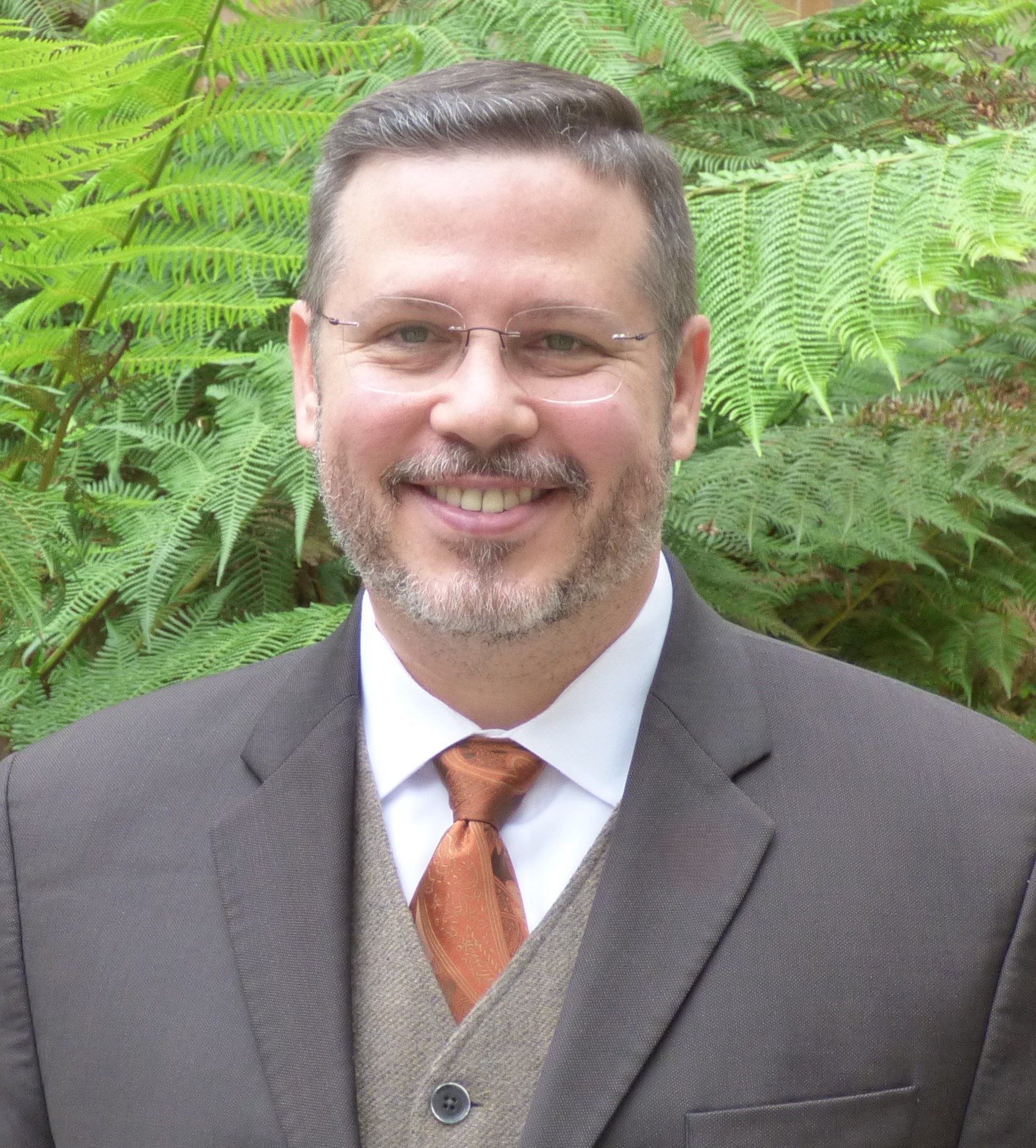
Season 10, Episode 08
In this thought-provoking episode of Parenting for the Future, host Petal Modeste speaks with Dr. Joe-Joe McManus, an author, educator, and executive advisor on inclusive excellence about what it truly takes to defeat racism and raise children committed to justice. Dr. McManus shares his deeply personal journey growing up in a multiracial family, witnessing the daily impact of racism on his brother, and how those experiences shaped his life’s work. Drawing from his book A Brother’s Insight, he explains why it is not enough to be “not racist,” and how parents can intentionally model anti-racism as a core value through everyday actions, conversations, and choices.
In this conversation, Dr. McManus shares:
- How his upbringing taught him to “live values out loud”
The personal experiences that shaped his lifelong commitment to defeating racism
Why racism is both systemic and interpersonal—and how inaction helps sustain it
What it truly means to be actively anti-racist, not just “not racist”
How parents can model racial justice as a core value in everyday life
Why critical thinking, honest history, and empathy are essential tools for raising socially conscious children
How racism harms not only its targets, but also those who perpetuate it
This episode offers parents, educators, and caregivers practical insight, moral clarity, and a reminder that raising good humans means teaching children to actively oppose injustice, not look away from it.
In this Episode you will learn about:
- Navigating bigotry as part of a multiracial, multi-religious and multi-ethnic family
- The power of parental values
- Why all “isms” are actually connected
- The role of fear in amplifying all “isms”
- How to be actively antiracist in your everyday life
- Why we should not be afraid of sharing true history with our kids
- A surprising lesson from M&Ms
- The tribal myth
- Why what we don’t do, don’t read and don’t talk about shape our kids
- How we can incentivize enough people to whisper, so that collectively we create a loud roar against racism and oppression
Petal Modeste: What would our collective experience be like if Martin Luther King, Jr’s dream became a reality, and every person was judged not by the color of their skin, but by the content of their character. And what power do each of us have to bring that world into existence? Our guest today, Dr. Joe-Joe McManus, is on a mission to defeat racism and has some answers. Joe-Joe is an author and an executive advisor on inclusive excellence. For over three and a half decades he has been an advocate, standing in opposition to bigotry and systemic oppression. He has held faculty, staff and executive roles in various higher education settings, including at an HBCU, an international university and an Ivy League institution. The first in his family to go to college. Joe-Joe has a BS in Psychology, from Florida Institute of Technology, an MA in Multicultural Education from Alliant International University and a Ph.D. in educational leadership from Florida A & M. University. Dr. Joe-Joe’s new book, A Brother’s Insight: Guidance on Defeating Racism and Advancing Freedom, offers guidance about how each of us can live the kinds of impactful lives that bring an end to racism. Welcome, Joe-Joe ,to Parenting for the Future. It is an honor to have you here.
Dr. Joe-Joe McManus: Well, thank you for having me.
Petal Modeste: So, you are the eldest of three boys, if I remember correctly. You come from a multiracial, multi-religious and multiethnic family, and you grew up in the back of a liquor store in what’s called a “white flight town” in Boston, Massachusetts. You tell us in the book that your parents were values-driven and expected all of you, all their kids to “live their values out loud”. So, tell us a little bit about those values. Tell us a little bit more about your family and how you were raised.
Dr. Joe-Joe McManus: Well, our family was fun. Like you said we lived in the back of the liquor store, which in Massachusetts is called a packie, a packie, right, a package store.
Petal Modeste: Okay.
Dr. Joe-Joe McManus: We had to work. We had to help the business and all of that. And we worked together a lot. We played sports together, and you know, we just had a lot of fun as a family. At the same time we had to deal with racism and other bigotries, among other kids, their parents and of course, in school where parents could have been helpful but often weren’t. That was, you know, sort of a quick version of growing up in town south of Boston.
Petal Modeste: You’ve said that that racism, antisemitism, classism surrounded you but when you started school everything became about race. What do you mean?
Dr. Joe-Joe McManus: Well, yeah, you’re right. All that garbage was around – antisemitism and homophobia, classism. All of that was around. But my brother Casey, who was adopted, is African, American. My mom was Jewish, and my dad was Irish Catholic. And if you know the Boston area, those two groups fight a lot as well. Have had beef.
But most of all, what we as kids experienced was around racism. And it was those daily microaggressions. It wasn’t always a big thing, but it was those daily microaggressions against my brother that he had to endure all the time, and my youngest brother, BJ and I, we witnessed this. And if you have siblings, you know that it hurts more when you see your sibling being, you know, hated on, or struggling and anything like that then if it was yourself. As the oldest, I felt like I was supposed to protect my brothers.
Petal Modeste: Yeah.
Dr. Joe-Joe McManus: And sometimes I was able to do that. But when it came to racism there was often nothing I could do, because it was bigger than just the interpersonal goings on among kids. It was often among parents or in systems.
Petal Modeste: Yeah. You share a lot of stories in the book that really help us to understand the toll that racism and discrimination took on Casey, and on all of you. There was a story about a girl in the doctor’s office who said she couldn’t play with Casey because he was the N-word. There was a time that there was this girl who, I guess there was a mutual crush going on between Casey and the girl, and he asked her out, and when he showed up at her parents’ home to pick her up, her parents basically canceled the date. They acted weirdly and told them. They needed to go out another time. You eventually lost Casey to suicide. And you attributed his death to being worn down by racial hatred and discrimination. What story from his life, from all those years stayed with you the most and sort of really cemented in your mind the toll that this discrimination and racial hatred took on Casey.
Dr. Joe-Joe McManus: Yeah. Well, there were more stories than I can count, right? We grew up in the seventies and eighties. And you know, I think things have improved in some ways, but of late I think we’re going right back to it. I talked about the story of that little girl, the doctor’s office in the book, specifically, because that one really stuck with me, but it stuck with us. He and I had talked about that story over the years. It happened when we were little kids. I think that it stuck with me even after Casey’s passing, because as we talked about it over the years we really focused in on how could that little girl learn differently. And you know Casey was the kind of person that led by example, he wasn’t one to talk a lot, or but he led, by the way that he acted, and the way that he treated people and that was a great example of that. This little girl who called Casey the N-slur. She was a little kid 3, 4 years old. She didn’t know what she was saying. She learned this from her parents right and Casey, even though we were young as well, he understood that already and he treated her with care. And as we left that doctor’s office, after a whole lot of turmoil, he said to me that maybe that little girl learned something from him. I think that that’s something that that has really stuck with me over the years, and I think guided me to become an educator, ultimately.
Petal Modeste: Yeah, because you started off wanting to be an astronaut, right? In fact, you were a Space Sciences major at Florida Institute of Technology. And so, it sounds like, in addition to obviously losing Casey. but then, drawing on all of these pivotal experiences, you eventually sort of decided to anchor your life, center your life’s work on anti-racism, equity, justice, and inclusion. Was that a difficult choice to make?
Dr. Joe-Joe McManus: Yes and no. So, I wanted to be the first you know. Basketball playing astronaut, you know. I wanted to be in the NBA and be an astronaut with NASA. I had big dreams in that sense. And that was just always what I wanted to do, you know. And Casey’s passing. I stopped looking at basketball as anything but a game, and it just wasn’t important to me anymore. And I did, you know, go to college. I was the first in my family to go, and I was studying space sciences, which is basically astrophysics and all that. I got to be the very first American employee of the Soviet Academy of Science, which the week I got there became the Russian Academy of Science, because I showed up when the coup happened. And you know, I worked as an astrophysicist at an observatory there, published papers. I really was excited and doing, I think, good work in that. But at the same time I was carrying on some work that Casey and I had done. He and I had done small things with teachers and students in our own schools and in local schools. And after his passing I started to do more of that. I started speaking in front of larger audiences. And, in fact, when I went to Russia, part of my role was, as a quote, unquote “youth ambassador”. And it’s actually, when I found out that I was actually terrified of public speaking, so I’d been doing it but I’d only been talking about something that I was passionate about, so that kind of overrode the fear. But when I got there they’re asking me like, talk about this American thing or that, and I’m like, “oh, God!” And I sweat, and I’m doing terror. I was scared, and the first few events were awful. And but then they asked me to talk about American holidays, and I said, I gotta do something different with this. So, I thought, Okay, I’m going to talk about Thanksgiving, 4th of July, Martin Luther, King Day and Juneteenth, which at that time most Americans had never even heard of right. I was talking to audiences in Russia that either thought that America was this place paved in gold that was easy and perfect, or people that thought of us as the evil Empire. And so I started talking about these holidays and telling different perspectives on them. Right? You can imagine that you know different perspectives on Thanksgiving. What is Juneteenth? And you know, why is it something that we should we should honor? And the audience was just going at each other and going at me, and it was great. You know, we had really big dialogue. And from that point on, even there in Russia, all of my talks were about issues of race and racism which was very prevalent there. And other forms of oppression. There was a lot of antisemitism in Russia. There was a lot of sexism and homophobia in Russia, and so I was speaking about all these different issues and having dialogue about what it was like, you know, in Russia as opposed to here and learning so much right, because I had read Angela Davis’s autobiography, for example, and she spoke of Russia as this place, free from racism. It’s not that simple in the autobiography, but it made it seem like that and I realized, okay, maybe she got the tourist version. But it sort of inspired me to think that maybe this is what I should be doing with my life. And you know I still think about it would have been nice to go into space and all that kind of stuff…
Petal Modeste: And play basketball.
Dr. Joe-Joe McManus: Yeah, I’m not that tall, so I don’t know how well I would have done if I would have really made it. But it was my dream. But it I don’t have any regrets about changing my direction and focusing on educating young people and working with adults to change systems, particularly around race and racism, but also these other forms of oppression that are all connected.
Petal Modeste: When it came to the book, in my opinion, just having read it, I feel like you’ve been writing this book all your life, actually. But you did have a very striking conversation with your daughter. I think her name is Michaela. If I’m pronouncing that correctly
Dr. Joe-Joe McManus: Yes, yes.
Petal Modeste: And that she played quite a key role in helping you decide to write it. Tell us a little bit about that.
Dr. Joe-Joe McManus: Sure. I mean, I’ve been doing this kind of work as an advocate for over 35 years and professionally for over 25, mostly in higher education. But I also work with folks in corporate and not and government and nonprofits. So, I’ve been doing this my pretty much my entire adult life and my daughter, who at the time was about 10 knew all of this. She’d introduced me at things right. She’d been at all of these events, and and knew very well what I do, and a good number of my friends who think she thinks of as aunties and uncles also do this work. So when the murder of George Floyd became public that was a really pivotal moment for her. And I remember her, saying to me that you know some of her friends were saying one thing, and others were saying something else. You know some were blaming him for his own murder, others were, you know, very angry about it, and she didn’t understand what was happening. I should say my daughter is biracial. And you know. So, she was really conflicted about this right? Because different friends were telling her different things. And I said, well, there’s a video of what happened and I said, If you’re up for it, we can sit and watch it together. And she thought about it. I said, it’s hard to watch and as a parent, that’s a tough decision, because you don’t want to put your kid through something like that. But I realized that the there was a young girl who actually took the recording that we all saw. She didn’t have any choice.
Petal Modeste: Right.
Dr. Joe-Joe McManus: And when we talk about, if something is, you know, too hard for a child to see, think about the kids that are being victimized, they have no choice. So, if a child of any age can be victimized by racism, I feel like we need to teach all children about it about the horrors of it, but also about what they can do about it. Kids kind of like adults. They want to know they can do something.
Petal Modeste: Yeah.
Dr. Joe-Joe McManus: So now Michaela and I sat and watched it, and I’ll never be able to get out of my head right as a parent, seeing this horror, this different look on your child’s face. So afterward, we had a conversation and she brought up what I do for a living. And she said, isn’t this what you’re supposed to prevent. This is what you’re supposed to stop from happening right?
Petal Modeste: Yeah.
Dr. Joe-Joe McManus: And I said, yes, me and Uncle Eddie, and Auntie Kathy and Granny Jane, and all these people that she knows as family, we all do it, and I’m trying to tell her that. And she cut me off and she said, “it’s not working – you have to do more”. And you know I come from a blue collar, serious blue-collar family Telling me I’m not working hard enough is awful hard to hear right. But I’m thinking, oh, my God! How could I do more? At first I just rejected it. I can’t work more hours. I can’t put myself at more risk. I can’t. I don’t know what else to do. Then I really thought about it. And one of the things that I hadn’t done is tell my story because I’ve never wanted to be the center of attention. I’ve always just wanted to do the work behind the scenes and get the job done.
Petal Modeste: Right.
Dr. Joe-Joe McManus: But telling my story, I hope in in the book helps people connect and then all of the insights that I’ve learned about how we can all have an impact. So, you know, which is why I think it’s great that there’s so many books on anti-racism and other forms of opposing oppression. I want all these stories out there. And I think it matters that you know my brother’s life taught me and provided experiences that it would be a shame if I didn’t share them and help other people understand not only the tragic pieces, but also what they can do. And that’s really my goal with this – it’s not all about huge things. You can do things every day as a part of your normal life and make a real difference.
Petal Modeste: Yeah, I completely agree with you. Do you have a definition for racism?
Dr. Joe-Joe McManus: I think racism is just prejudice, discrimination, and hatred that’s rooted in white supremacy. But there’s also the fact that it’s systemic meaning that those biases are built into our systems, whether it be our educational systems, , our economic system they’re built in. And then they’re reinforced by individual biases, right? Individual racism. So, people reinforce it either by actively being a part of it, or by doing nothing, even when they know better.
Petal Modeste: Could this really just all be rooted in fear – a sort of a scarcity mindset? So if I help end this horrible thing, if I act differently, how will I suffer? Is that at the bottom of all of this?
Dr. Joe-Joe McManus: Well, it’s interesting. Our fears are used to divide us and there’s historical evidence, It’s in the book about how you know race was used to divide folks that were fighting against those that were oppressing them. Right? One of the unique things I think about racism and how it’s connected to all these other types of bigotries is that all of them are used to continue to divide us so that we can’t fight against those that are oppressing us. And I’m saying us, all of us in different ways, and to different degrees. But if we’re talking about racism in particular, it’s white folks who are struggling are being told that the problem is not the people in charge that are taking billions in profit. It’s the guy next to you struggling, that’s African American. That’s an immigrant of color. That’s LGBT. Whatever it might be. That’s the problem. And so the fear that you know whether it’s yourself or your child that you’re worried won’t have opportunity is used to keep us divided. A lot of this is driven by what is often called the culture wars. Right? It’s driven by people that are fearful that the country is changing, and that even though they’re struggling, maybe it could get worse, right? Because they’re being told that the problem is the guy next to them, not the person, you know, buying 100 million dollar jets
Petal Modeste: You devote an entire chapter in the book to the concept that it is not enough to not be racist; that in order to create a more just world, we have to be actively anti-racist. And this is something many other scholars in this area also believe. But describe for us what it really means to be anti-racist, especially since most of us listening are parents or people who parent and want to think about how to how to do that work for themselves as individuals. But then, how to help their children do that work. How do we really adopt racial justice as a core value?
Dr. Joe-Joe McManus: Yeah, I think it speaks to the way the system sort of helps to perpetuate itself. Right? So those people that had been opposed to racism were then taught to just be colorblind and neutral. That would solve the problem. If you’re not racist the problem is that when you, when you’re in a system that is racist and you do nothing that doesn’t help change it. You’re colluding by doing nothing and just watching it happen. And so, being actively anti-racist means that anti-racism as a part of your core values, so that in your normal decision making every day it’s a part of it. If it’s if it’s relevant, right? You take it into consideration. And in your behaviors and all of that. So, in the book I talk about everything from what is anti-racist dating to shopping, to all these different things. If we compare it to a religion right? If you’re Jewish, or if you’re you know, Christian, if you’re a Muslim, and you’re serious about your beliefs, those beliefs are a part of what the decisions that you make every day right? The same thing could be true of any issue that you care about. If you’re an environmentalist, the decisions that you make when you’re shopping and doing other things in the world are going to be impacted by that. That’s where we need to be – where people really incorporate this as a core value and understand that their actions matter. And so, if you think about it just on a very simple level, we have to think about who are our circles of influence right? Who do you influence every day? If you say something it can have a lot more impact. And I wish I could say that that was always true as a parent.
Petal Modeste: Yeah, we know better.
Dr. Joe-Joe McManus: We know better, but it does matter. We have these little truth bombs that go off eventually in a child.
Petal Modeste: Exactly, exactly.
Dr. Joe-Joe McManus: We do have some influence though. That’s what it’s about. It’s not about grand gestures. It’s not about attending protests. Not that those are bad things at all, but it’s really about a critical mass of people making this a norm for themselves and just making everyday decisions based on that.
Petal Modeste: Yeah. It seems to me that if there are enough people who hold racial justice as this core value and start to live their lives like that, it stands to reason that real shifts can happen right? It will impact who you vote for. Right? It will impact how you show up on your school boards. How you show up in your community, what businesses you choose to patronize. Is that how we kind of ultimately can create and or build anti-racism into these systems?
Dr. Joe-Joe McManus: Yeah, I mean, at the end of the day, systems are run by people, right? The vast majority of people in the United States, and I would say, even in the world, would not describe themselves as racist. If we can get those folks who do not consider themselves racist to understand that they are colluding with racism if they do nothing and that if they were to do a little bit, to do their part, that they could have this great impact, I think that’s where we really find change happening. And I think the other part of it is we often don’t think about ourselves, and how much we influence our children, and not just as parents, but as aunties and uncles, and as community members who deal with children as teachers who work with children. We all have an impact on kids. And you know some of the stories in the book sort of speak to this. But the idea is that if you don’t talk about it, people have believed. Oh, then, you know, it’ll go away. That’s not how this works.
Petal Modeste: Yeah.
Dr. Joe-Joe McManus: We do have to talk about it. There some tough conversations. But from my experience, having those conversations with young people, really helps them to develop a critical lens that they can look at their experience in their world with and over time that really has huge impact as well. So, it’s not just ourselves, but it’s all the people we influence, especially young people.
Petal Modeste: Yeah, I think the role of critical thinking is so important here. In the book you note that even a passing glance at history will show us that white supremacy has taken countless lives – the genocide of native people, slavery, the holocaust. And yet many people choose to not think critically about these facts. Or they can feel that any criticism of facts is a personal judgment against them. It’s part of why books get banned in schools. They don’t want certain students to feel guilty or to feel bad. Nobody’s talking about the kids at the other end of it . So, there is an empathy gap. Actually, I think that’s the term you used in the book, which I really like a lot, an empathy gap between reality, what actually happened and now, how we want to deal with it How can we bridge this gap?
Dr. Joe-Joe McManus: Well, there is something to that. Recently there’s been efforts to show to identify folks that are in some of these iconic pictures of white folks screaming at children that are desegregating schools, and they’ve identified a number of these folks. But there’s also this desire not to have your kids see who you may have been. Right? But I think it’s not about shaming anybody. You mentioned some things that have happened around the world, the holocaust and colonialism,. If we use Germany as an example. They teach about the holocaust, and they teach to think critically. They teach about not only the Nazi folks but also people who were not Jewish that were part of the solution and we have the exact same history. The Abolitionist movement started pretty much when you know the use of race began in this country, and there were people of color, and there were white folks as well. So the real history actually gives us different heroes.
Petal Modeste: Yeah.
Dr. Joe-Joe McManus: Even heroes that look like me. And they were certainly not the central focus. We need to learn about Frederick Douglass but there were also folks that look like I do, white folks who put their lives on the line to fight against not only slavery, but white supremacy, right? The abolitionist goal was yes, to end slavery, but to end white supremacy as well. And so I think that there is a way in which we can teach a more accurate history, which, by the way, is much more interesting. There’s plenty of heroes to go around right and sheroes. So I think that it’s a matter of how it’s taught. Using fear by saying, your kids are going to feel bad about themselves, and that’s why you should be opposed to this being taught in your school, that’s just meant to divide. I think we have to be careful and we have to use our critical thinking skills to recognize we’re being played.
Petal Modeste: What impact does racism, sexism, all of the isms, all of the different forms of bigotry, what impact do these things have on the perpetrators themselves? What have What impact does racism have on the racist? What impact does sexism have on the sexist?
Dr. Joe-Joe McManus: That’s a great question. And I think people don’t realize how much damage is done to those perpetuators of oppression. They don’t think about it, but it really keeps us from addressing the real problems that we’re facing, right by blaming others who are also struggling. I think it keeps us from addressing the problems that are hurting us. And you know, we talked about voting. You mentioned that earlier. So it can cause people to vote based on their bigotry instead of their own self self-interest. My parents, they taught us very simple lessons, you know, when we were really young. And I remember, living in the back of the packi right there was in the package store, you know, at any convenience store, right by the register, there’s all the candy, right that last second of who I want candy. Well, we lived in the back of the store. We weren’t allowed to go near that right, because we’d want that every day. It was a special occasion when we got some candy, and I remember something came up among the folks talking in the store. And it was a round race and we were very young, and so we did not understand what was being talked about, and so my dad said, “all right, boys, you can get some M&Ms” right? So one of us grabbed the peanut. One of us grabbed the regular. We were running out back into the apartment to have our M&Ms. And desk and hold on a second. And he had us open the M. &M’s. And pour them out on the counter. And he said, You can have all these M. And Ms. Right. I’m not taking them away. You can have all these M&Ms . But first you have to tell me why they’re different shapes and different colors.
Petal Modeste: Huh?
Dr. Joe-Joe McManus: So Casey and I are like, you know, all right. What can we come up with? We gotta give them an answer and all we could come up with really was that it would be boring. And because the flavor, the colors on M. And M’s don’t change the taste of it right.
Petal Modeste: So it’s all the same.
Dr. Joe-Joe McManus: The same right, So we said, our answer is “it would be boring if they were all the same.” And Dad said, You’re right, it’s exactly right. Life would be boring if people weren’t different. And that was our little lesson for the day.. But there’s some real, you know, deep truth to that, and I do genuinely believe that if you limit who you’re, open to who you engage with, who you love, you receive a lot less. you know, in so many different ways.
Petal Modeste: That’s a really great example. And also the fact that they all taste the same even if they look different – it’s kind of we’re all human, even if we look different. That’s going to stay with me. Thank you for sharing that. I’m gonna look at them quite differently now, Joe- Joe. I’m not going to snarf them down, as I usually do. I have to admit that as a Black person in the world I am sometimes so skeptical that we could really bridge the empathy gap that we could really convince people to move past their guilt; to understand that racism hurts all of us. I don’t know if it’s enough, and you know you point out in the book, as we know that nobody is really born already believing the myths about race. We are all taught these ideas. There are so many studies that talk about kids not just recognizing differences in skin color, or other features very early on, but starting to make choices as early as 2 or 3 years old about who they want around them based on some of these characteristics. I mean that that’s like, what? And so how do we learn anti-racism instead of racism? How do we prepare educators to teach our children in inclusive and equitable ways? And what role can parents play? Give us some ideas for how to do this.
Dr. Joe-Joe McManus: Yeah, I think the first thing is to think critically about the myth. We’re taught that. You know that it’s natural right, that we naturally are tribal, and we find differences and separate ourselves. It’s not true. In fact, if you’re around a lot of children, you realize that that’s absolute BS, right? So, letting go of that, mythology is the first thing. And the second thing is to understand that, just like with anything else we teach our kids and expose our kids to that being anti-racist is something that they will learn the younger they are when they start learning this and like I said, it can be small things at first. And it’s just about what they see as well. So, you can be. You know you can say all the right things. But if your kids see that you have no diversity among your friends that you bring to the to your home and that you know you’re you’re watching news that says all these negative things. They’re gonna learn from your example. So the second thing is to be conscious of your own example that you’re setting for your kids and other kids that are around. But then also think about the things that kids pick up early, right? And I think technology is an interesting example, I know many households where the parents actually look to the kids to say, ok I don’t know what’s happening here, can you help me with this? And it’s not that the kids are smarter than the parents. It’s the kids have been exposed more and have learned it and have not been afraid to play with it from a young age when they’re really open to learning. Right? That’s why parenting and teaching is so important – what’s in the curriculum matters so much whether it be the curriculum at home or in school. It matters, and it also matters what’s left out. What you don’t talk about at home what is not included in the classroom. So, thinking about the example you set and what you teach your kids at home by your own behavior and by what you expose them to in books – we all read little books to our kids when they’re young. Right? That’s one of the pleasures of being a parent is the nighttime bedtime story. But if all of your books, there’s no diversity in there, it sends a message. Even from that young age. Kids are learning and they will learn beautifully if we allow them to right. So, I think that not being afraid to expose your kids to different perspectives and different stories again. The global majority are people of color and you can’t tell me that 90 plus percent of the planet has never written anything worth reading. Come on now.
So, let’s connect into that and learn from it, and expose our kids to to all these different things, so that they they’ll grow up better than us.
Petal Modeste: Yeah. And again, it’s not just race. It’s also making sure that different perspectives, religions, cultures. It’s such a rich world. I know many of the parents and the caregivers who listen to this podcast really believe in that – that it starts with toys and books. And who’s at dinner table? It’s really important for us to bring the world in so that our kids can see it. So, Joe-Joe. You know, the goal of this whole podcast is really to give everyone who parents a better understanding of the forces shaping the future. You know old things that we’ve been grappling with forever, like racism and sexism. But new things on the horizon, climate change, and AI and all of that. These are all shaping the future. We want to give them cutting edge, parenting tools and resources which they could leverage as they raise the next generation. And you mentioned in the book that, of course, racism is a global plague that has been shaping our world for centuries, and I will tell you that as a mom to two girls in two different generations – One is Gen. Z, one is Alpha. And they are both part of the first minority majority generations in the US. They are bilingual. They belong to multiracial, multi-religious, multicultural families., They have a view about all of these isms and bigotry. And I’ve heard it expressed you know, through their friends, you know, in conversations that they’re having with people their age, that they’re just kind of like, you know, like, racists are kind of losers, you know, people who want to believe this stuff, you know, they kind of outnumbered in the world. They’ll simply be outlived by other generations, that will have a different approach to life, and, you know, like whatever just, leave them be. Obviously, it’s really not that simple, because we are so inundated from the first day we open our eyes the minute we go to school, the minute we look at TV, or a magazine, or an I-pad. We are inundated with the ideas about race, about gender, about religion. I think you were extremely fortunate to have parents who taught you that if you are smart enough to recognize that something is wrong, you should see it as your responsibility to correct it. They taught you that opposing racism was just part of what it meant to be a good person. And so I want to zero in on that right now, because I think part of what is so overwhelming with all of these conversations about bigotry is that it could feel very heavy and very impenetrable. It doesn’t matter what your background is. It all is overwhelming. So, how can parents listening today, whatever their backgrounds redefine and really embrace this idea, that being a good person includes being opposed to racism and other forms of oppression, so that, like your parents, they could start living that belief and teach their kids to do the same?
Dr. Joe-Joe McManus: Yeah, I agree with you. It’s kind of our job as parents right is to raise good humans and hopefully, better than us. We want every generation to be a little bit better, right? Or maybe a lot better. And I have a lot of conversations with my daughter. She’s about to turn 15. There are so many things that are huge that we take on as parents. And this is one of those things that I think we are taught to believe we can’t do anything about . And it like I mentioned, earlier, environmentalism is a thing, and it’s important that our planet continue to be – we can live on this planet, right? It’s important. And it seems huge. But it’s small actions of individual people that over time make a difference.
Petal Modeste: Yeah.
Dr. Joe-Joe McManus: And it’s ironic that we’re taught that racism is too big to have any impact on. But at the same time we’re often taught that one person can make a difference. Those are opposing views. And you know I really do believe that as parents, we are the first line of defense for our children, and we’re also the first educators of our children. And I think that we have to let go of the idea that there’s all these things are different. All these things are separate – environmentalism, social issues, all these things it’s all about we’re trying to raise good human beings. And so, I don’t think that many people would define a good human being as somebody who’s a white supremacist. That’s something that from my perspective is a deal breaker. You’re not a good person. I need you to work on that right. I’ll help you work on it. So, think if we can incorporate that, just like we incorporate other things that we value – it might be our religion that that sort of guides us. It might be our upbringing from our parents. It might be our culture. It can be all different things. They all sort of sprinkle into what we see as our values. But as you teach these values and you incorporate it into helping your child develop real core values for themselves, it helps them to make this normal. And I think that’s what we see in kids when we see them interacting with everybody. That’s their natural way is to interact with everybody. Ask all the questions they’re asking them as kids. They don’t know. They’re genuine questions. They’re answering it for each other. And they are really engaged. We corrupt that. And I think our job as parents is to not allow that corruption and to teach them to be actively anti-racist, because then that lens carries with them, as they watch television , as they watch podcasts, listen to radio, as they go to school. That lens is with them. It’s not going anywhere.
Petal Modeste: Hmm.
Dr. Joe-Joe McManus: And they’re going to be able to see. Wait a second. That doesn’t make any sense. Where are the women in our curriculum? Right? Well, how come all the parents are all straight folks. Where are the LGBT folks? What’s going on here? That will be normal for them. The problem is that we haven’t done that. We’ve been neutral. And so, when that those corrupting things come in that beauty that we see in children, of being so accepting and embracing one another disappears over time because they get corrupted.
Petal Modeste: So, my last question for you has to do with something you said in the book that again has really struck me and will stay with me. It’s that we actually know how to end racism and other forms of oppression. We just need the collective will to do our part and hold each other accountable. What have you found in your life (and maybe it’s some of the things you just mentioned). But what have you found to be the most powerful way to incentivize enough people to whisper, so that collectively they can create a loud roar against racism and oppression?
Dr. Joe-Joe McManus: Yeah, I love that saying. I think it starts with self-interest. Right? So if you can help people understand how racism and other forms of oppression actually impact them negatively, that has it that has, you know, a way of making people pay attention. But also, you know, and I think this speaks to my relationship with my brother Casey and other folks is, if you can demonstrate that it’s also impacting people that they care about, right whether it’s their children and whether it’s friends, family. But I think that that’s for me. That’s where I start. So, parenting comes up a lot right, because talking about how these things might impact your children. Right? So we mentioned the LGBT stuff right? And these things are all interconnected. They’re all meant to divide us so that we can’t, you know, make progress. There’s nothing stopping your child from being a part of the LGBT community. Right? It doesn’t happen more often in progressive or liberal families than it does in conservative families. Right? So sometimes with folks that are that are holding on to this hate. It’s when their child comes out to them that they have to confront their own bias. So, I do think that their personal self-interest and interest in the people that they love and care about, If you can tap into that that’s really a powerful way to help people to deprogram themselves. Start with the personal and then, you know, and then build up to understanding the systems and all that kind of stuff.
Petal Modeste: Yeah. Thank you so much, Joe-Joe for sharing your wisdom and your experiences with us. Your story about the M&M’s -we’ll keep thinking about. But thank you most for believing in and working for a world where racism and other forms of oppression do not continue to rob countless children of their promise and the world of their contribution. It’s really empowering to talk to you, and we hope that we can do our part to help you create that world. All the best to you and thank you again for joining us.
Dr. Joe-Joe McManus: Well, thank you so much for having me, and thank you for what you’re doing. Because parenting is hard. We need all the guidance we can get
Petal Modeste: Amen!
Dr. Joe-Joe McManus: Yes.
Petal Modeste: All right, take care, Joe-Joe.
Dr. Joe-Joe McManus: You too.
Subscribe to the PFTF podcast
The "Parenting for the Future" podcast connects you the experts leading the charge toward a brighter future. Gain fresh perspectives and actionable advice for nurturing future-ready kids.